Why a Midtown repaint is judged under fluorescent light
A car that lives on P2 under Yonge and Eglinton is seen mostly in one place: a concrete garage lit by tubes that turn every metallic silver slightly green and every black slightly grey. That light is unforgiving. A quarter panel painted the right code but not blended will look fine on the drive up Bayview and wrong the moment you park beside your neighbour’s identical car at night. Midtown owners notice, partly because so many of these cars are leased and the return inspection is on the calendar, and partly because a repaint that shows is the kind of thing the person who wanted the paint perfect will see every single evening.
Then there is the damage itself. Garage scrapes are long, shallow and repetitive — the same rear door and quarter dragged along the same column, layered with concrete dust and a smear of yellow pillar paint. Curbside on Davisville, it is a mirror cap and a door edge. On the Forest Hill side, laneway garages take the front bumper corners and the driver’s side of the hood. Each of those means a different amount of paint and a different blend boundary.
Matching a colour is the beginning, not the job
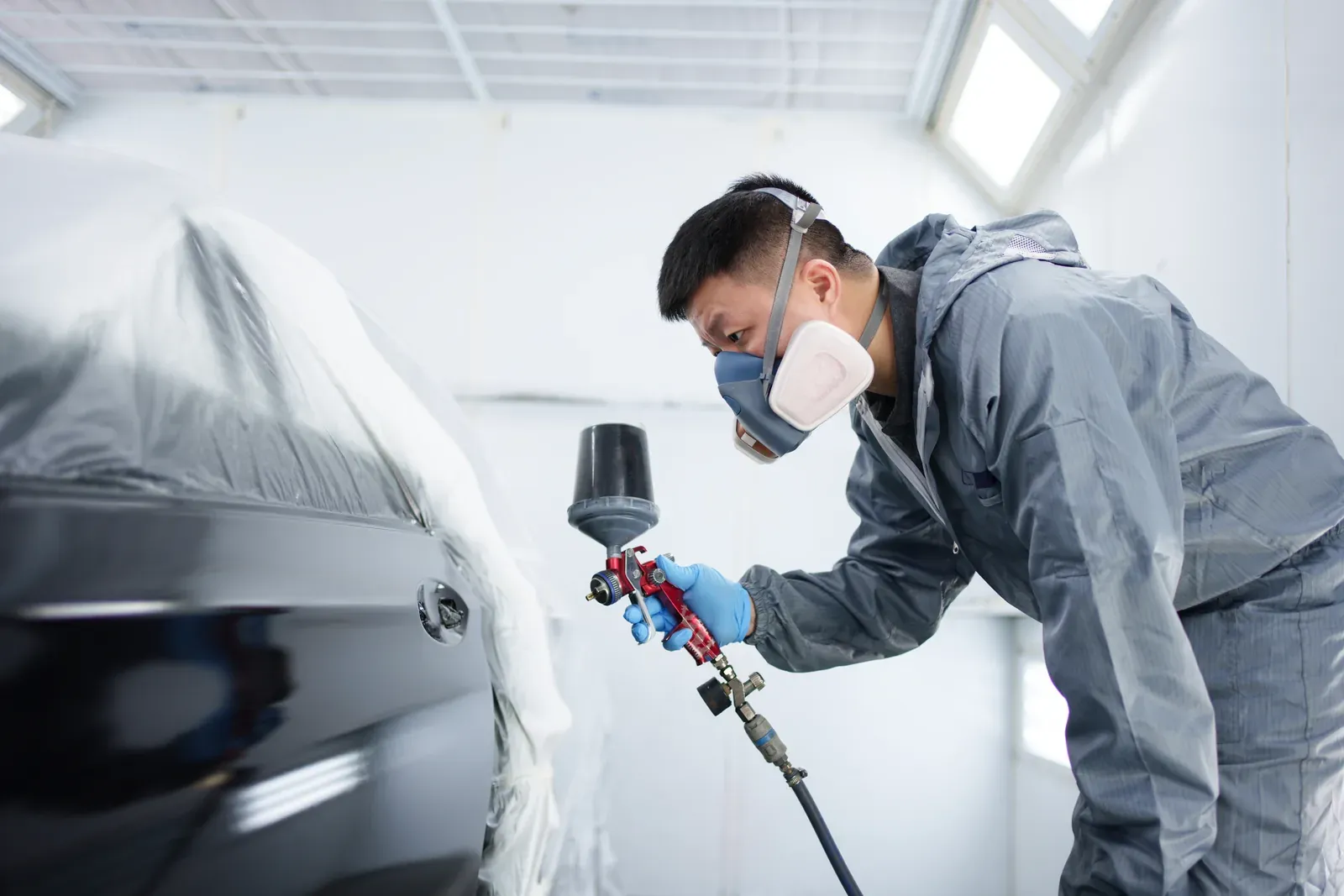
The paint code on the door-jamb label tells us the formula the factory started with. It does not tell us how that formula has aged on your car after eight winters of salt spray on the lower panels and eight summers of sun on the roof. So the code is only where we begin. A spray-out card is made in the mixed colour and held against the car in daylight and under the booth lights; the formula is adjusted until it disappears, with the variants the paint maker publishes for that code tried first when the factory batch ran light or dark.
Then the repair is blended. The new colour is faded into the neighbouring panel — the door beside the quarter, the fender beside the hood — so there is no hard edge for the eye to catch. Clear coat goes over the blended area as one continuous film. The panel cures in the booth, is checked again in daylight, and is polished only where it needs it. That is what separates paint that matches on a chart from paint you cannot find on the car.
Winter, humidity and the underground garage
Midtown’s garages are damp from December to March. Cars come down the ramp wet with brine, drip onto the slab, and never fully dry, which is hard on fresh paint that has not finished curing and hard on any chip that has reached bare metal. We plan around it. A repaint done in winter cures in the booth and is handed back with plain instructions — no pressure washing for the first while, no wax for longer — and a chip found in January is worth sealing before spring rather than after.
Drop-off and pickup follow the Midtown pattern: leave the car on the way to work, take the rental or the subway, collect it on the way home. The paint and refinish carry a lifetime warranty, which matters more for a car that will spend its life under those lights.
Questions people ask
My car is a three-year-old lease with a scraped quarter panel. Will a repaint show at the return inspection?
Not if it is blended and cleared properly. The inspector looks for colour steps, texture differences and overspray in the jambs; a repair that is faded into the adjacent panel and polished flat gives them nothing to point at. Bring the lease return date with you and we build the schedule to it.
Do you have to repaint the whole side to fix one door?
No. The door is refinished and the colour is blended a short distance into the fender and the quarter panel so the transition is invisible. A whole side is only repainted when several panels are damaged or the existing paint has failed. Blending adds a little labour and saves a great deal of paint, and it is the standard for a match that holds up in daylight.
A previous repair matched in daylight but looks green under the garage lights. Can you fix that?
Yes — that mismatch has a name, metamerism: two paints that read the same in daylight can split apart under fluorescent tubes because their pigments reflect that light differently. The cure is a re-blend with the colour checked under more than one light source before it is sprayed; our spray-out card is compared in daylight and under the booth lamps for exactly this reason. Send a photo taken in the garage and one taken outside, and the pair tells us most of the story.