The Windfields driveway palette
Walk down Bannatyne or Banbury and count the colours. German silvers with coarse metallic flake. Three-stage pearl whites out of Japan that shift warm or cool with the angle of the sun. A deep British green. A red that is one code on the sticker and three formulas in the paint system because the factory changed suppliers mid-year. And black, which forgives nothing, shows every polishing swirl and every step in the clear. None of these is matched by reading a code and mixing what the can says. The code gets you a family; the variant gets you close; the spray-out card held against the fender at the shop door in daylight gets you to a match nobody can find later.
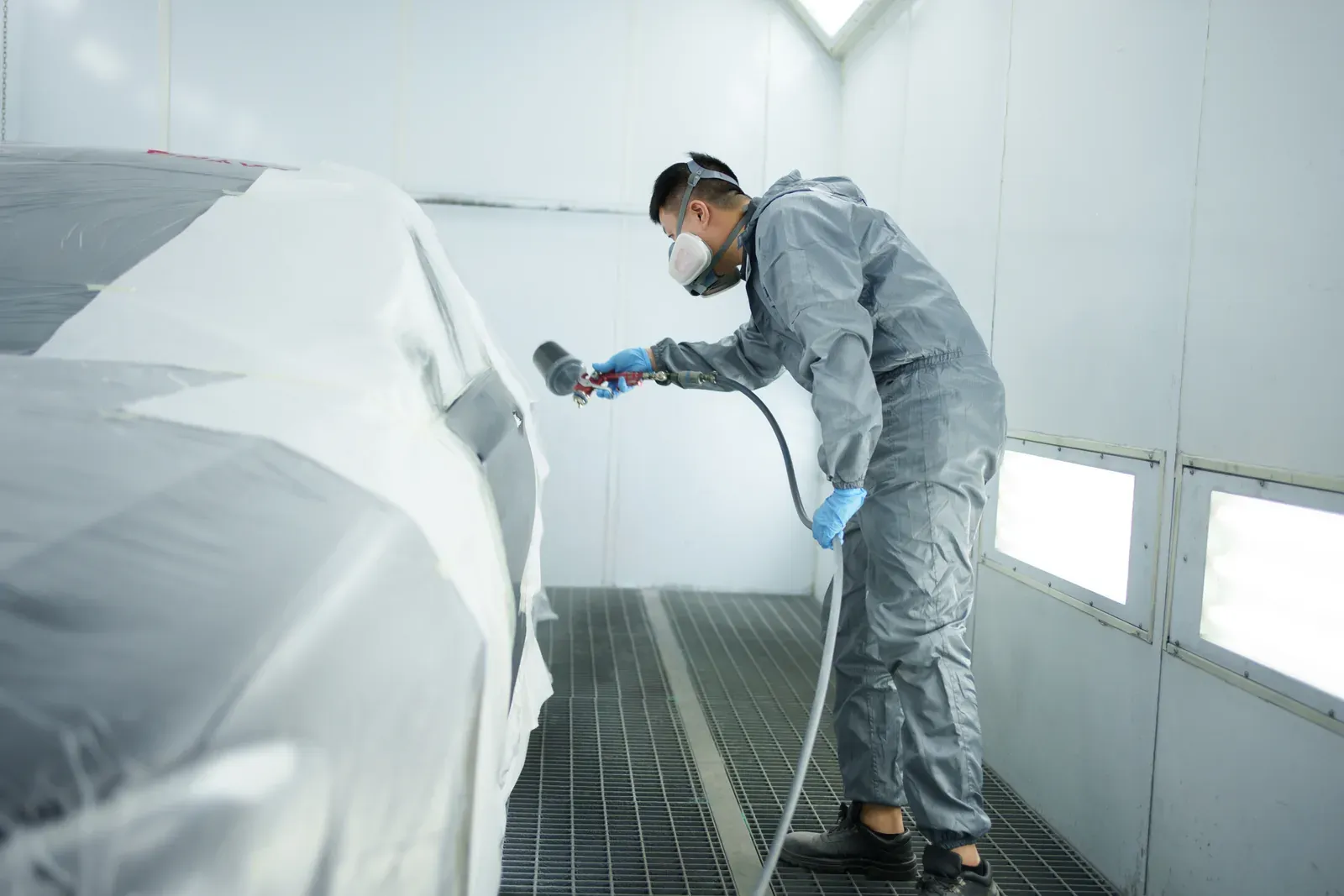
That is the standard for York Mills work, and it is why we blend. A new colour on one panel, however good, sits beside the old paint on the next panel with a hard line between them. Fading the new colour a few inches into the neighbouring door or quarter and clearing over both removes the line. On a quarter panel that often means the door and the bumper cover come into the booth as well.
The roof fades faster than the doors it has to match
A car that lives outside under the hollow’s oaks weathers from the top down. Sun works hardest on the horizontal panels, so by the eighth summer the roof and hood have drifted lighter and flatter while the doors still read close to the factory chip, and baked-in sap rings etch the clear where drops sat through July. Repainting that roof to the original code would make it the newest-looking panel on the car, and the mismatch would show along every pillar. So the match is made to the car as it stands: the spray-out card is compared against the weathered paint beside the repair, the formula is tinted toward what the sun has done, and the colour is faded into the tops of the pillars so the transition happens where the eye cannot hold both surfaces at once.
The same thinking applies to a hood beside two faded fenders, and to a bumper cover beside a ten-year-old quarter panel. On metallics and pearls the adjacent panel is usually blended anyway, because a cover’s plastic takes the same colour slightly differently than steel, and the blend keeps that from reading as a step.
One booth date, and what the price follows
Send photos of the panel in daylight and our estimator tells you whether the job is a single panel, a panel plus blend, or a full side, with the estimate in writing. If it is a lease-return repaint or a private-sale tidy-up rather than a claim, that estimate is the price conversation, and the price follows three things you can see on the sheet: how many panels are involved, what the colour needs — a three-stage pearl takes more booth time than a solid — and how much preparation the surface takes before colour goes on. Booth time is reserved when the car comes in, so a two-panel job usually leaves in a few working days.
The drive is York Mills Road east to Don Mills Road and north to Sheppard, beside Fairview Mall. Drop off in the morning, walk to Don Mills station, and you are back at York Mills station before the coffee is cold. Winter does not change the booth — it is heated and dehumidified — but a car that arrives wet with brine gets washed and dried before any paint work starts, which adds a little time in January. The finish carries a lifetime warranty on paint and refinish.
Questions people ask
The hood has sap etching after a summer on the driveway. Polish or repaint?
It depends how deep the sap burned. Rings that sit in the clear coat polish out in an hour or two. Etching that has gone through the clear into colour cannot be polished away, so the hood is refinished and blended into both fenders. Photos taken in low sun tell us which you have before you book anything.
The lease return goes to a Bayview dealer with a paint gauge. Will the inspector find the blend?
The gauge will read the refinish — repaired panels carry more film than factory, and there is no honest way around that. What matters at inspection is the quality: colour that matches, texture that matches, no dirt or dry spray in the clear. Keep the invoice; a documented professional repair reads very differently from a mystery panel.
The car is solid black. Is that the easy one to match?
Easiest to tint, hardest to finish. Black hides colour error and shows everything else — swirls, texture, a speck of dust in the clear — so the work shifts to preparation and polishing. The repaired panel has to carry the same gloss and the same texture as the panel beside it, or the repair shows in the reflection instead of the colour.