Why Woodbridge paint is a different job
Drive the estate streets off Pine Valley Drive or the crescents behind Market Lane and count the cars: German sedans, Italian badges, large European SUVs, a great many white pearls and deep metallic greys, and the occasional red that took the factory three coats to get right. The share of pearls and tri-coats on Pine Valley driveways is as high as anywhere we draw from, and those are the two finishes that forgive nothing. A door repainted in a flat single-stage white beside a factory tri-coat pearl reads as a repair from the end of the driveway. That is the bar for painting here, and it is the reason a Woodbridge owner makes a 26-kilometre trip for a fender.
The other half of Woodbridge is the work truck: the family stone, landscaping, HVAC and framing businesses whose pickups and cube vans carry the company name on the door. Those need a different sort of paint job — durable, quick, the lettering reapplied straight — and they need it without the truck sitting for two weeks in the spring rush.
The code opens the match; the spray-out card in daylight closes it
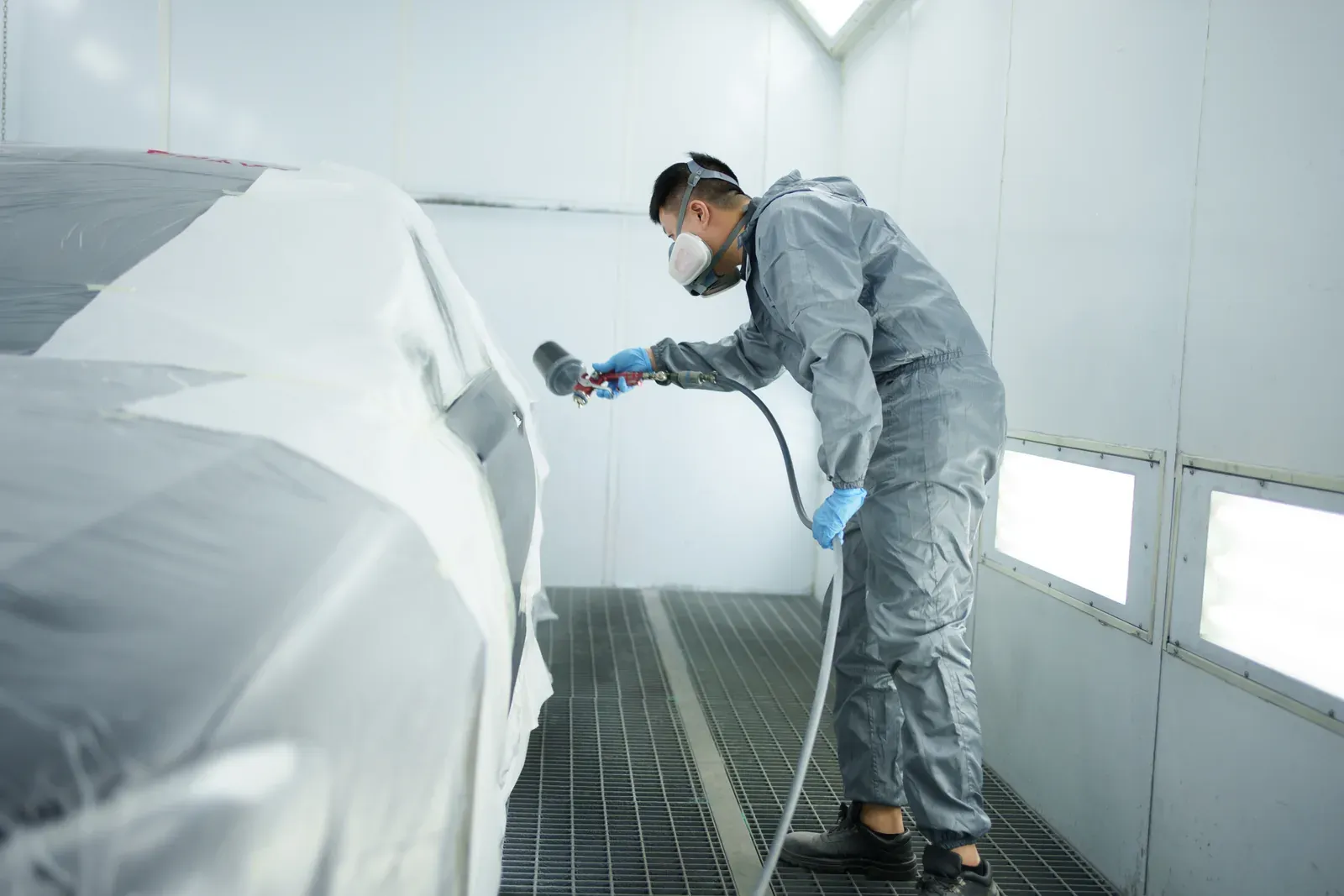
The paint code on the door jamb is where a match starts, not where it ends. Factory paint drifts from plant to plant and fades differently on a roof than on a door, so we mix to the code, spray a test card, and hold it against the car in daylight before the booth door closes. A pearl or a three-stage colour gets let-down cards too, because the number of mid-coat passes changes how bright the pearl reads. Then the colour is carried into the neighbouring panel rather than stopped at the gap, which is how a repainted quarter disappears on a metallic grey. Bare steel gets epoxy primer; plastic gets adhesion promoter. Clear goes on in the booth, bakes, and is checked under the lights for texture and dust before anything is polished.
The work trucks get their own recipe. A cube van door in fleet white wants a durable single-stage or a simple base and clear — something that shrugs off pressure washers and site grit and reads even against the rest of the box. Where the company vinyl sits clear of the damage, we mask to its edge rather than strip it; where it crosses the repair, the refinish and the sign shop are booked in the right order. Spring is the crunch, when the landscaping and paving trucks all want the same two weeks, so a one-door refinish is scheduled on the truck’s quiet day and turned around with the crew’s calendar in mind.
- Mix to the code, confirm on a spray-out card in daylight
- Let-down cards on pearls and three-stage colours
- Blend into the adjacent panel on every metallic
- Baked clear, wet-sanded and polished before the car leaves
Timing paint around the drive from Vaughan
Fresh clear is hard to the touch when it leaves the booth but keeps curing for weeks, and a car that goes straight from the booth onto a January 407 in brine is asking for trouble. So a Woodbridge paint job is scheduled backward from the pickup: the car comes in on a day we agree, the rental through your coverage is in the lot when you arrive, and the collection is set for after the clear has had its bake and its first day of rest. We tell you what not to do on the way home — no automatic wash for a while, no wax yet, no cover in the sun — and we mean it more for a Highway 7 drive in slush than for a July evening. The paint and refinish carry a lifetime warranty, and the person who stands behind it is the owner who wrote your estimate.
Questions people ask
My car is a pearl white. Can a repainted door really match?
Yes, with a blend. Pearl is a three-stage colour — base, pearl mid-coat, clear — and how many passes of mid-coat go on changes how bright it reads, so we spray let-down cards to find the right count, then carry the colour into the fender and quarter so the eye never finds an edge. The door alone, painted to a hard line, would not match; the blended door does.
The cube van has the company name in vinyl across the damaged panel. What happens to the lettering?
We paint; vinyl is a sign shop’s trade. Lettering that crosses the repair comes off before refinishing, and the new vinyl goes on only after the clear has cured — applied over fresh paint it traps solvent and lifts later. Bring the artwork file or the sign shop’s name and the handoff is arranged in one call.
Is fresh paint safe to drive back to Woodbridge on a salted Highway 7?
It is, provided the clear has had its bake and a day of rest, which is how we schedule pickups. Avoid an automatic wash for the first month and rinse salt off by hand rather than with a brush. The warranty covers the refinish; it does not cover a stone on the 407, so give the truck ahead of you some room.