It will, if the match is built in steps
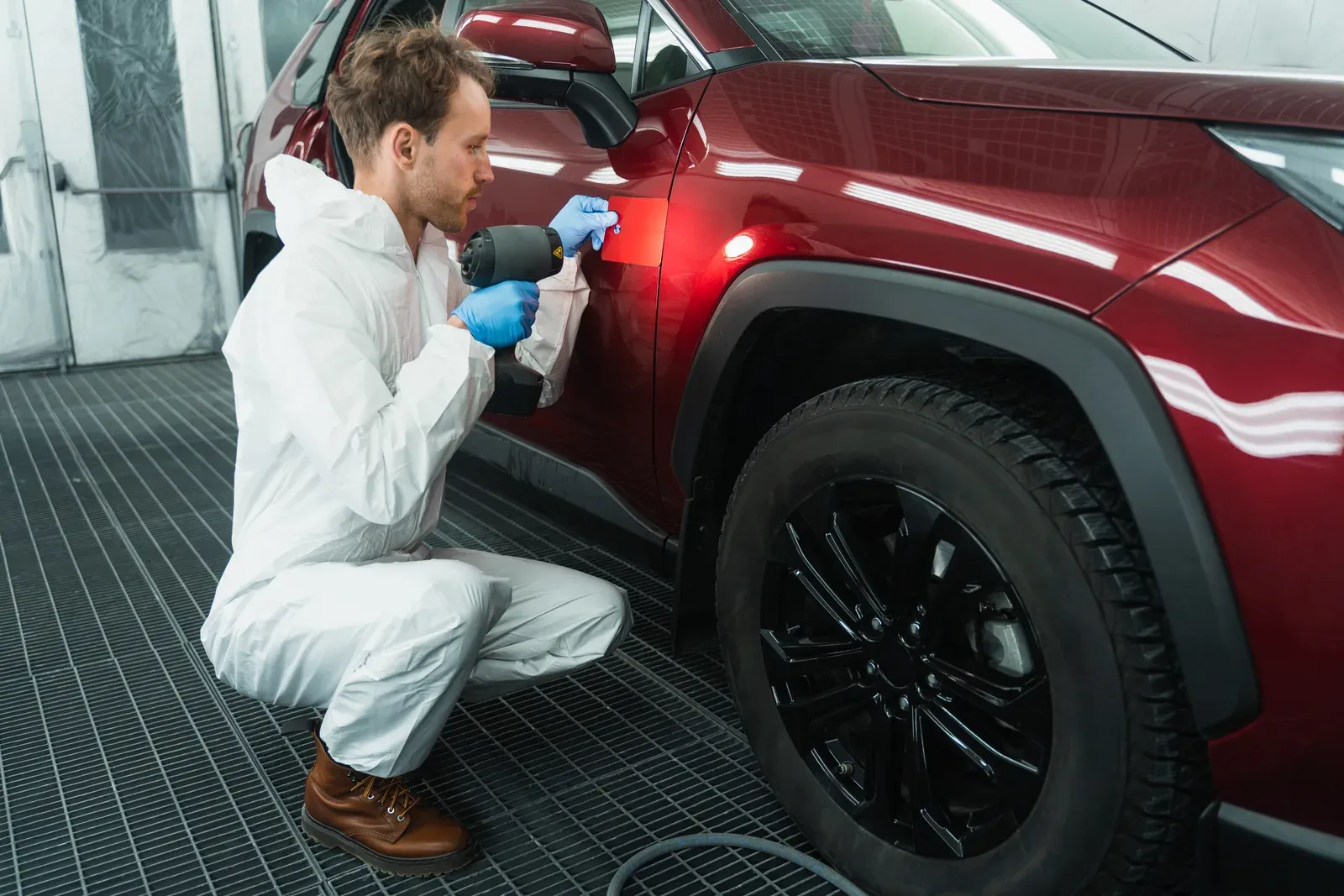
Matching paint is not one action. It is a short sequence, and every shop that gets it right follows roughly the same one. The paint code from the door jamb or under the hood identifies the colour. A set of variant chips for that code, held against a clean, polished spot on the car, identifies which version of the colour this particular car left the factory with and how it has aged. A spray-out card, sprayed with the chosen mix and cleared, is then held against the car under a colour-corrected lamp to confirm the choice before a drop of paint goes on the panel.
That sequence is what turns a factory formula into a match for a specific car that has spent eight winters on Sheppard. A shop that reads the code and mixes the standard formula is guessing that yours is the standard variant. Often it is not, and the guessing shows.
Why the paint code alone is not enough
A single paint code can hide a surprising number of variants. Factories run the same colour through different plants, different suppliers and different years, and each one drifts a little lighter, darker, bluer or coarser in the flake. The paint companies track these as separate formulas under the same code. On a popular silver or white there can be a dozen. Pick the wrong one and the result is a match that is technically correct and visibly off.
Then the car itself changes. Ultraviolet light fades some pigments and yellows others. Red goes chalky, black goes grey at the horizontal surfaces, and clear coat on a ten-year-old roof has a different texture from the doors. The painter is matching the car as it is today, not as it was in the showroom, and the only way to know what that is, is to look at it in the right light.
Corrected light matters because shop fluorescents and the orange sodium lamps in a parking garage each lie in their own way. A colour-corrected lamp that mimics daylight is the reference; the painter checks the card under it and then walks it outside as well, because you will see the car in the sun, not under a lamp.
The spray-out card is the honest test
A spray-out card is a small test panel sprayed with the chosen mix using the same gun, the same pressure and the same number of coats the painter will use on the car, then cleared. It is the only way to see how the flake in a metallic will lay, because that depends on the application and not only the formula. The card is held against the panel, at several angles, under the corrected lamp. If it is off, the painter tints the mix a little and sprays another card. Only when the card disappears against the car does the panel get painted.
This is the step most likely to be skipped when a shop is rushing. It takes time and material and produces nothing you can bill for. It is also the difference between a door you notice every time you walk up to the car and a door you forget was ever painted.
The card does one more job. It lets the painter check the flop, which is how a metallic changes as you move from looking straight at it to looking along it. A mix can match head-on and still read darker at an angle, and only a sprayed card, turned slowly under the lamp, reveals that.
- Paint code read from the car, not from a database guess.
- Variant chips compared against a polished spot on the actual panel.
- Spray-out card sprayed with the real gun settings and cleared.
- Card checked under a colour-corrected lamp and again in daylight.
- Blend into the neighbouring panel to bury any remaining difference.
Blending closes the last gap
Even a card that disappears against the car is a card, not a full panel with its own edges. The final safeguard is to carry the colour a little way onto the adjacent panel and fade it out, then clear both, so there is no hard line where the eye could compare old and new. That is blending, and it has its own page explaining what gets blended and why it appears on the estimate. The short version is that a match that is good on a card becomes a match that is invisible on the car.
When the car comes back, look at it outdoors, at the panel and its neighbours from a few angles, and then look at the flake up close. What you should see is nothing. If the colour is right but the surface texture is different, the clear coat rather than the colour is the problem, and the guide on clear coat explains that. Our lifetime paint warranty covers the refinish, so if something is off, bring it back and it gets corrected.
A word on older cars and previous repaints. If a panel next to the repair was painted somewhere else years ago and is itself slightly off, matching to the factory paint on one side may leave a visible step on the other. We will point that out at the estimate and suggest where to blend so the whole side reads as one colour rather than chasing a match that cannot exist.
Questions people ask
Can you match a colour if the car has faded?
Yes. The variant chips and spray-out card are compared against the faded paint, not the original formula, and the mix is tinted toward what is actually on the car. Blending then hides the rest.
Are some colours harder to match than others?
Yes. Tri-coat pearls, some reds and light metallics such as silver are the most demanding, because their appearance depends heavily on how the flake or pearl lays. They take more spray-out cards and almost always need a blend.
Do you need to see the car in person to match the paint?
For the estimate, photos are enough. For the match itself the car is in the shop, because the chips and cards have to be compared against the real panel under the right light.
What if the match is off after I get the car home?
Bring it back. Colour and finish on the refinished panels are covered by our lifetime paint warranty, and a mismatch is corrected, not argued about.