What Etobicoke weather and trees do to paint
Paint in Etobicoke ages by neighbourhood. Under the mature maples and oaks of the Kingsway, a car parked on the street all summer collects sap and bird droppings that etch through clear coat in a few hot afternoons, leaving dull rings that no wash removes. Along Lake Shore at Humber Bay Shores, the towers put cars on open rooftop decks or in salted garage entrances, and the lake side of a dark car fades faster than the street side. North of the 401, cars parked outside near the airport and along Dixon Road pick up a fine industrial fallout that bonds to horizontal panels, and work vehicles from Rexdale simply wear through: hoods sandblasted by the 427, roofs chalked by sun, tailgates scratched by cargo.
That history matters when a panel has to be painted. A new fender sprayed to the paint code will match a car that has lived in a garage at Islington City Centre and stand out on one that has spent eight summers on a Kingsway street. So the first thing our estimator does is read the car, not the code.
Matching a colour instead of guessing at it
The paint code from the door jamb is where a match starts, not where it ends. Manufacturers run several variants under one code, and a car that has faded, been polished hard or already had one panel repainted will not sit on any of them exactly. We mix the closest variant, spray a test card, and hold it against the car in daylight and under the booth lights before a drop touches the panel. If it is off, we adjust. Metallics and pearls get a second check for flop — the way the colour shifts as you walk past — because that is where a poor match shows first.
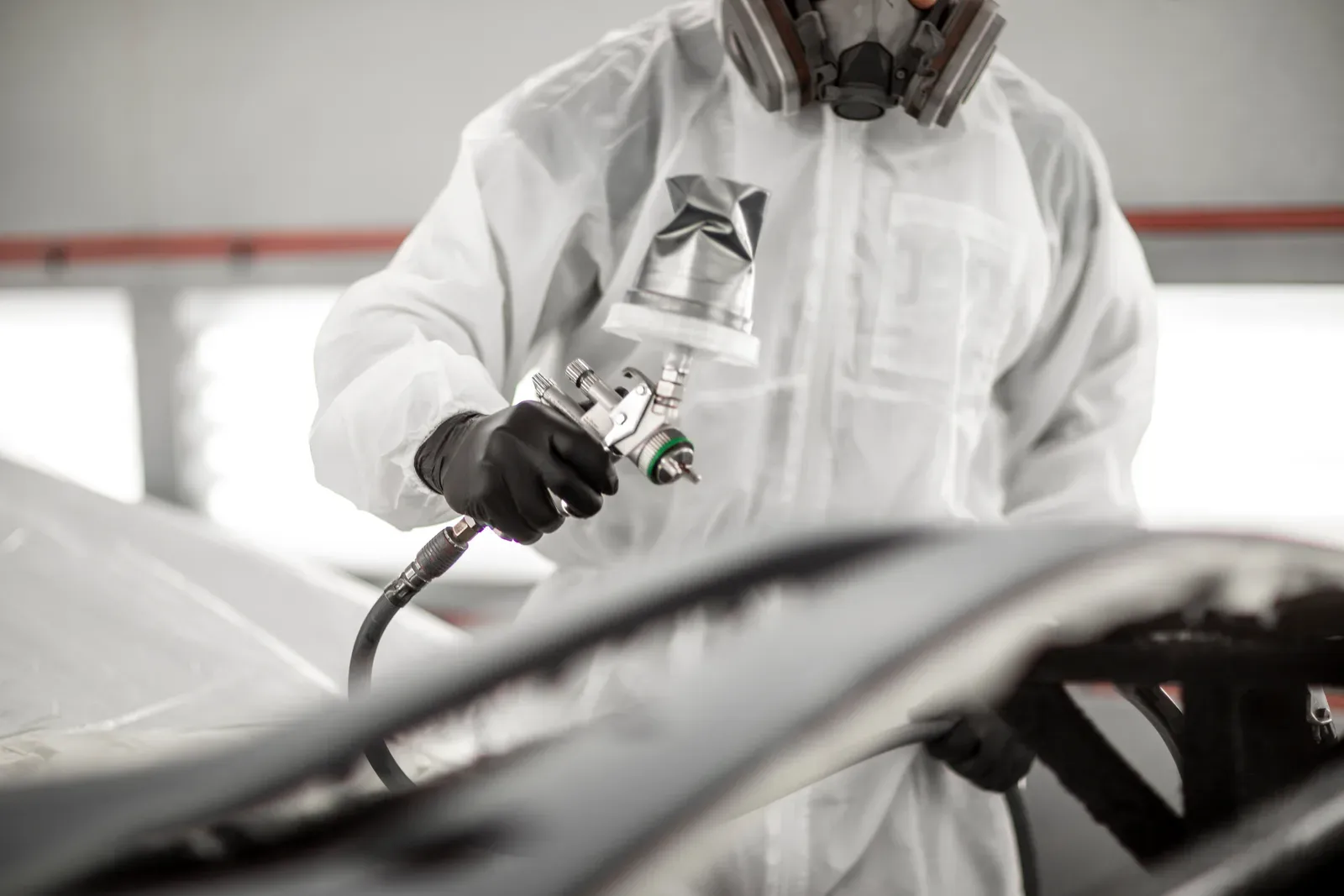
Then the colour is blended. The new paint fades into the adjacent panel over a hand’s width, so the eye never finds a hard edge where old meets new. On a rear quarter that usually means the door gets blended; on a hood it can mean both fenders. Clear coat goes over the whole area, the booth bakes it, and the panel is wet-sanded and polished so the texture matches the factory orange peel beside it.
- Paint code plus a spray-out card checked in daylight
- Adjacent panels blended so no edge is visible
- Clear coat cured in the booth, then polished to factory texture
- Lifetime warranty on the refinish, in writing
How the car comes and goes around a commute
A single-panel repaint usually keeps the car for a few days, most of it waiting on prep and cure rather than spraying. Etobicoke drivers who use the 401 eastbound tend to drop the car at Sheppard on a Monday morning and collect it on the way home later in the week; the rental, if your coverage includes one, is here for the handover. Fresh clear coat keeps hardening for weeks after you leave, so we send you off with plain instructions: keep it out of the automatic wash for a while, no wax yet, and rinse off sap or bird droppings the day you see them rather than the weekend after. If a Kingsway street is the car’s home, that last habit is the one that protects the work.
Questions people ask
Sap from the maples on our Kingsway street etched dull rings into the hood. Is that a polish or a repaint?
It depends how long the sap sat. Rings caught within a few weeks usually polish out, because the etching is only in the clear coat. Rings that have baked through a whole summer can sink past the clear, and then the hood is refinished as a complete panel. Send a photo taken low across the hood so the light catches the rings — the depth reads from the reflection.
Do you have to paint the door next to the fender you are fixing?
Usually we blend into it rather than repaint it fully. Blending fades the new colour across the edge of the neighbouring panel so the transition disappears; it uses a little material on that panel but does not strip or refinish it. Skipping the blend is how a repaired fender ends up looking half a shade different in the Sherway Gardens lot.
How soon can I take the car through the wash on the Queensway after a repaint?
Hand wash only for the first few weeks, and no wax or sealant until the clear has finished hardening. The booth cures the paint enough to drive, but brushes and high-pressure jets can mark a surface that is still outgassing. We give you the timeline in writing at pickup.