Drive it up, or send it up
Twenty kilometres is the number that shapes a Beaches collision repair. A car with a wheel pushed back, a headlight hanging or a hood that will not latch has no business on the parkway for that distance. So the first thing our estimator does with your three photos is not price the damage; it is decide whether the car should move at all. If it should not, we coordinate a flatbed from wherever the car stopped, and under Ontario’s towing rules the destination is yours to name. If it can drive, Victoria Park to the 401 keeps you off the valley, and the rental through your coverage is booked for the morning you arrive.
The rest of the process is built to need you here once. The estimate is written from photos the same business day. The claim is opened from our desk, and the adjuster deals with the owner rather than with you. When the car is finished we call, and you ride the 92 up from Queen and take three trains from Woodbine to Don Mills station to collect it.
Where Beaches cars get hit
The neighbourhood itself is slow — 30 on the side streets, the streetcar setting the pace on Queen — so the serious hits happen at its edges. Lake Shore at Woodbine is the worst of them: four lanes of stop-and-go where a driver watching the lake meets the bumper in front. Kingston Road, climbing along the top of the neighbourhood toward Victoria Park, has grades that catch drivers in the first freeze. And the 501 itself: a car that turns left across the tracks at Woodbine or Lee in front of a streetcar takes a corner hit at streetcar weight, and a streetcar does not stop the way a car does.
The Lake Shore rear-end is the claim we see most from the Beaches. It looks like a scuffed cover and is usually more: a crushed absorber, a bowed bar, a radar bracket a degree off. The streetcar clip is second — rear quarter, tail light, sometimes the wheel.
Teardown, OEM and the sensors behind the cover
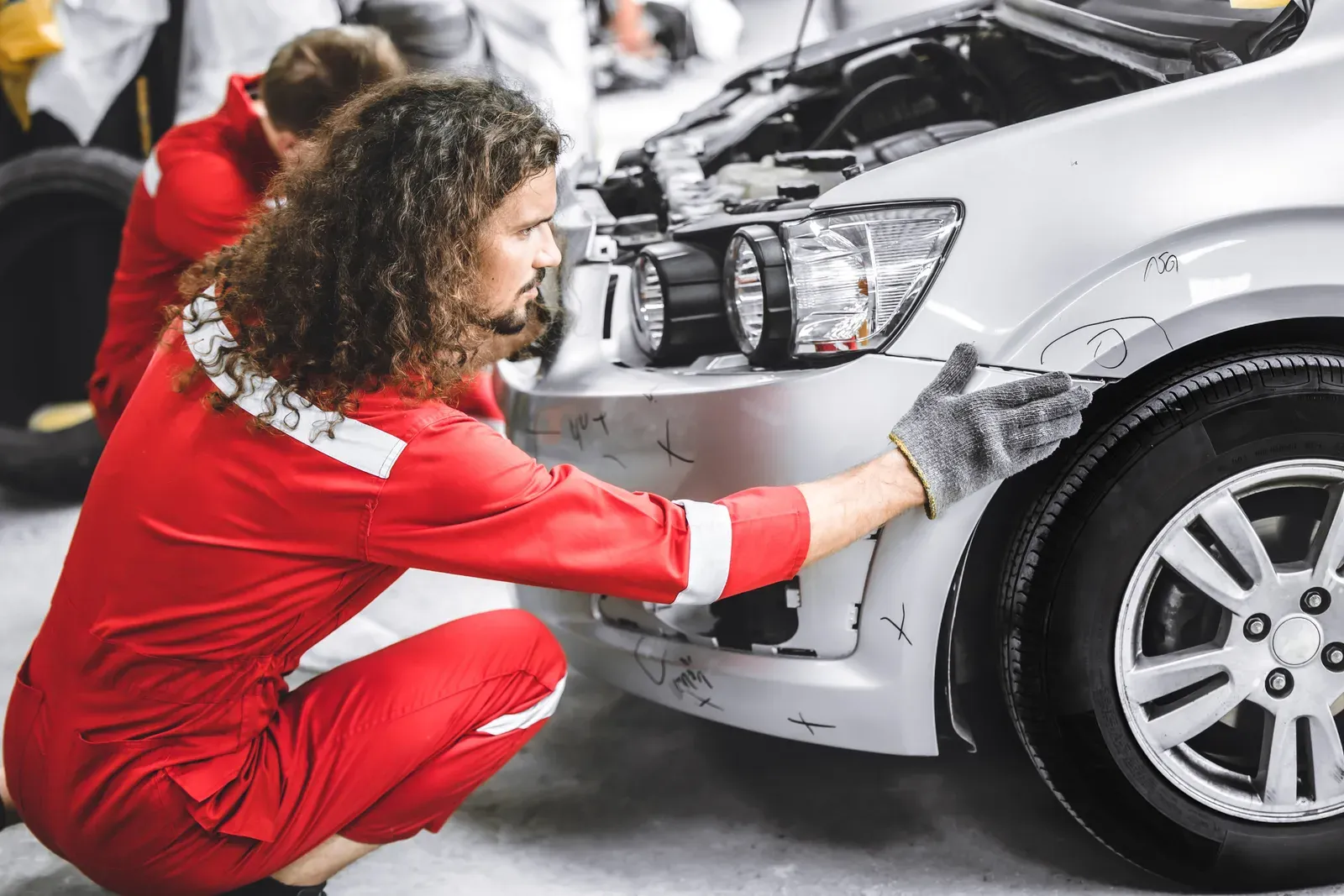
Your photos produce a starting estimate. The real one is written after the cover, headlight and liner are off and our estimator can see what the bumper was hiding; each finding is photographed, priced and sent to the adjuster as a supplement, and nothing is ordered until it is approved. Where the damage reaches a rail, an apron or an airbag sensor, we ask your insurance company for OEM parts and put the reason on the estimate. A front hit on anything recent disturbs the radar behind the badge and the camera behind the windshield, so the estimate notes that both may require recalibration before the car goes home.
Ontario runs collisions through your own policy. When another driver caused the crash, in whole or in part, DCPD has your own insurance company pay for your car, with the share of blame set under the Fault Determination Rules rather than argued at the roadside. The one hole is OPCF 49: signing it removed DCPD, Collision or Upset and All Perils together, so there is nothing to draw on for crash damage at all and no claim against the driver who caused it — comprehensive is what survives. Combined damage past the provincial reporting threshold means a visit to the nearest Collision Reporting Centre; injuries mean 911 from the scene instead. Your insurance company should hear from you within the week. The adjuster may read you a list of preferred shops; in Ontario that is a suggestion, not a rule, and the shop you name is the shop that does the work. Name this one and the calls come here instead of to you.
- Photo estimate first, torn-down estimate before parts are ordered
- OEM requested wherever a crash structure or safety part is involved
- Recalibration flagged on any hit with sensors behind it
Questions people ask
I was rear-ended on Lake Shore at Woodbine and the car drives fine. Can I bring it up the DVP myself?
If the bumper is attached, nothing is rubbing and the lights work, yes — but check that the trunk latches and the exhaust hangs straight first. What looks fine at the curb can rattle loose at parkway speed. If you are unsure, send the photos and we will tell you before you leave the neighbourhood.
A streetcar hit me when I turned left across the tracks at Lee. Is that automatically my fault?
A left turn across the path of oncoming traffic is generally on the turning driver under the Fault Determination Rules, and a streetcar counts as oncoming traffic. The split is set by the insurance companies from the reports, not on Queen Street. Your own collision coverage repairs the car; we handle the estimate, the teardown and the adjuster from here.
The other driver wants to pay directly to keep it off insurance. Should I take it?
The shoulder of Lake Shore is the worst place to price a repair. What reads as a scuffed cover often turns out to be a crushed absorber and a radar bracket out of true, and a private settlement leaves you paying that difference. Exchange details, photograph both cars and both plates, and give the answer after our estimator has seen the pictures.