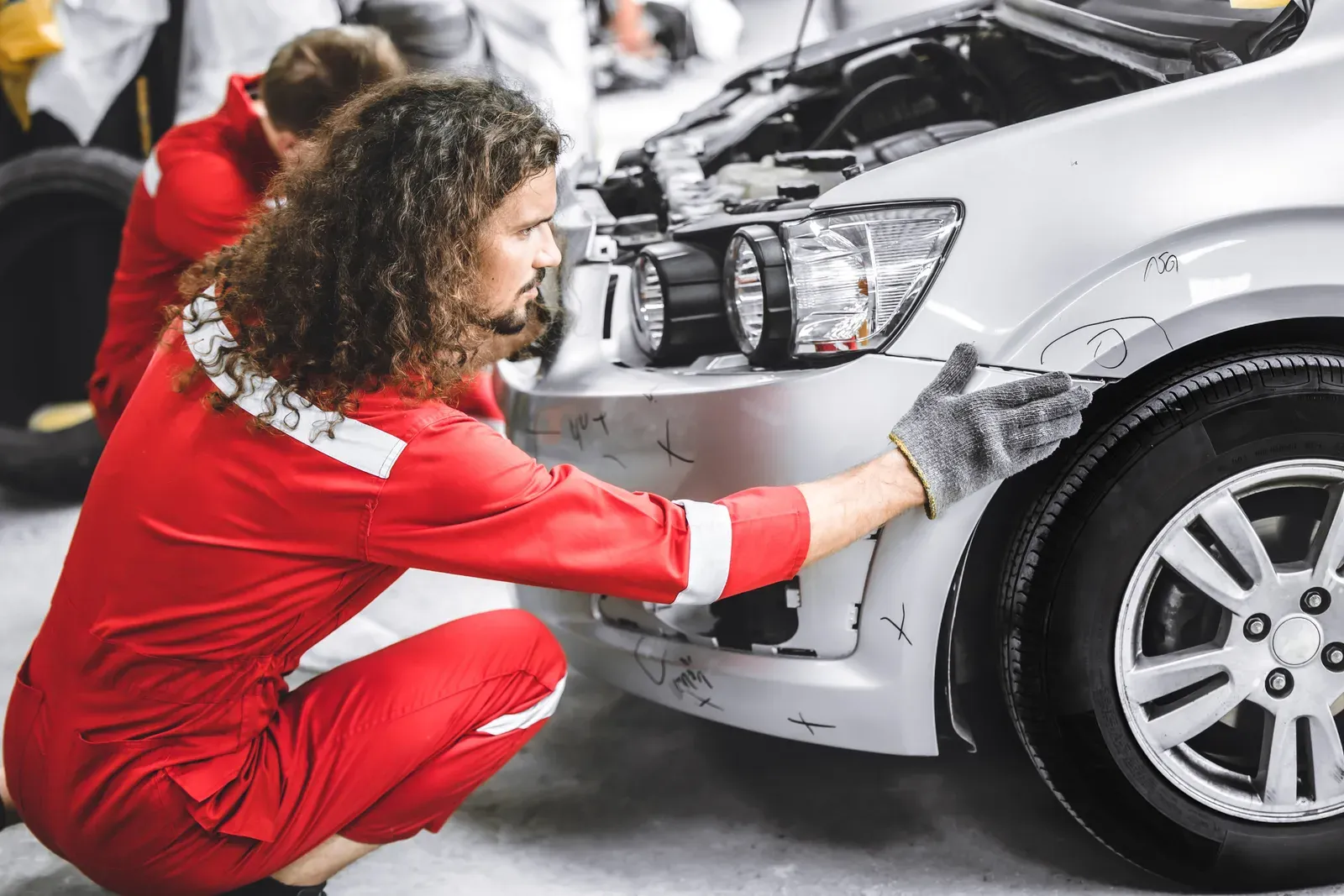
Drive it down or leave it in King: the first call
Before anything else, decide whether the car should move. A dented quarter panel with all four wheels pointing the same way can make the trip; a car with a crumpled front corner, a headlamp hanging, a steering wheel that sits off-centre or a coolant smell should not be tested on the 400 at speed to find out. Send the photos first and our estimator tells you which it is. If the answer is tow, the car stays wherever it stopped — the shoulder of King Road, a laneway in Kingscross, the Collision Reporting Centre lot in Richmond Hill — and we coordinate the operator. In Ontario the owner picks the tow destination, so the truck comes to Sheppard and Don Mills and not to a storage yard with a daily fee.
If the car is drivable, we still do not want you here twice. The estimate is written from the photos, parts are ordered against it, and the drop-off date is set only when they have arrived. The rental through your coverage is booked for that hour. If you commute past Sheppard anyway, or ride the GO from King City to Union, the drop-off folds into a normal weekday.
What King City collisions look like
Most collision work from King comes from the roads around the village rather than the core. The two-way stops where the sideroads cross Jane, Weston Road, Dufferin and Bathurst produce the side impact, where one driver did not see the other in the fog that settles in the moraine dips. King Road east of the village and the hill on Keele ice ahead of the salt trucks in November, and a slide there ends against a gatepost, a hydro pole or the car ahead. From late October the deer are on the move at dusk along the treelines, and a hit at sideroad speed takes the hood, the grille, a headlamp and the radiator support behind them. Wild turkeys are lighter, but they come through the windshield.
The 400 is the other source: the merge from King Road into traffic already at speed, and the rear-end in the southbound crawl at Major Mackenzie or Rutherford. Trucks and premium SUVs from King tend to hide the damage — the bumper cover flexes back, the hitch receiver takes the load, and the bent rail behind them shows up only on teardown. Our estimator photographs what is under the cover once it is off, and the supplement to your insurance company carries the pictures.
The claim, run from our desk rather than yours
Two Ontario rules shape a King City claim. The first is that the shop is your decision — an insurance company can recommend, not require. The second is DCPD: when the other driver is at fault — identified, and insured by an Ontario-licensed insurance company — the bill for your car goes to your own insurance company and is rated not-at-fault, so it does not count the way an at-fault claim would. A policy carrying the OPCF 49 endorsement loses that and more: it removes Collision or Upset and All Perils at the same time, and the form is an agreement not to be compensated by anyone, the driver at fault included. Comprehensive can remain, which is why a deer or turkey strike is still a claim with no fault attached. We find out which policy you have before the estimate is approved. If someone was hurt, that is 911 at the roadside; if not, two vehicles that together look likely to exceed the provincial reporting threshold mean a reporting centre visit first, and for King that usually means Richmond Hill.
From there the file is ours. Teardown photographs, supplements, OEM parts where safety is involved, any radar or camera recalibration the vehicle may need, and a lifetime warranty on the refinish. The household can run the whole thing in Mandarin if that is easier.
- Drive-or-tow decided from your photos before the 400 gets a vote
- Teardown photographed; supplements to the adjuster carry the pictures
- OEM parts where the structure or a safety system is involved
- Pickup set when the paint has cured, not guessed in advance
Questions people ask
I hit a deer on Dufferin near the Seneca campus. Which coverage pays, and is it a fault claim?
Animal strikes fall under comprehensive, with your usual deductible and no fault assigned, so it does not count against you the way an at-fault collision does. Report it to your insurance company within the week, photograph the car where it sits, and if it is not safe to drive have it brought to us on a flatbed rather than left in a yard.
The other driver ran the stop at the 15th Sideroad. Do I have to chase their insurance company?
No. Under DCPD your own insurance company pays for your car when the other driver is at fault, identified and insured in Ontario, and it does not raise your rates the way an at-fault claim can. The exception is the OPCF 49 endorsement. It removes DCPD, Collision or Upset and All Perils together, so there is no coverage on your side and no claim against the other driver either — signing it gives up being compensated by anyone for the damage. Comprehensive is the only physical-damage cover that survives. We check your policy before the work starts.
The car went to the Collision Reporting Centre in Richmond Hill first. What now?
Forward the reporting-centre paperwork with your photos. We book the tow from the lot to Sheppard and Don Mills, open the claim, and set the rental up through your coverage so it is ready the same day. Your next drive to North York is to collect the finished car.