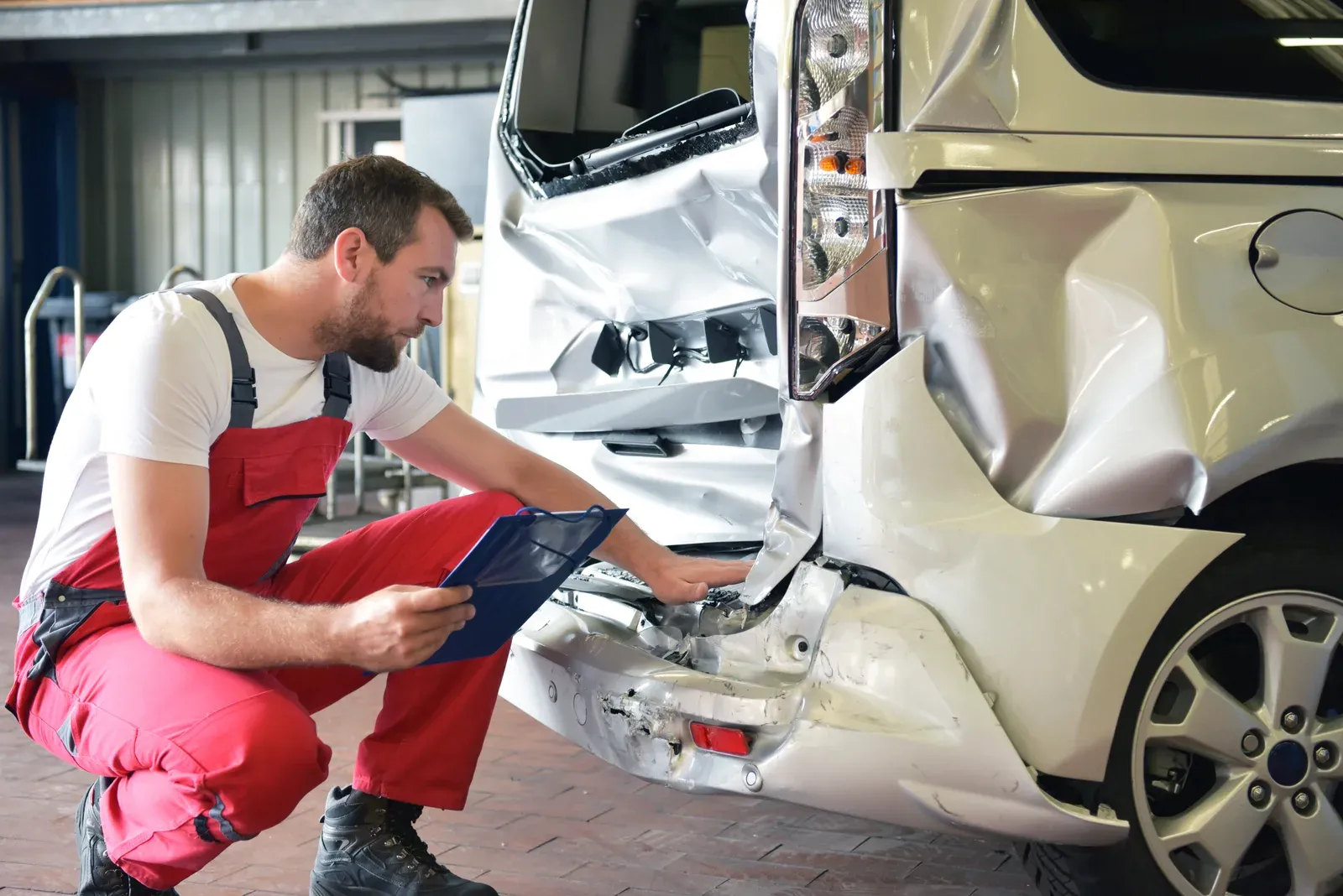
Where the 404 meets the 401, and what it does to cars
The 404 ends at our corner. Southbound traffic from Markham and Richmond Hill gets one exit before the 401 takes over, and that exit is Sheppard, a short ramp whose queue reaches back onto the highway shoulder most weekday mornings. Northbound, the on-ramp from Sheppard climbs into a 404 that is still absorbing the 401 traffic sorting itself into lanes. Half a kilometre south, the weave splits toward the 401 east, the 401 west and the DVP in the space of a few hundred metres. Add Sheppard and Don Mills itself, six lanes each way with a subway underneath and a mall entrance on the corner, and you have a map of where North York collisions happen.
The two kinds of hit are different animals. The ramp-queue rear-end is a 20 to 40 km/h event that crushes a bumper cover, the foam absorber behind it, and often the radar module or parking sensors that live there. The weave sideswipe is a highway-speed glance along a whole side of the car: door skins, mirror, quarter panel, sometimes a wheel and the suspension arm behind it. The intersection hit is the left-turn collision, front corner to front corner, which is the one most likely to move a rail. We see all three every week, usually from people who could have walked here.
The claim, run from a desk two minutes from the 401
If anyone was hurt, call 911 from the scene and wait for the police. If nobody was, and the combined damage looks likely to pass the provincial reporting threshold, the collision needs to be reported at the nearest Collision Reporting Centre; for this part of North York that is usually the one at 32 Division. Your insurance company expects to hear from you promptly, within seven days under the standard Ontario policy. After that, most of the work is ours. Ontario’s DCPD rules mean your own insurance company pays for your vehicle when you are not at fault, in whole or in part, with fault split under the provincial Fault Determination Rules. One caution: the OPCF 49 endorsement removes DCPD, Collision or Upset and All Perils together, so a driver who signed it has no coverage for collision damage of any kind and cannot recover from the other driver either. Comprehensive is what is left. Check your policy, or ask your broker, before assuming a not-at-fault repair is paid for.
Your insurance company may read you a list of preferred shops. In Ontario that list is a suggestion, and the choice stays with you. Bring the file here and our estimator opens the claim, meets the adjuster, sends teardown photos with every supplement, and pushes for OEM parts wherever the repair touches a safety system. The adjuster conversation is available in Mandarin too.
What happens once the covers come off
A photo estimate prices the outside of a car, which is why ours is a starting number given quickly so you can plan. The final estimate is written after teardown: bumper cover, liners, lamps and trim off, every broken bracket and crushed absorber photographed and listed. That keeps the supplement honest and the parts order complete. Where the hit reached structure, the car goes on the measuring system before and after any pull, and the readings go in your file.
Refinishing is matched to your paint code, tinted to how your panels have aged, and blended into the neighbouring panel so the repair does not show in the mall lot at noon. Radar, cameras and parking sensors behind a replaced cover may require recalibration, and we say so up front rather than after. The last step is a road test on the roads the car actually lives on, which around here means the Sheppard ramp and the Don Mills lights.
- Photo estimate to start the plan, final estimate after teardown
- Structural measurement before and after any pull, documented for the claim
- Colour blended into adjacent panels, lifetime warranty on the refinish
- Sensor and camera recalibration flagged early where the hit involved them
Questions people ask
I was rear-ended in the queue on the Sheppard off-ramp. Who pays for my repair?
Your own insurance company does, under Ontario’s DCPD coverage, provided you still have it on your policy. Fault is assigned under the Fault Determination Rules, and a driver hit from behind while stopped is normally not at fault. We open the claim and deal with the adjuster from here; your part is the notice call within seven days.
My insurance company gave me two shops near the 401 to use. Do I have to pick one of them?
No. Ontario drivers choose their own repair shop. A preferred-shop list is a recommendation the insurance company is allowed to make, not a condition of the claim. Tell the adjuster the car is at Crash Consultant at Sheppard and Don Mills and the file moves to us.
The car drives but the bumper is hanging. Can I bring it the few blocks to you?
If nothing is dragging, no fluid is leaking and the lights work, a few blocks at low speed is usually fine. If the cover is touching a tire, a lamp is out, or the steering feels off, leave it where it is and we help arrange a tow. A short flatbed ride costs far less than a cover pulled under a wheel on Sheppard.