Two kinds of Richmond Hill collision
The photos we get from Richmond Hill fall into two piles. The first is the highway pile: a sideswipe on the short merge from 16th Avenue or Major Mackenzie onto the 404, where a car joining at 60 meets a lane doing 110 and the contact runs the length of the side. Those hits take a mirror, a door skin, and a quarter panel, and they often push the door far enough that the striker no longer lines up. The second is the Yonge Street pile: a rear-end at a red light somewhere between Richmond Hill Centre and Major Mackenzie, low speed, the cover scuffed and popped back into shape, and everyone shaking hands.
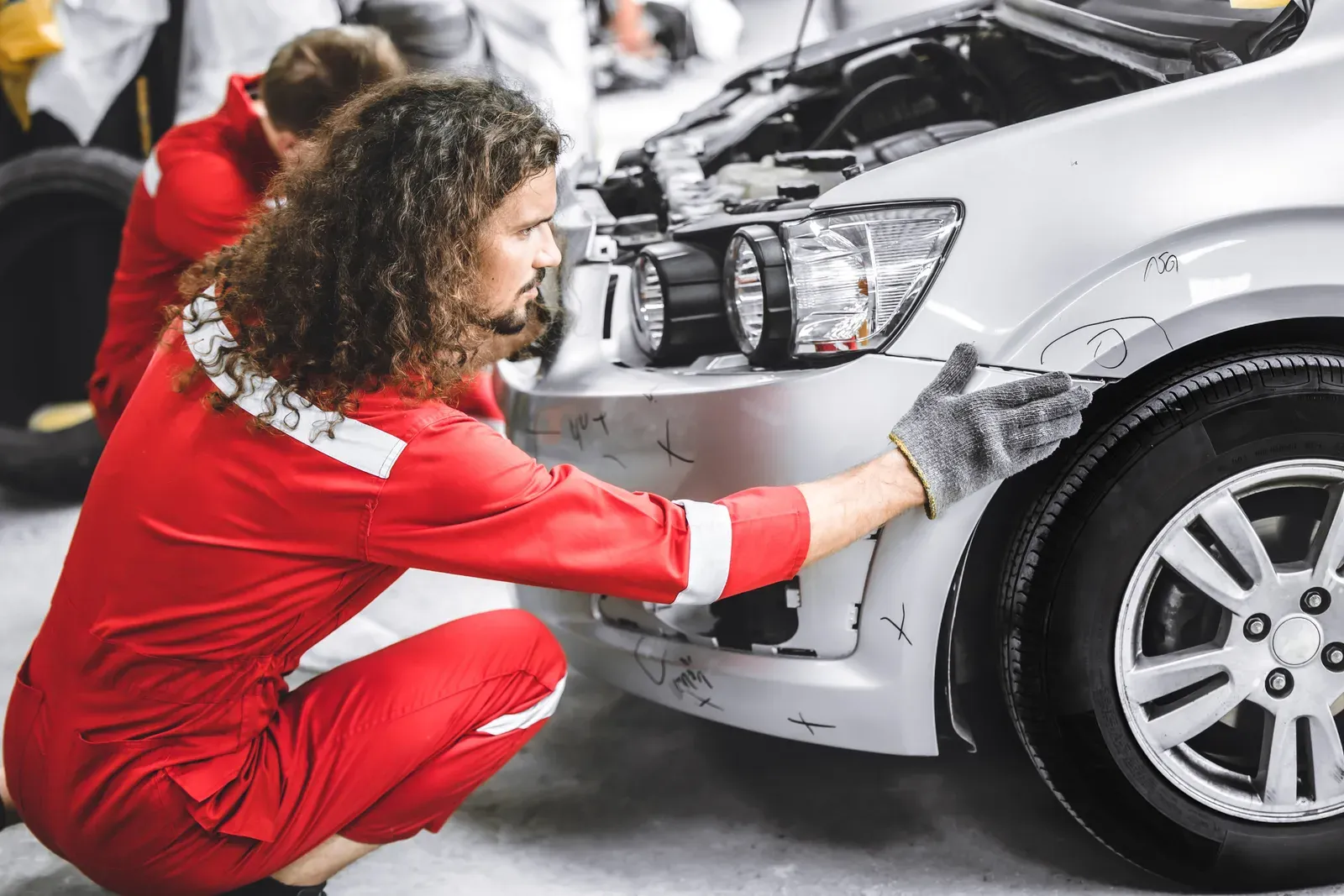
The Yonge pile is the one that fools people. A plastic bumper cover flexes and recovers, so the outside looks like a scuff while the absorber behind it is crushed, the bar is bent, and the trunk lid has been pushed forward a few millimetres — which is why the trunk now needs a slam. On the highway side the concern is different: the car looks obviously hurt, and the question is whether the rocker or the B-pillar moved with it. Both answers come from the same place, which is teardown.
What the 404 sideswipe needs that the Yonge tap does not
The highway sideswipe is a side-of-car job. The door skin is the visible loss, and the first question is skin or shell: a skin pushed in along its length can be replaced on the original door frame, but a hit that reached the intrusion beam means a complete door. Once the door is right, the striker on the B-pillar is realigned so the latch closes without a shove, and the rocker below is measured, because a car shoved sideways at highway speed carries the load down into the sill. The mirror is usually a full assembly, and on a newer car its blind-spot sensor may require recalibration afterwards.
The Yonge tap is a rear-of-car job that hides. The cover comes off first, and behind it the foam absorber is usually crushed flat and the reinforcement bar bent where the other car’s plate hit it; both are replaced, because an absorber does its work once. Then the trunk lid is checked against the quarter panels: a gap closed on one side means the rear body panel moved, and that is a measurement, not a guess. The firm estimate is written at this point, with the hidden parts photographed for the supplement, so your insurance company sees pictures instead of hearing an argument, and the parts are ordered from one list.
- Door skin or complete door, decided by whether the beam and frame were reached
- Striker realigned and the rocker measured after any highway-speed side hit
- Absorber and bar replaced behind a Yonge Street tap, trunk-lid gaps checked
- OEM parts asked for wherever the repair touches a safety part
Who pays, where to report it, and how the car gets down without a second trip
If another driver hit you, your own insurance company pays for your car under Ontario’s DCPD rules, with fault split under the province’s Fault Determination Rules; there is no settling up between the two companies afterwards. Give them notice promptly, and if the combined damage looks likely to pass the provincial reporting threshold, or the other driver did not stop, the Collision Reporting Centre in Richmond Hill is where the report gets made. Anyone hurt means 911 from the scene.
A car that came off the 404 on a flatbed does not need to make the trip twice. Tell the tow operator where it goes — in Ontario that is your call — or tell us and we coordinate the tow from the scene or the reporting centre lot. The rental through your coverage is booked to meet you here. If the claim conversation is easier in Mandarin, that is how we will have it.
Questions people ask
I was sideswiped merging onto the 404 at 16th Avenue. Who pays for my car?
Under DCPD, your own insurance company pays for your vehicle to the extent you were not at fault, and fault on a merge is assigned under Ontario’s Fault Determination Rules. Merges are the contested case: the driver joining is expected to yield, so the other side will often say you came across the line, and the position of the two cars and the damage on each is what settles it. Get the other driver’s details and photograph both cars where they stopped, before anyone moves them. We open the DCPD file and deal with the adjuster from here.
The car still drives after a Yonge Street rear-end. Can I bring it down myself?
Usually yes, if the lights work, nothing is dragging, and the trunk latches. Send the photos first so the estimate is written before you leave Richmond Hill, then the drive down the 404 is the drop-off. If the bumper is hanging or a tail light is out, ask us about a tow instead.
The car is a lease from a dealer on Yonge. Does the collision repair have to go back through them?
No. The lease company owns the car, but Ontario still leaves the choice of repair shop with the driver, and the dealer’s body shop is one option among many. What the lease changes is the standard the car has to meet at return: the inspector looks for aftermarket parts, colour mismatch and gaps, so we write the estimate with OEM parts wherever safety is involved and blend the refinish into the next panel. Check the lease agreement for any notice requirement and let the lease company know a claim is open.
Do you deal with every insurance company, or only some?
Every one. Ontario lets you repair the car at the shop you choose, and the claim process is the same regardless of who your policy is with. We send the estimate, the teardown photos, and any supplement to your company directly, and you get updates from the owner rather than a call centre.