The roadside, in order
People before metal. If anyone is hurt, or if the vehicles are blocking live lanes on the 401 or the DVP, that is a 911 call and everything else waits. Hazards on. If you can get clear of traffic on foot, do it, and stand behind a barrier rather than beside the car.
Once everyone is safe, accept the situation rather than testing it. A car that will not steer straight, is dragging a tire against sheet metal, has lost a wheel’s geometry, is leaking coolant or oil, or has an airbag hanging out of the wheel is not a car you nurse to the next exit. Limping a damaged vehicle home is how a repairable collision turns into a seized engine or a second collision.
Then collect what you will not be able to collect later: the other driver’s name, phone, plate and policy details, photographs of both vehicles where they came to rest, photographs of the wider scene including signals and lane markings, and the exact location. Where nobody was hurt and no officer attended, that documentation goes to a Collision Reporting Centre rather than a police station counter — promptly, the same day if you can, once the damage across the vehicles looks likely to pass the provincial reporting threshold.
You choose where it goes — say it out loud
This is the part that costs people the most money and takes the least effort to get right. In Ontario, the vehicle owner decides where a towed vehicle is taken. Tow operators are provincially certified, they are required to give you an itemized invoice, and they need your authorization — not your resignation.
The truck that arrives first is not automatically your shop’s truck, and the yard being offered is not automatically a place you want your car to sit. Before you sign anything, ask three questions: where exactly is it going, what is the daily storage rate at that address, and what is required to release the vehicle. Get the answers written on the paperwork, and photograph the paperwork.
If you already know where you want the car repaired, name that shop as the destination and the whole problem disappears. If you do not, name a location you can physically get to during business hours the next day, and understand you may need to authorize a second tow later — which is fine, but it is a second bill.
Storage is the quiet expense. It accrues every single day, including days when nobody looks at the vehicle, and it accrues while you are waiting on a callback from an adjuster. A car sitting in a compound for a week and a half generates a line item nobody enjoys reading. Decide fast, even if the decision is provisional.
- Ask for the tow destination address, not just a company name.
- Ask the daily storage rate and the release requirements before authorizing.
- Take your registration, insurance slip, garage remote, parking pass and anything valuable out of the car before it leaves.
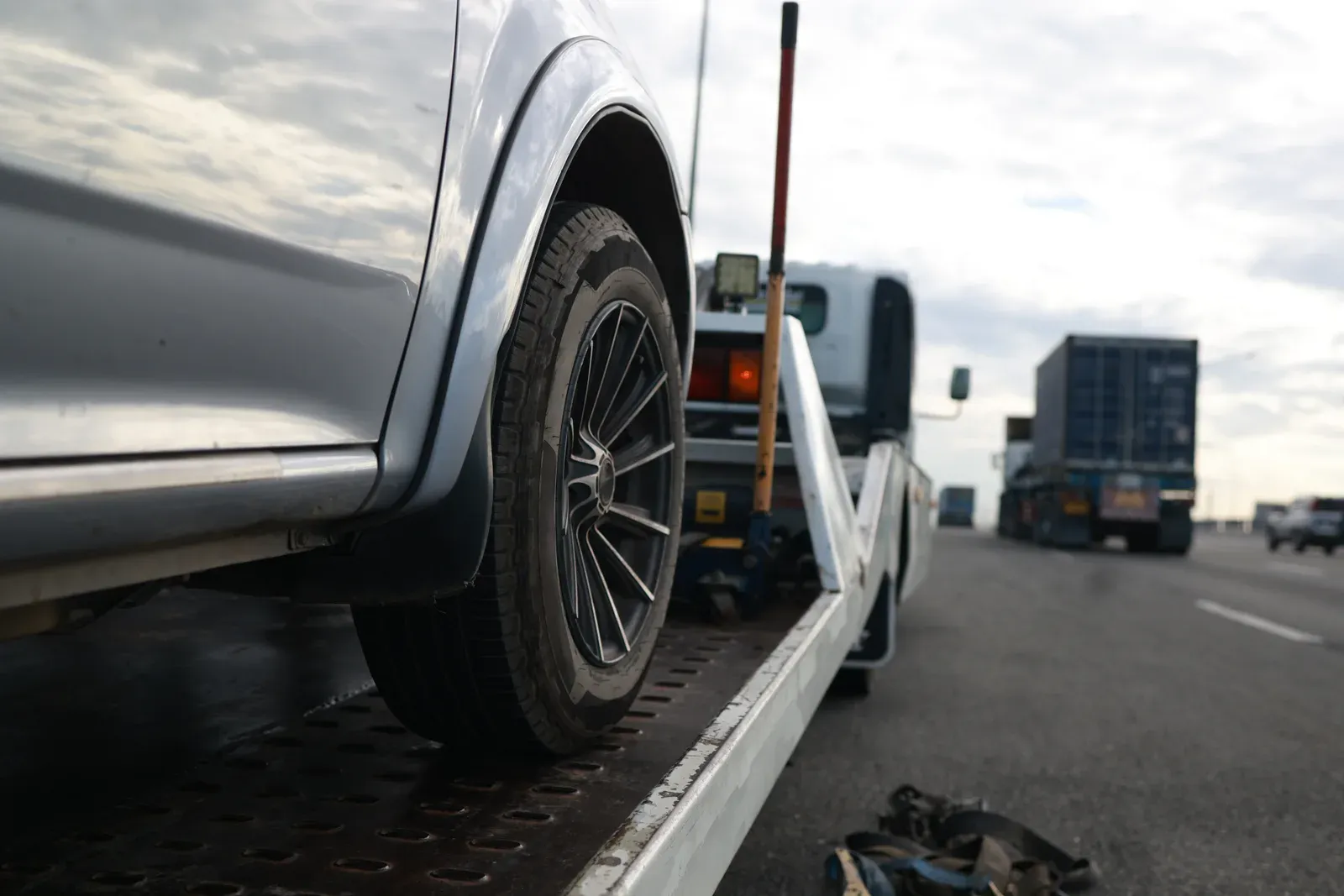
- Photograph the vehicle on the truck bed with the truck’s markings visible.
What happens when it arrives on a flatbed
A car that arrives here undrivable gets photographed as it comes off the deck, before anyone opens a door. Those photographs go into the claim file and they matter later, because they establish the condition on arrival — separate from anything that happened in transit or in a compound.
Then it comes apart far enough to see. A vehicle that will not drive usually has damage in one of a few places: suspension and steering components, a wheel or hub, the radiator and cooling system, the frame rails or unibody structure, or a combination of those with a deployed restraint system. None of that can be estimated from the outside, which is why a reliable estimate on a non-drivable car is written after teardown rather than in the first ten minutes.
Where structure is involved, the car goes on measuring equipment so the deviation is a number rather than an impression. Where restraints deployed, the scope expands to belts, sensors and modules. Our estimator writes it all up, sends it to your insurance company with the photographs, and calls you with the version in plain language — including the possibility that the car is a total loss, if that is what the numbers are pointing to.
We help arrange the tow if the car is still sitting somewhere else. We coordinate it; we are not a tow company. Tell us where it is and we will get it moved here.
The claim, the storage clock and the total-loss question
Towing and storage are ordinarily part of the claim, but they are paid against documentation. That itemized invoice from the tow operator is the document. A handwritten total on a piece of paper with no breakdown is where disputes come from, and by then the vehicle is already in somebody’s yard.
Notify your own insurance company promptly — the standard policy expects notice within about a week, and there is nothing to gain from waiting. If another driver was at fault and you carry DCPD, your own insurance company handles the vehicle damage. Where the OPCF 49 endorsement has been signed, none of that is available: direct compensation, collision and all perils all came off in the same signature, the form is also an agreement not to recover from the at-fault driver, and the repair sits with the owner. Worth knowing before you need it rather than after.
If the vehicle is heading toward a write-off, the arithmetic is actual cash value weighed against repair cost plus salvage value. There is no fixed statutory percentage in Ontario that triggers it. What there is, is a clock: storage continues to run while a valuation is negotiated, and rental coverage has caps. Slow negotiations are not free.
One last thing worth saying to anyone reading this from a roadside. You do not have to accept the first plan handed to you — not the tow yard, not the repair shop, not the timeline. Ontario drivers choose their own shop, and a recommendation from an adjuster remains a recommendation.
Questions people ask
The tow operator at the scene wants to take my car to their own yard. Do I have to agree?
No. You authorize the destination, and you can name a repair shop or a location of your choosing instead. Ask for the yard address, the daily storage rate and the release requirements in writing before signing. If the answers are vague, that is information. A certified operator has no difficulty providing an itemized invoice and a destination.
Who ends up paying for the tow and the storage?
They are normally covered as part of the collision claim, supported by the itemized invoice. Where they become a problem is when storage accumulates for days or weeks while a decision is pending, or when the paperwork is not itemized. Move the vehicle to its final destination quickly and keep every receipt, and this stays a routine line on the file.
Can you tell me over the phone whether my car is a write-off?
Not honestly, and be wary of anyone who does. A non-drivable vehicle has to come apart before the real scope is visible, and structural damage is measured rather than eyeballed. What we can do from photographs is tell you whether it looks like a serious structural event or a dramatic-looking but repairable one, so you know what you are probably facing.
My car is already in a compound somewhere. Can it be moved here?
Usually yes. You will need the release requirements from that yard, which typically means identification, proof of ownership and settling storage charges to date. Tell us where it is and we will help coordinate the move. The sooner it is out, the smaller that storage figure is, so this is worth doing today rather than at the end of the week.