The ten minutes before you take the elevator up
Concrete does not move and it does not apologise. The instinct after clipping a pillar on the way down to P2 is to park and go upstairs and think about it tomorrow, which is exactly when the useful evidence disappears. Roll clear of the ramp so nobody comes down behind you, then get out and look at both objects: the car and the column. A yellow smear on the pillar at door height tells you the contact was flat; a gouge in the concrete edge tells you it was a corner.
Photograph the panel in the garage lighting and again in daylight if you can, because fluorescent tubes hide depth. Get the wheel, the mirror and the rocker in frame too — a pillar rarely touches only one thing. Note the ramp level and the column number if it has one. If your building has a concierge, mention it, mostly so nobody reports an unexplained mark on the structure and comes looking.
The rules change if the thing you hit was somebody else’s car. Then you owe them your name, address and insurance details, which in practice means a note on the windshield with a phone number and a photo of the note where you left it. Nobody needs police for a scrape on private property when there is no injury and the damage is modest, but if two cars are involved and the total looks like it clears the provincial reporting threshold, the nearest Collision Reporting Centre is the right stop on the way home.
Yellow paint, concrete, and what sits under both
Pillar scrapes come in three depths. Yellow sitting on glossy, unbroken clear is transfer rather than damage, and a damp cloth with a spot of polish will start moving it. A scratch a thumbnail snags on as it crosses has cut into the clear and sometimes the colour. A mark with a visible channel is through to primer or bare metal — and on an edge or a body line it usually is, because that is where the film is thinnest.
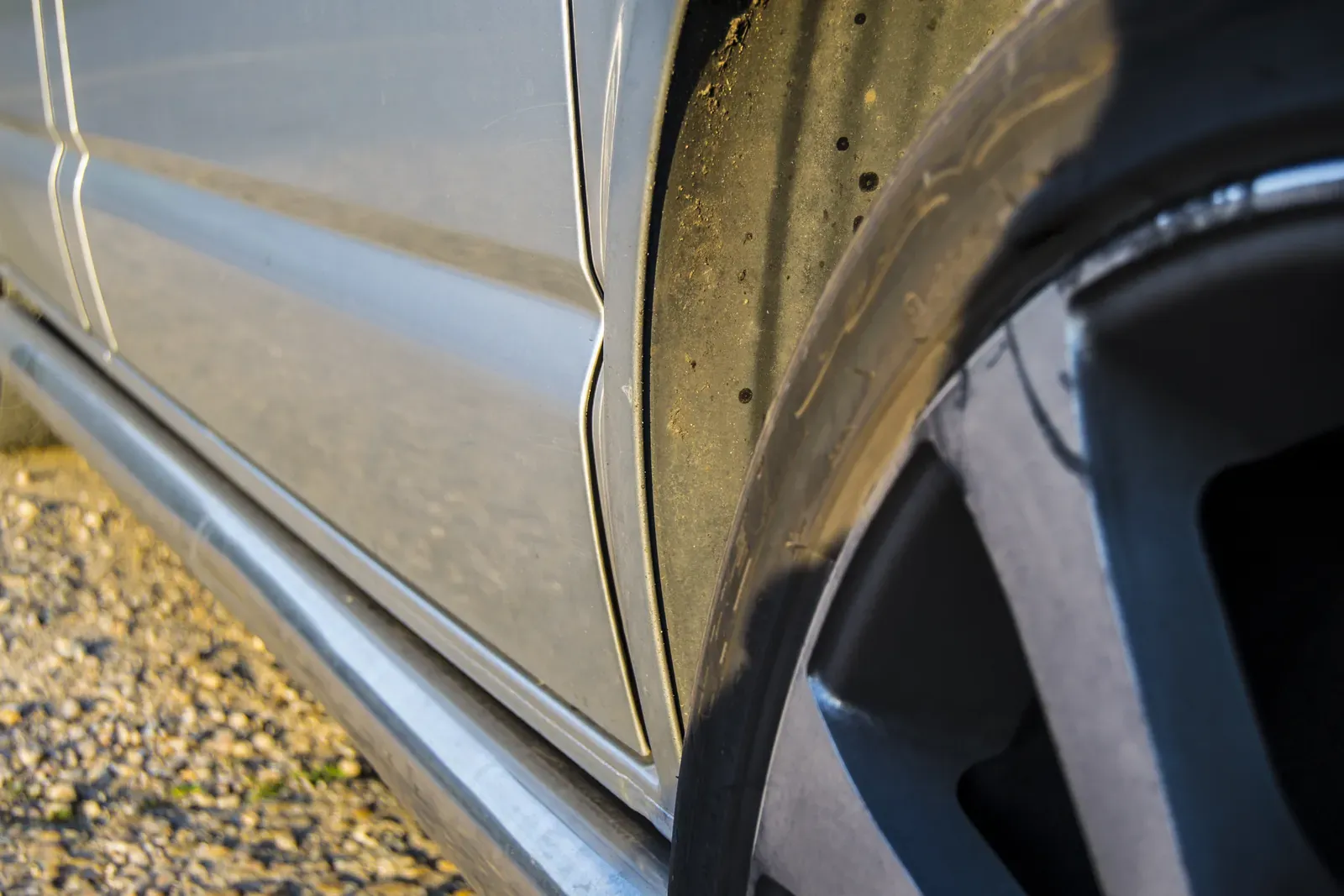
The panel itself matters as much as the paint. A flat door skin that has been rubbed can be sanded and refinished. A door skin with a crease pushed into it has stretched metal that must come back before any colour goes on. Mirror caps are cheap and usually just replaced. Wheels take the worst of it — a rim lip ground flat by a pillar base is a separate repair from the paintwork. Rockers and the lower fender lip pick up the deep stuff because they stand proud of the door.
One more thing that surprises people: the clean-looking scrape that ends in a small dent. Concrete edges catch, then the panel folds slightly at the end of the stroke. That fold is what decides whether this is a two-hour job or a two-day one.
What we do with a garage scrape
Photos taken in daylight, square to the panel and from a low angle so the light rakes across it, are enough for our estimator to tell transfer from damage before the car ever comes in. Where the scrape sits in the clear coat only, machine compounding lifts the yellow and the marks come out without any paint being sprayed at all. That is the outcome we look for first, because a factory panel is always better than a refinished one.
Where the colour is broken, the panel is prepped, filled if the metal moved, sealed, sprayed and then blended into the panels beside it. Blending is not optional on metallics and pearls: colour is mixed to a formula, but the way the flake lands is affected by the gun, the temperature and the panel shape, so the transition is faded out over the neighbouring surface instead of stopped at a door edge. Dent removal without repainting stays on the table where the paint is intact and only the metal moved.
If the wheel took a hit as well, we tell you plainly which parts of it are cosmetic and which are structural. A rim with a flat spot on the lip is a different conversation from a rim with a scuff on the face, and no amount of paint fixes the first one.
A single-vehicle scrape is at-fault, so start with the deductible
A pillar scrape is a single-vehicle collision, which means it lands on your collision coverage, it is recorded as at-fault, and your deductible applies. For a shallow scrape on one door, the repair is very often less than the deductible, and the sensible answer is to pay for it and never open a file. For a door plus a quarter plus a wheel, the answer usually flips. The estimate exists so you can make that call with a number in front of you rather than a feeling.
Your condo corporation’s insurance does not cover your car. The building’s policy covers the building, and the yellow paint you took off the pillar is the property manager’s problem, not a claim you can make against them for your door. If you scraped a neighbour’s vehicle, that owner claims through their own insurance company under DCPD and fault comes to rest with you.
Paying for it yourself keeps the claim file closed, but the policy still asks you to let your insurance company know a collision happened, and a quick call costs nothing. Be deliberate about the repair too, rather than drifting: a scrape you meant to fix in the spring is still on the car at lease-return time.
Why downtown ramps do this so reliably
Most residential garages in the core were laid out when the average car was narrower and shorter than the crossover that now lives in the stall. Helical ramps at CityPlace and along the Yonge corridor were designed to a radius that assumes a small turning circle, the pillars are set at the tightest point of the curve, and the painted stripe on the column exists precisely because the designers knew what would happen. Add a wet tire, a cold morning and a driver watching for the gate to open, and the geometry wins.
Downtown Toronto is about seventeen kilometres from us, roughly twenty to thirty-five minutes up the DVP depending on when you leave. Most garage scrapes do not need a tow or a rental — people drop the car on the way to something else, and we time the work so that they are not without it for longer than the repair actually needs.
Questions people ask
Can the yellow paint just be polished off?
Sometimes the whole thing lifts with compound and a machine, which is the best outcome available. It works when the transfer is sitting on unbroken clear coat. Try a corner of the mark with polish on a cloth: if yellow comes away and gloss comes back, keep going; if a pale line stays put, some paint work is coming.
The scrape is grey underneath. Is that primer or bare metal?
Usually primer on a modern car, and either way it needs sealing rather than leaving. Bare metal starts oxidising within days in a damp garage, and primer is porous, so both drink up moisture and salt. It does not need to be repaired tomorrow, but it should not spend a winter like that.
Will the property manager or my condo corporation pay for the repair?
No. The building policy insures the building, and hitting a fixed part of the structure is your side of the ledger. The only version where somebody else pays is when what you hit was another vehicle and fault sits with its driver, which is rarely how ramp contact happens.
The building says I marked the pillar. Can they bill me for it?
They can ask, though yellow transfer on structural concrete is usually a maintenance note rather than an invoice. If the corporation did pursue the cost of repainting a column, that would be property damage you caused with the vehicle — the liability section of your auto policy exists for exactly that — and it is a separate question from the repair to your own door.