Where to stop when the road has no shoulder
The Don Valley Parkway was never given real shoulders. What looks like one is a gutter with a concrete wall behind it, and standing in it during the evening crawl is how a fender-bender becomes something worse. If both cars still drive, agree with the other driver by hand signal and take the next ramp together: Wynford Drive, Don Mills, Eglinton or York Mills, depending on which way you were headed. Do the exchange in a plaza lot with the engines off.
Before you move, take one photo through the windscreen showing where the cars sat. After that, everything else can happen in the lot: plates, both bumpers, the corner where they met, and a wide shot showing which lane you were in. Swap names, licence numbers, plate numbers and insurance company details. If the other driver is not the registered owner, note whose car it is, because the claim gets opened against the policy on the vehicle.
A crawl-speed tap on the parkway is often below the provincial reporting threshold, but that is a judgement about both cars added together, not just yours. A cracked cover and a broken lamp on one side climbs faster than people think. When it looks close, go to a Collision Reporting Centre and let them decide — it costs an hour and closes off the argument.
A walking-pace tap snaps tabs before it marks paint
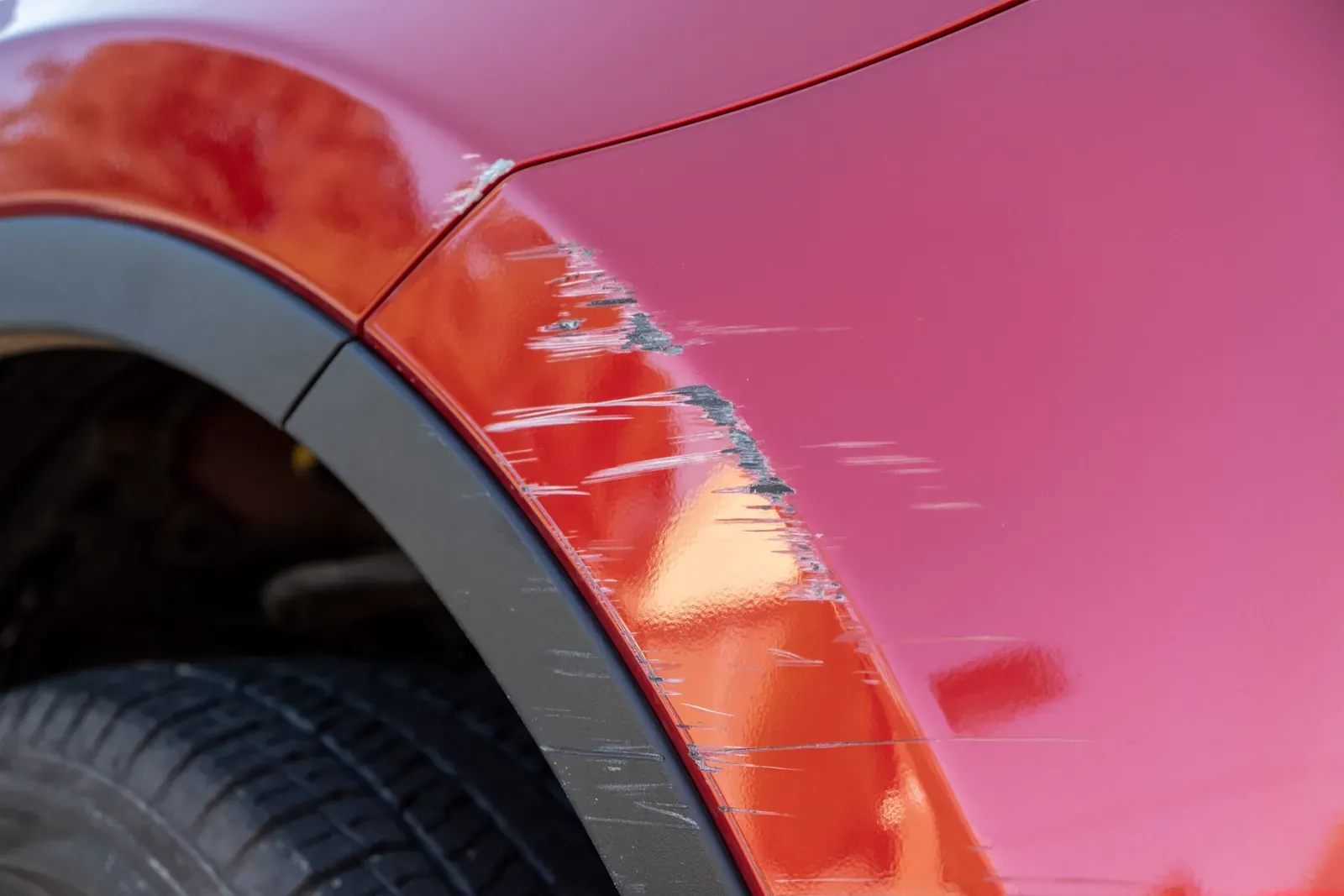
At walking pace the cover usually survives with a scuff in the clear coat, and that is genuinely all it is on a good day. The bad day looks identical from three metres away. Underneath the cover, the mounting tabs that hook it to the fender ends are the first casualty; they snap clean and let the corner of the bumper sag a few millimetres, which reads to the eye as a gap that got wider on one side.
The other regulars: an energy absorber squashed on one corner, a licence-plate bracket pressed into the cover from behind, a lower valance cracked where it meets the wheel arch liner, and a tow-eye cover that no longer sits flush. On the front of a car, the radar behind the badge or in the lower grille sits close enough to the skin that a firm nudge moves its bracket. Parking-sensor rings pop out of their housings and rattle afterwards.
None of that shows in a phone photo taken at night in the rain. It shows when the cover comes off, which takes minutes on most cars and is the only way to tell a scuff from a repair.
How we sort it out
A photo set starts it — straight on, close on the mark, and wide. For a low-speed hit the written estimate usually offers you two roads: refinish the existing cover, or replace it. A cover that is scuffed, gouged or split away from a tab can often be repaired, because the plastic welds and fills well; a cover cracked through a mounting boss or torn at a sensor ring is better replaced than nursed.
Refinishing a bumper is not the same job as refinishing a door. The plastic gets a flex additive and the lower textured section has to be re-textured before colour, or the repair reads as a smooth patch on a grained surface. Colour is blended into the fenders or the quarter so the eye never finds an edge. Paint and refinish work carries a lifetime warranty, which is easy to promise and only meaningful if the prep underneath it was done properly.
If sensors, cameras or radar sit in the panel we are touching, we flag the recalibration question up front. It may be required, and the answer depends on the car rather than on what any shop would prefer.
Is this even worth a claim?
For a small rear-end tap the honest maths is your deductible against the repair. If the work costs less than the deductible, a claim does nothing but put a file on your record. If it costs more, the deductible question is the only one left. Ask what deductible applies to a DCPD claim on your policy — it is not always the same number as your collision deductible, and people are often surprised by that in a good way.
Fault for a rear-end hit in crawling traffic follows the same rules as one at speed: the following driver wears it. The wrinkle on the parkway is the concertina — you get hit, you go into the car ahead, and now there are two files with your name in them. Photographs of your front and rear bumpers, taken before anyone drives off, are the reason that ends up recorded correctly.
If you were not at fault, DCPD means your own insurance company handles the vehicle damage. Paying for the repair directly and skipping the claim is a choice you are free to make — but tell your insurance company the collision happened either way. The policy expects prompt notice whether or not you claim, and if the other driver reports it first, you want your account already on file.
Why the parkway does this every weekday
The DVP is a valley road with short merges and no room to widen. Northbound in the evening, the queue for the 401 ramps backs down past York Mills and the whole lane stops without warning. Southbound in the morning, the climb through Wynford and the Bayview merge stitches three streams of traffic into two lanes at exactly the point where drivers are looking left instead of ahead. Low sun through the valley in October does the rest.
That pattern is why the parkway produces so many bumper jobs and so few dramatic ones. Most cars that come to us from a DVP crawl need a cover, an absorber, some clips and a blend — not a week in the shop. We are minutes off the parkway at Sheppard and Don Mills, which is usually the difference between dropping the car before work and losing a morning to it.
Questions people ask
There is no mark on my bumper at all. Can there still be damage?
It happens more than you would guess. Covers are designed to spring back, so the paint can be perfect while a tab has snapped or the absorber behind it has taken a set. The tell is usually a gap that no longer matches side to side, or a corner that gives when you press it.
The other driver says the tap was too small to bother reporting. Are they right?
They might be, but it is not their call to make for you. Take the photos and the details anyway. People who are relaxed on the roadside sometimes remember the event differently a week later, and a photo of a plate and a pink slip is what keeps the story straight.
Is it legal to leave the parkway before we exchange details?
Yes — moving to somewhere safe is exactly what police ask drivers to do, and it is not leaving the scene as long as you stop and exchange once you are off the live lanes. Agree by hand signal, take the same exit, and do the paperwork in a lot. Driving off without stopping at all is the offence.
How long does a bumper job like this take?
Usually a couple of days once the parts are in hand, because most of it is prep, colour and cure time rather than fitting. A cover that needs ordering in a factory colour can add a day or two. You get a range in writing before the car is booked, not a guess after.