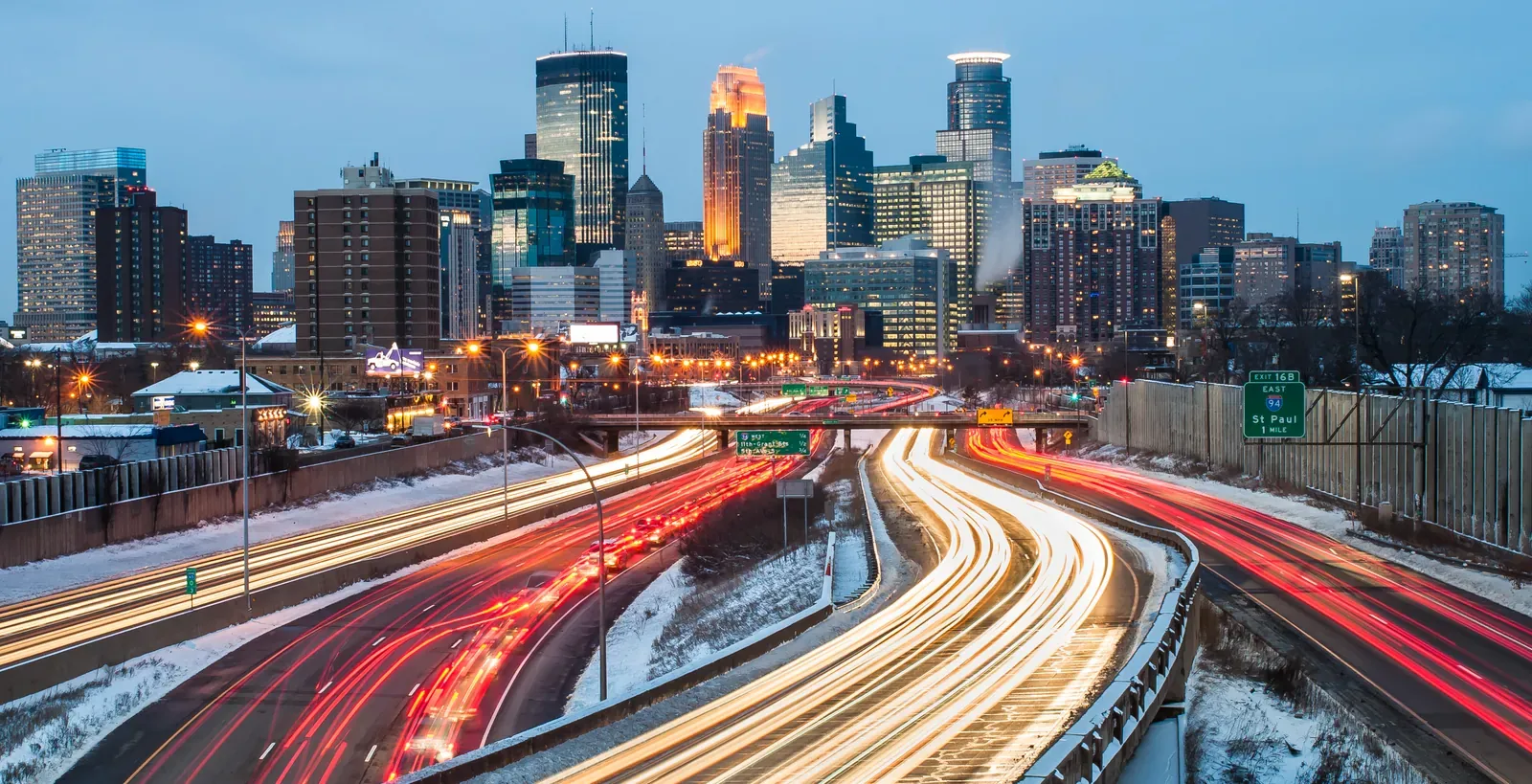
Stopped traffic, and then the hit
The 400 north of the 407 does something particular on a Friday afternoon. Traffic runs at speed, then compresses into a standstill without warning as everyone north of Vaughan tries to reach the same two lanes, and the car three back does not get the message in time. Chain rear-enders in that compression are the single most common way a long weekend starts badly.
The immediate problem is geography. The shoulder up there is narrow, the traffic beside you is not slowing down, and standing between two cars exchanging information is genuinely dangerous. So if your vehicle still moves, put the hazards on, signal your intention clearly to the other driver, and take the next exit together. There are plazas at most of them. Do the exchange in a parking lot where nobody is passing at highway speed.
If the car does not move, stay belted inside with the hazards on unless there is a reason to be out of it, and call it in. Standing on a live highway shoulder is worse than sitting in a damaged car.
- Photograph the damage on both vehicles, plus the plates, once you are somewhere safe.
- Note the exit number, direction of travel and roughly what time it happened.
- Photograph the other driver’s pink slip rather than copying numbers by hand.
- Write down what the traffic was doing — stopped, crawling, sudden brake — while it is fresh.
Report where you are, not where you live
Reporting is tied to where the collision happened, and the instinct to save it for when you are back in the city is the wrong one. Injuries sit outside all of this: those are a 911 call at the roadside with police attending there and then, wherever on the 400 you happen to be. Where nobody was hurt, the report belongs at the Collision Reporting Centre serving the area you were in, once the combined damage looks like more than a minor scrape.
Coming out of the north end of the GTA, that generally means a York Region centre — there are locations in Richmond Hill and Markham — and if you were already well north of Aurora when it happened, call the local detachment and ask where they want it reported. Every region does it slightly differently and they will tell you directly.
Doing it on the way north costs an hour of the weekend. Doing it on the way back means a report filed days later and an adjuster asking why. Your own insurance company also expects prompt notice — the standard policy language is about a week — so make that call from the cottage. Bring the report number home; it goes straight into the claim file.
You can start the whole thing from the cottage
Nothing about an estimate requires the vehicle to be in North York. Take three photographs in decent daylight — one from far enough back to show the whole end of the car, one closer on the damaged area, and one down the length of the panel at a shallow angle so the light shows what is bent. Send them along with the year, make, model and what happened.
Our estimator reads the photographs, writes the estimate and gets it back to you the same business day. It is a written document with the operations listed, not a range someone read off a screen, and it is the same estimate that goes to your insurance company. Mandarin is spoken here if that makes the conversation easier.
From there you can open the claim and have parts identified while you are still up at the lake, so the work is scheduled rather than starting from zero on Monday. Parts get ordered against a booking, and if you need a rental it starts on drop-off day instead of burning through your loss-of-use coverage while a usable car sits in a cottage driveway.
Getting the car home
If it drives and it is safe, drive it. A cracked bumper cover that is not touching a tire, a creased quarter panel, a broken lamp lens taped for the trip — none of that stops a car making it down the 400 on a Sunday. Check tires, lights and fluid levels before you leave, and secure anything hanging so it cannot come loose in traffic.
If it does not drive, do not have it hauled all the way here on the Friday of a long weekend. The better sequence is a short local tow off the highway to a nearby yard or a lot where it can sit legally, then a flatbed down to us timed to arrive Monday morning when the shop is open and the car goes straight inside. Sitting in a compound over a long weekend earns nothing but storage days.
You choose the destination for every one of those moves. Tow operators are provincially certified and must provide an itemized invoice; get the yard address and the daily storage rate in writing before you authorize the first tow, because that first decision is the one that sets up the second.
We help coordinate the run south. Tell us where the car ended up and what condition it is in, and we will work out the timing with you rather than leaving it to a dispatcher who does not know the plan.
How the claim usually lands
A rear-end collision in compressing traffic normally falls on the following driver under Ontario’s Fault Determination Rules, and the fact that traffic stopped abruptly is not by itself a defence. If you were the one rear-ended, that generally makes this a not-at-fault claim, which means your own insurance company handles the vehicle damage through DCPD.
That surprises people who expect to be dealing with the other driver’s insurance company. In Ontario you deal with your own, and this is the smoothest version of a claim there is — provided direct compensation is still on the policy. The OPCF 49 endorsement takes it off along with collision and all perils, and closes off any recovery from the driver who hit you, which leaves a not-at-fault crash entirely self-funded. Rental coverage follows the same logic — not at fault, it usually rides with the claim; at fault, you need OPCF 20 loss-of-use.
One thing holds regardless of where it happened or who caused it: you choose the repair shop. Drivers come to us from Newmarket, Aurora and King City because they would rather have the car repaired near the city on the way to work than near the highway where it broke. We handle the claim side with your insurance company directly, so the paperwork is not what you spend the week after the long weekend chasing.
Questions people ask
I am four hours north. Do I really have to report before driving home?
If it meets the reporting threshold, report it in the area where it happened rather than saving it for the city. Call the local detachment and ask where they want it — some regions use a Collision Reporting Centre, others handle it differently. Filing days later with a vague location makes the claim harder for no benefit to you.
The bumper is hanging but the car drives. Can I make it down the 400?
Only if nothing is contacting a tire, nothing is dragging, all your lights work and no fluid is leaking. Secure loose bodywork properly, not with one strip of tape, because a bumper cover that comes off at highway speed becomes somebody else’s collision. If any of those checks fail, arrange a flatbed instead of gambling on two hundred kilometres.
Can the claim get started while I am still up at the cottage?
Yes, and it should be. Report to your insurance company from wherever you are and send us photographs of the damage for a written estimate. Parts get identified and the booking gets made for the week you are back, which removes several days from the total time the car spends off the road.
The other driver’s insurance company gave me a shop to use up north. Do I have to?
No. Ontario drivers choose their own repair shop, and no insurance company can require a particular one — recommendations are exactly that. If it is more convenient to have the vehicle repaired close to home in the city rather than near the highway where it happened, arrange that, and the claim follows the car.