The next hour, starting with getting off the live lanes
A rear-end hit on the 401 lands you in the worst possible place to sit still. The collectors between Leslie and Don Mills carry lanes of traffic that are either moving at speed or not moving at all, and the driver two cars back has no idea why brake lights have appeared. If the car still rolls, take it to the right shoulder past the ramp gore, or all the way off at the next exit. Hazards on. Everyone stays inside with belts done up until moving traffic is no longer beside the door.
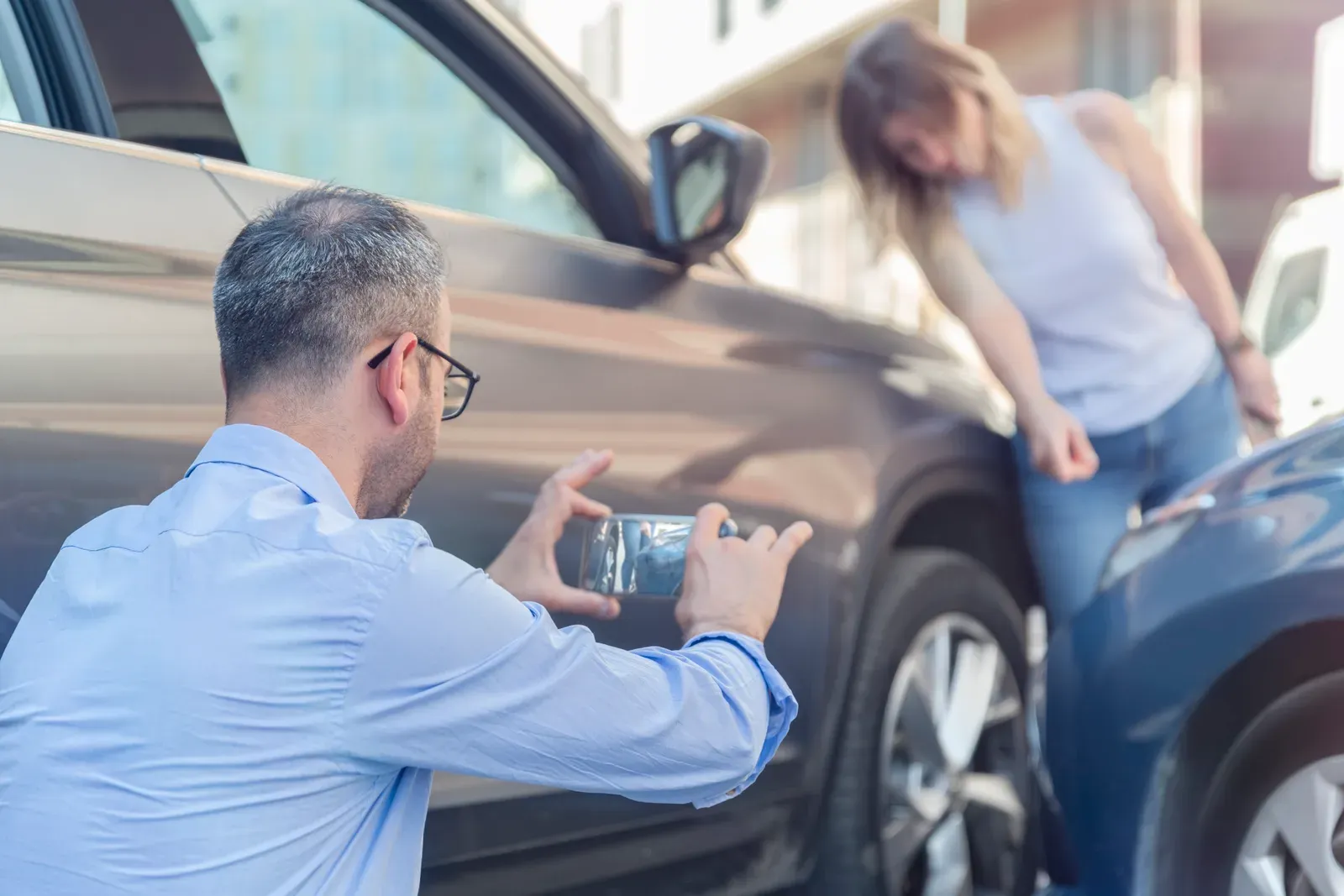
Once you are stopped somewhere sane, work through it in order. Ask whether anyone is hurt, including the other driver. Photograph the two cars where they ended up, then the plates, then the damage from close enough to read the panel gaps, then wide enough to show the lane and the exit sign behind you. Trade names, licence numbers, plates, insurance company and policy number. A photo of the other driver’s pink slip beats writing it out on a phone in the cold.
Police come out when someone is injured, when a driver appears impaired or has no licence or insurance, or when a vehicle cannot be moved. Otherwise Ontario sends you to a Collision Reporting Centre once the combined damage looks like it passes the provincial reporting threshold — and after a highway rear-ender it usually does, because that figure counts the damage to both cars. Go the same day while the details are still exact.
The cover springs back; the crush cans behind it stay folded
The plastic cover is the cheapest thing on the back of a modern car and the worst witness to how hard the hit was. Behind it sits a foam or honeycomb absorber, and behind that a steel or aluminum reinforcement bar bolted to two crush cans that are engineered to fold. A cover that wiped clean can be sitting in front of an absorber flattened on one side and a can already collapsed. That is why the cover comes off before anyone writes a number down.
Past the bar, the items worth finding on a highway hit are the expensive ones to miss: a kink in the rear rail, ripple in the spare-wheel well, a trunk lid whose gap has gone tight on one side, a latch that needs a shove, and exhaust hangers pulled off their rubber mounts. On a wagon or an SUV, a quarter panel that has moved shows up first as a tailgate rubbing its weatherstrip on the way closed.
Anything with parking sensors, cross-traffic alert or a rear camera adds a step. Sensor rings live in the cover, radar modules sit behind the quarter skins, and a hit hard enough to shift the bar can push a module out of aim. Recalibration may be required once the parts go back on, and you hear about that before the car goes in rather than after.
What we do, from first photos to the keys back
Send three photos: one straight at the back of the car, one of the damage from about a metre, one wide enough to take in the whole side. Our estimator reads them and writes an estimate the same business day, in plain language, with the parts named. If the car is not safe to drive, we help arrange the tow instead — and where the vehicle goes is your call in Ontario, whoever ends up paying.
Once the car is here, the cover comes off. Teardown is where a rear-end estimate turns honest, because the absorber, the cans and the rail stay hidden until then. Anything new goes to your insurance company as a supplement with photographs attached, and the owner makes that call rather than passing you a file number. Refinish work is blended into the quarter panels so the repair does not sit as a slightly different shade under the lot lights at Fairview.
Claims run through us with every insurance company, in English or in Mandarin. Rental is arranged through the coverage you already carry and timed to the day the car actually comes in, not the day the file opens.
The insurance reality when someone hits you from behind
If you were stopped or slowing and took the hit from behind, Ontario’s Fault Determination Rules almost always land on the driver who was following. That matters less for the repair than people expect, because the province runs on DCPD: when you are not at fault, your own insurance company pays for the damage to your vehicle, and you deal with people who already have your file open. It is not a favour, and being hit is not a penalty you earned.
Two things complicate it. A driver who signed the OPCF 49 endorsement has nothing to claim on: that signature takes direct compensation, collision and all perils off the policy together, and it is also an agreement not to recover from the driver who caused the damage, so the repair is paid privately. And a chain reaction on the collectors — you get shoved into the car ahead — can end with fault spread across more than one file. Tell your insurance company promptly either way; the standard Ontario policy expects notice within seven days.
You are not obliged to use the shop your insurance company names. A recommendation is a recommendation. Ontario drivers pick the repair shop, and the claim runs the same way whichever one you pick.
Questions people ask
The other driver wants to settle in cash instead of using insurance. Should I agree?
Not before the cover is off. A highway rear-ender routinely turns a clean-looking bumper into an absorber, two crush cans and a bent rail once it is apart, and a figure agreed on the shoulder never covers that. Get the estimate, then decide. If you take the cash and the damage grows, there is nobody left to go back to.
My bumper looks fine. Does it still need an inspection?
Yes. Covers are moulded to flex back into shape and the parts behind them are built to crush, so the outside can lie about the inside. A photo estimate takes a few minutes and costs nothing, and it tells you whether teardown is worth booking.
Do I have to go to a Collision Reporting Centre?
When nobody is injured and both cars drive, you report at a centre rather than waiting on the shoulder for an officer — and you should when the damage across both vehicles looks past the provincial reporting threshold. Toronto has centres in North York and Scarborough, and York Region runs its own.
Can I bring the car to you if my insurance company already sent me somewhere?
Yes. Tell them where the vehicle is going and the claim follows it. The insurance company may suggest a shop from its preferred list, but the choice belongs to you, and switching does not slow the file when the shop handles the paperwork.