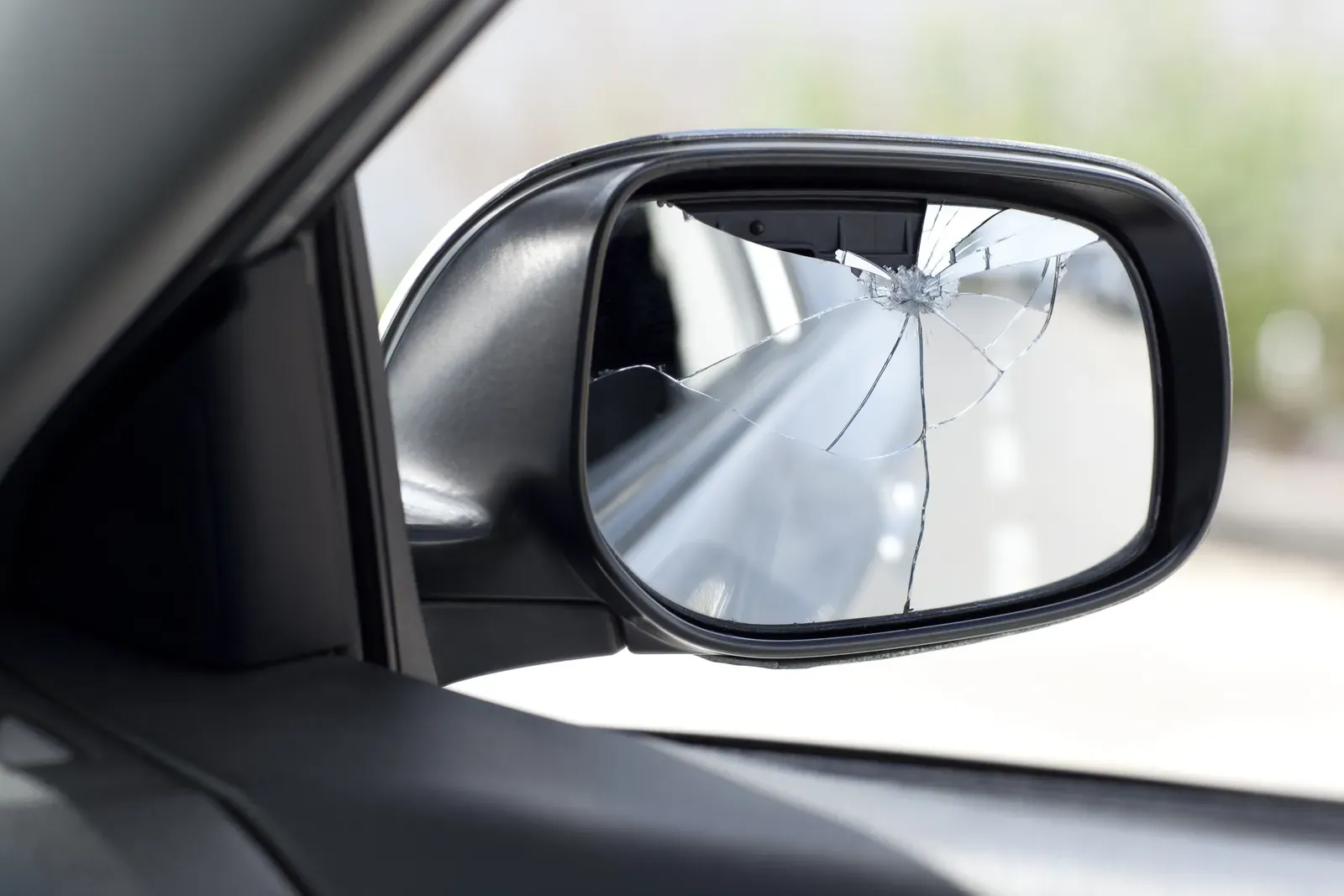
The first hour after you find it
There is a specific sinking feeling that belongs to walking out at eight in the morning and seeing the mirror hanging by its wires. Before you touch anything, take the photographs: the car as it sits, both wheels against the curb, the gap to the vehicles in front and behind, and the damage from three distances. Once the car moves, that geometry is gone, and it is the part that shows the damage happened while the vehicle was stationary and legally parked.
Check the windshield, the wiper and the door handle for a note. Then look up. On residential streets in Riverdale, along the Danforth and through most of East York, half the porches have a doorbell camera pointed at the sidewalk and the parked cars beyond it. Neighbours are generally willing, but the footage rolls off on a schedule, so knocking the same morning is what makes the difference.
Report it. Where the other driver is unknown, a police report or a visit to a Collision Reporting Centre is what turns your account into a documented incident, and the reporting centres take parked-car hit-and-run reports as a matter of routine. If somebody did leave details, you have a normal two-vehicle claim and the same reporting threshold applies as it would on any road: police or a centre once the combined damage looks past the provincial reporting threshold.
The rear corner takes more of these than the mirror does
The classic overnight street hit is a misjudged parallel park: the arriving car swings in short, and your rear corner wears it. The bumper cover is scraped in an arc, the bracket behind the corner is broken so the cover no longer sits tight, and the tail lamp is cracked at its mounting tab. Lamp lenses do not repair; they replace, and on cars with LED units the lamp can be the biggest number on the estimate.
A car that was dragged along rather than backed into shows a different pattern. Look at the wheel face and the tire sidewall for grinding, at the arch lip for a fold, and along the quarter panel in raking light for a shallow crease that a straight-on photo will never show. A vehicle shoved bodily sideways can also climb the curb, which is why the first photographs — where the tires sit against the concrete — are worth taking before anything moves.
A mirror folded flat or hanging by its wires is its own subject, with its own parts-and-wiring questions, and our side-mirror page walks through them. One more habit worth ten seconds: check the gutter and under the car before you drive off. Notes get tucked under wipers at night and are on the road by morning more often than people believe.
What we do about it
Photos of the mirror, the door and the surrounding panels get you a written estimate the same business day. For mirrors, the first question is which options yours has, because the part number changes with heating, folding, signal, camera and blind-spot monitoring, and ordering the wrong one costs days rather than dollars. We flag whether an aftermarket assembly exists for your car and what it gives up compared with the factory part, and we push for the factory part where a driver-assist function runs through it.
Painted caps and covers are colour-matched and blended into the door and fender so the new part does not sit brighter than the panel it lives on. Where the door skin was creased, the metal is worked and refinished, and where a blind-spot module or a camera has been disturbed, recalibration may be required — that is a check we do rather than a box we tick.
Insurance-direct handling means the file runs through the shop rather than through you. Our estimator sends the photos, writes the estimate, and deals with the adjuster directly, which for a hit-and-run matters, because those files ask more questions than a straightforward two-car collision.
The insurance reality of a hit-and-run
DCPD — the coverage that pays for your vehicle when somebody else is at fault — requires an identified, insured vehicle to point at. A driver who left the scene gives you neither. So a genuine hit-and-run does not run through DCPD; it runs through your own coverage for an unidentified vehicle, with your deductible applying, and the police report is what supports it.
You are not assigned fault for a parked car being struck. That is worth saying clearly, because people worry about it. What can happen instead is that the claim is recorded on your history as a not-at-fault collision loss rather than an at-fault one, and those are treated differently. If the other driver is later identified — the camera footage produced a plate, a neighbour saw it — the file can move onto DCPD and the deductible question changes with it.
Report to your insurance company within the week even if you have not decided whether to claim. Notice and claiming are two different acts, and giving notice keeps the option open while you look at the estimate.
Why street-parked cars get hit at all
Permit parking on this city’s older residential streets leaves a single moving lane between two rows of cars, and every delivery van, contractor truck and snow-clearing operator has to thread through it. On the narrower streets off the Danforth and around Pape and Chester, mirror-to-mirror clearance is genuinely tight, and in winter the plowed edge pushes traffic further toward the parked side. Overnight, most of these happen without anybody being awake to see it.
From that part of the city we are a straight run up the Don Valley to Sheppard and Don Mills — the Danforth is about thirteen kilometres away, roughly fifteen to twenty-five minutes outside rush hour. A mirror and a door edge is usually a short job, and it is the kind of repair we would rather schedule around your week than keep the car for a week to do.
Questions people ask
Is it worth reporting when the other driver is long gone?
Yes. Without a report there is no dated record of the damage, and an insurance company looking at an unidentified-vehicle claim relies on exactly that. It also protects you if the other driver turns up first with a different version of events.
Can I just drive with the mirror taped up?
For a day or two, carefully, but a mirror is required equipment and a hanging one is both a hazard and an open door harness collecting water. Wires that sit wet in a jamb corrode at the connector, and that turns a mirror job into an electrical one.
Does a hit-and-run claim count against me?
You are not at fault for a parked vehicle being struck. The loss still appears on your claims history, but as an unidentified-vehicle or comprehensive claim rather than an at-fault collision, and those are weighed differently. Ask your insurance company how it is being coded before you decide.
The mirror has a camera in it. Does that change the repair?
It changes the part and it may add a calibration step. Assemblies with cameras, blind-spot radar or heating are specific to the trim, and the aftermarket versions do not always support every function. Where a safety system runs through the mirror, the factory part is what we recommend.