Flemingdon Park, the Science Centre corridor, and curb stops
The bumpers that come up from Don Mills have a few signatures. The stretch of Don Mills Road from Eglinton south past the Science Centre site and through Flemingdon Park is dense, bus-heavy and slow, and the rear-end tap at a light is its standard product. That tap has a look: the round tow-hook cover pops out and vanishes under the next car, a crack hides beneath what reads as a scuff, and the tabs that clip the cover to the fender shear on one side so the corner stands a few millimetres proud. North of Lawrence the damage changes shape — the curb stops in the plaza lots and the sloped entrances at the Shops at Don Mills catch the lower lip of a front bumper on the way in and grind it again on the way out, leaving a strip of gouged bare plastic below the paint line.
The underground garages along Don Mills contribute the corner smear from a pillar. And every bumper on a car built in the last decade carries something: parking sensors, a camera, or a radar unit behind the badge. Repairing the cover is the easy part; confirming the sensors behind it still see straight is the part that may require a recalibration before the car goes back on the road, and we say so on the estimate rather than after.
What a Wynford tap breaks that a Shops ramp scrape does not
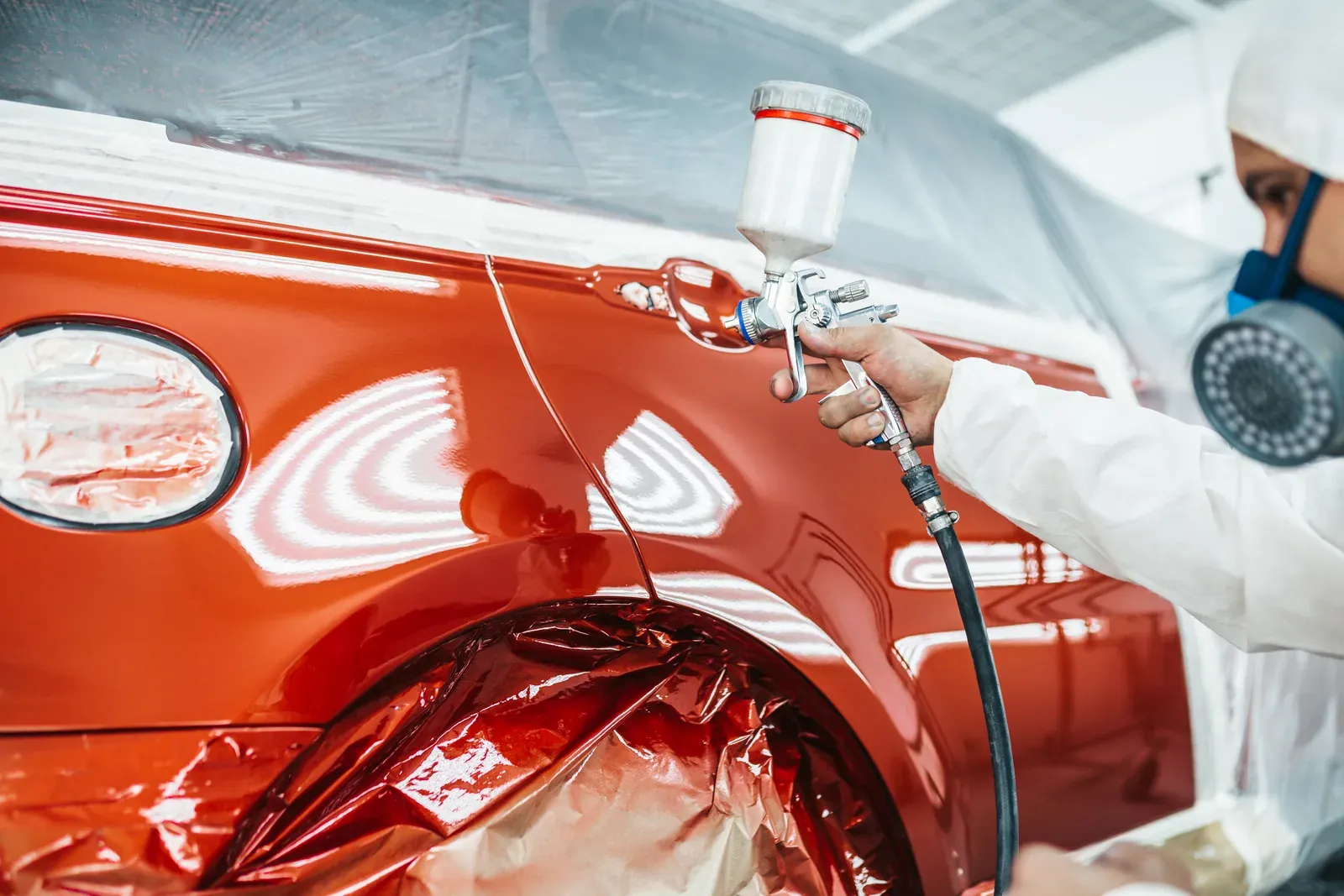
The two damages are different jobs because of what sits behind the paint. A lip gouge from a ramp or curb stop touches nothing but the cover: it is sanded, filled with a flexible filler, refinished and blended, and the structure above it is rarely disturbed. A rear-end tap from the Wynford queue loads the whole stack — cover, foam absorber, then the reinforcement bar bolted to the body — so a cover that popped back into place can still be hiding a crushed absorber and sheared tabs. Cracks away from the corners are ground out in a V, welded with plastic rod from behind and reinforced with mesh; broken mounting tabs, a tear through a sensor opening, or a spent absorber tip the job to replacement, with OEM asked for on the absorber and bar because the car’s crash behaviour was designed around them.
When the car is also the job: rideshare and delivery bumpers
A good share of the cars on the Flemingdon stretch are working vehicles — rideshare in the evenings, deliveries all day — and a working car earns nothing while it sits in a shop. For those drivers the order of the job matters more than anything. Our estimator prices the damage from your photos, orders the replacement cover or confirms the weld before you stop driving, and books the booth so the car arrives, is repaired and leaves in the shortest stretch the paint allows. A repair and refinish is usually a couple of days; a replacement with sensors runs longer only when the part has to come from the manufacturer, and the estimate says so up front.
Claims work the same way whether the car is personal or working. A tap you took from behind on Don Mills is a DCPD claim through your own insurance company; a lip scrape on a ramp is your own doing and usually cheaper to pay directly than to run past a deductible. Where the policy includes a rental it is booked for drop-off morning — and if the car is used for rideshare, it is worth confirming with your insurance company that the policy and the rental reflect that use before the claim rather than after.
- Repair where the cover allows it, replacement where the tabs or absorber are gone
- OEM parts requested for the absorber and reinforcement bar
- Sensor and camera positions checked, recalibration flagged on the estimate
- Cover ordered before the car arrives so the visit is one trip
Questions people ask
The rear bumper on my car has a crack from a tap on Don Mills near the Science Centre, but it is still attached. Do I need a new one?
Not necessarily. A single crack away from the corners and the sensor openings can be welded from behind, reinforced, and refinished so it disappears. If the tabs that hold the corners to the fender have snapped, or the absorber behind the cover is crushed, replacement becomes the better repair. The photos usually settle it.
The tow-hook cover popped out after a tap at Wynford. Is anything behind it bent?
Sometimes. The cap covers a threaded socket that runs back to the reinforcement bar, so it pops loose in almost any tap and means little on its own. What matters is whether the plastic around the opening has cracked and whether the absorber behind the cover took the hit. Send one photo of the opening and one of the whole bumper from a few steps back; the cap itself is a small part we order alongside the paint.
Is a bumper scuff from a curb stop at the Shops at Don Mills worth an insurance claim?
Usually not. A scuff on the lower lip is a sand-and-refinish job that sits close to a collision deductible, and it is your own fault under the rules, so most people pay for it directly and keep the claim off their record. If the impact cracked the cover or pushed the fog lamp in, the numbers change, and our estimator will tell you which side of that line you are on.