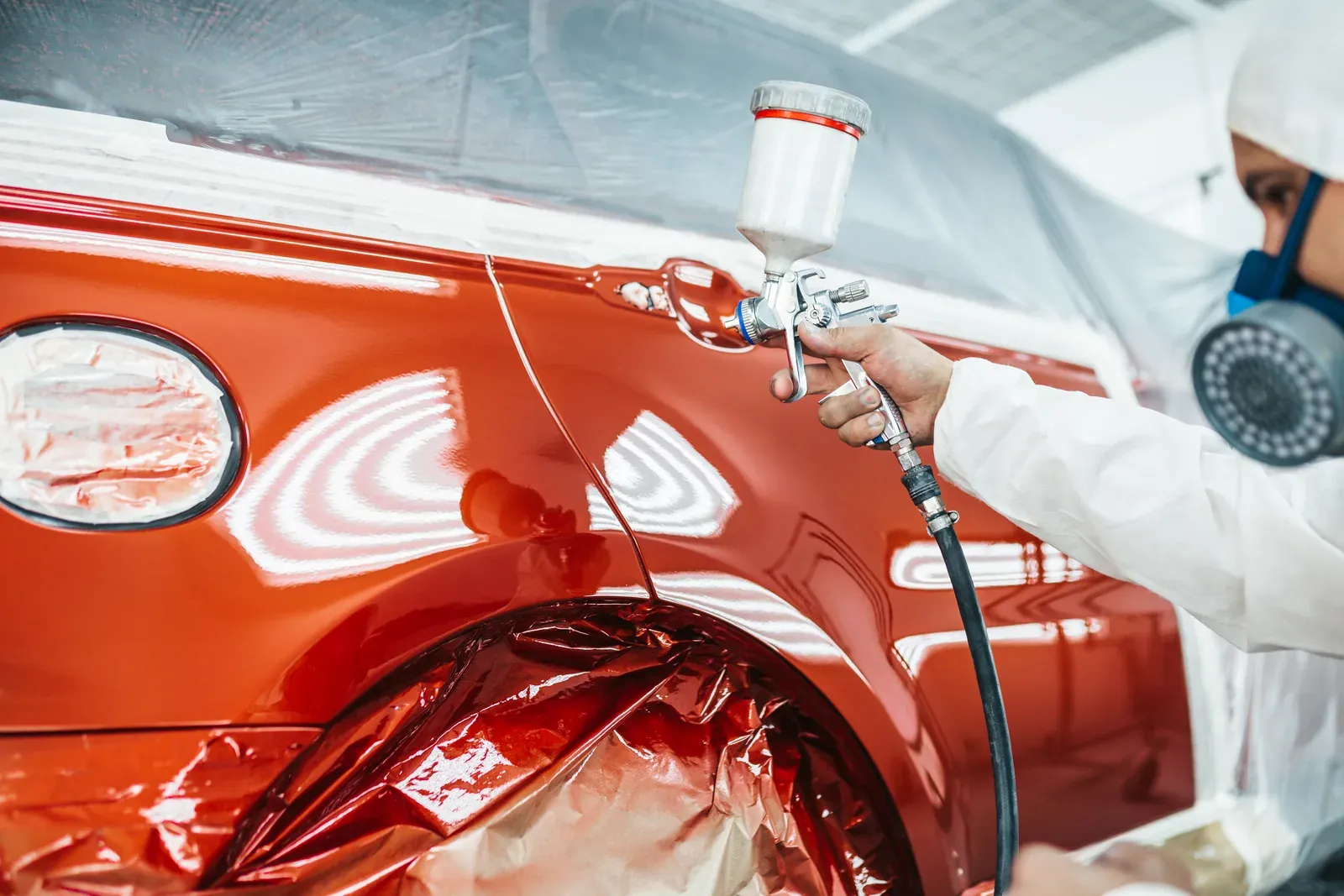
The bumper is four things, and only one of them is plastic
What you point at and call the bumper is the cover: a moulded skin, usually a thermoplastic olefin or polypropylene blend, that carries the paint and the styling and almost none of the impact load. Behind it sits an energy absorber, typically a moulded foam block or a plastic honeycomb. Behind that is the reinforcement bar, a steel or aluminum beam bolted to the rails, which is the part doing the crash work. Holding it all in place are brackets, retainers and a set of moulded mounting tabs.
On a growing number of vehicles there is a fifth category built into the cover: ultrasonic parking sensors, a forward radar unit behind the grille or emblem, and sometimes a camera. Those change what a bumper repair involves after the paint is dry.
Knowing which layer is damaged is the whole diagnosis. A scuffed cover with an intact beam is a refinish. A pushed-in beam is structural work regardless of how the cover looks.
Reading the damage
Scuffs and abrasions from a curb or a pillar sit on the surface. They sand out, prime and refinish, and there is nothing structural to address. Gouges that dig into the plastic need filling but not welding, provided the material is not perforated.
Cracks are the dividing line. A crack that stops in open plastic away from the mounting points is a good repair candidate. A crack radiating from a bolt hole, or one that runs through the area where the cover clips to the fender, is fighting against the forces that hold the part on the car.
The tabs are what usually decide it. Those thin moulded ears around the edges and in the wheel arches carry the whole cover, and when several snap off, the part will never sit right again no matter how good the surface repair looks.
- Surface scuff or scratch — sand, prime, refinish
- Gouge with the plastic still continuous — flexible filler, then refinish
- Clean crack in open plastic — weld from both sides, reinforce, refinish
- Multiple torn mounting tabs — replace the cover
- Cracked sensor or camera housing — replace, then address calibration
Plastic welding and reinforcement
A proper crack repair starts with identifying the plastic, which is stamped on the inside of the cover as a code such as PP, TPO or PC/PBT. The rod used to weld it has to match, or the joint will not fuse. The cover comes off the vehicle and gets washed on both sides, because mould release agents and road grime prevent adhesion.
The crack is then V-grooved along its length on both faces, and welded — heated air or nitrogen driving the rod and the parent material together into a single mass. The back of the repair is reinforced, usually with welded-in mesh or stainless staples bedded into the plastic, sometimes with a two-part structural adhesive over a fibre backing. Reinforcement is what stops the crack from reopening the first time the bumper flexes on a cold morning.
The front is then contoured with a flexible body filler formulated for plastic. Rigid filler is the classic mistake here: it cracks along the repair line within a season, because the panel under it moves and the filler does not.
Why painting plastic is its own discipline
Bare plastic is a poor surface for paint to grip. Where sanding has exposed raw material, an adhesion promoter goes down first — a thin, almost invisible coat that chemically prepares the substrate so primer will bond. Miss it and the finish looks perfect leaving the shop and lifts in sheets a year later.
Some paint systems then call for a flex additive in the primer or clear, which keeps the film elastic enough to move with a cover that deforms in a car wash and shrinks in a cold snap. Whether it is used depends on the manufacturer’s recommendation for that particular product line.
Covers are almost always sprayed off the vehicle on a stand. That lets the painter reach the underside of the lip, the wheel arch returns and the top edge with even coverage, and it means colour can be blended into the fenders on either side afterward — plastic takes metallic slightly differently than steel does, so a bumper that matches on a card can still need a fade at the joint.
When replacing is the better call
A repair that is technically possible is not always the right answer. If the cover has torn away from several mounting points, the repair time climbs past what a new part costs and the result is a cover that fits slightly worse than the one you had. If the damage runs behind the absorber and has distorted the reinforcement bar, the bumper is not the problem to solve first.
Parts availability comes into it too. A common cover for a high-volume model may be on the shelf in the GTA and in the booth the next morning; a cover for a newer or less common vehicle can take days to arrive and longer if it is painted-to-order. That trade-off between repair time and parts lead time is part of what our estimator weighs when writing the estimate.
Where sensors sit in the cover, replacing brings its own step: the sensor housings and brackets have to sit at their designed angles, and after any removal or replacement of a bumper the vehicle may require recalibration before the driver aids read the road correctly again.
A replacement cover is also not a finished part. It arrives in raw black or grey primer and has to be prepared, sealed and refinished in your colour, with the same blend into the fenders that a repaired cover needs. So “replace” never means simply bolting on a new piece — the paint work is identical either way, and it is the plastic repair time that comes off the estimate.
Questions people ask
Can a cracked bumper cover really be as strong as a new one?
For the job the cover actually does — holding shape, carrying paint, staying attached — a welded and properly reinforced repair holds up well. The cover is not a crash structure; the reinforcement bar behind it is, and that part is inspected and replaced separately if bent.
Why does the shop need to take the bumper off for a small scuff?
Because the edges matter. Colour and clear have to wrap around the lip and into the arch returns, which cannot be reached on the vehicle. Removing the cover also exposes cracks and broken tabs behind the surface that would otherwise be missed.
My bumper is only scuffed but the parking sensors now beep constantly. Why?
Impact can shift a sensor in its housing or crack a bracket without leaving much of a mark outside. A diagnostic scan reads the fault codes, and the sensor is reseated or replaced. Recalibration may be required afterward depending on the vehicle.
Will paint on a repaired bumper match the fenders exactly?
That is what the blend is for. Plastic and steel reflect metallic flake a little differently even with identical paint, so colour is faded into the adjoining fenders rather than stopped at the gap, and the result is judged outdoors at a shallow angle.