Backing out across the tracks
The angled parking on the side streets is the Beaches’ signature bumper hazard. A car nosed in at a slant has to reverse blind into a street barely wider than two cars, with the 501 tracks a few metres away on Queen and a parked car on either side, and the rear corner that swings out first is the corner that meets the neighbour. Multiply that by a neighbourhood that parks that way every day and a rear cover comes to carry a history of small contacts: scuffs at both corners, a lip cracked where a taller bumper rode over it, a plate frame printed into the paint.
The front takes its share on Lake Shore at Woodbine, where four lanes of beach traffic stop without warning and the cover is the first thing to touch. And it takes it in the lots: the Woodbine Beach lots have wheel stops that catch a low front lip, and the concrete ends of the rows have finished more than one corner in the dark after a bonfire.
Windrows and plow blades
Winter does the rest. On the narrow side streets the plow has nowhere to put the snow except against the parked cars, and by February the pile along each one is packed hard. Pulling out through it on a Monday morning pushes the lower grille inward and springs the cover off its side clips, and the driver sees neither until the car is on Queen. And cold leaves the plastic brittle, so a tap that would flex in July cracks in January.
A cover that has hung off its clips for a winter also lets salt into the space behind it, which is worth knowing before the sensors start to complain.
What the estimate looks at behind the plastic
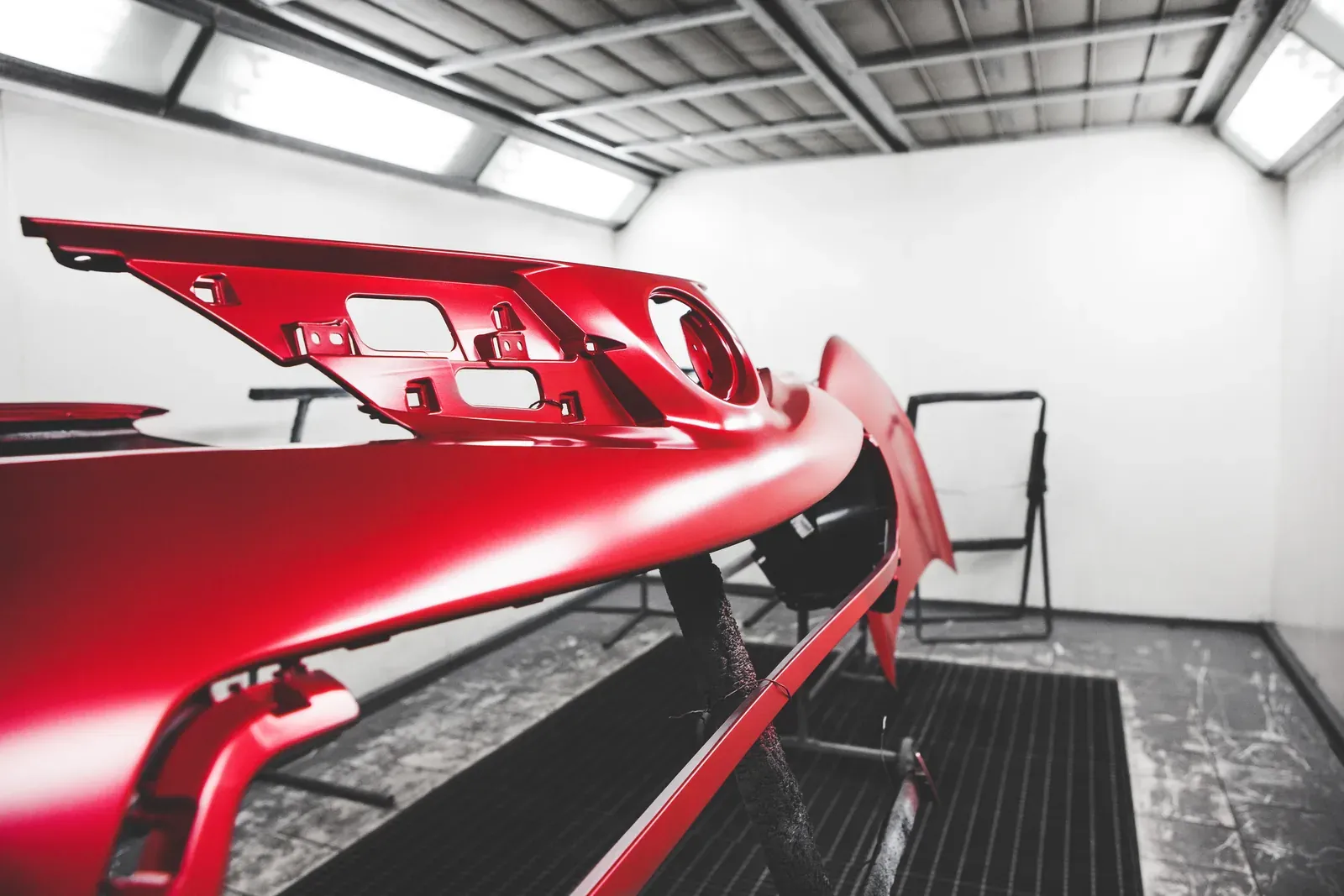
What you see is skin. The cover is a shaped piece of flexible plastic, and the crash protection is the foam absorber and the steel or aluminum bar bolted to the rails behind it. A parking tap touches the cover alone; a windrow or a wheel stop at walking pace compresses the absorber and can bow the bar, and neither shows until the cover is off. Newer cars bury electronics in the cover too: ultrasonic parking sensors in cups around the edge, and at the front a radar module behind the emblem that runs adaptive cruise and emergency braking. A corner tap does not have to crack anything to push a sensor out of its cup or tilt the radar a degree. Recalibration may be required after the repair, and the estimate says so up front.
Flexible bumper plastic takes a weld. The crack is opened, plastic-welded from the back, reinforced, filled and textured, then refinished with the rest of the cover, and on a cover that is otherwise straight it is the cheaper and equally durable option. We replace instead when the split runs through a sensor mount, when the mounting tabs at a corner have snapped, when the plastic has aged brittle, or when a gouge has taken the texture off past what fill can rebuild. Where a bar or a sensor is involved we ask your insurance company for OEM parts and write down why. A repaired cover is a few days; a replacement with a recalibration is longer. If the cover is dragging, tape it and take Woodbine to O’Connor rather than the parkway, or let us arrange the tow.
- Cracks welded from behind when the plastic and tabs are sound
- Absorber and bar checked with the cover off
- Sensor and radar recalibration written into the estimate when it may be required
Questions people ask
The rear cover is covered in angled-parking scuffs but nothing is cracked. Repaint or replace?
Refinish it. The scuffs sand out, the plate-frame ghost sands out, and the cover is sprayed as one piece and blended into the quarters where the colour asks for it. New plastic only earns its cost when the old is split or the tabs have gone. Most of these are paid directly and never go near a claim.
I drove into the windrow on my street and now the parking sensors beep constantly. Broken?
Usually not broken, just displaced — a windrow pushes the cover, the cover takes the sensor with it, and the sensor starts reading the bumper itself. It goes back in its cup when the cover comes off; if it is cracked it is swapped. Front radar on the same car means recalibration may be required, and we book that with the repair.
Someone backed into my front bumper at the Woodbine Beach lot and left their number. Claim or settle?
Keep the number and do not agree to anything yet. Send us photos of both cars where they stood; if it is paint only, taking their money and skipping the claim is fair. If the absorber is crushed or a sensor is loose, their fault means your own insurance company pays under DCPD, and our written estimate is what the adjuster works from.