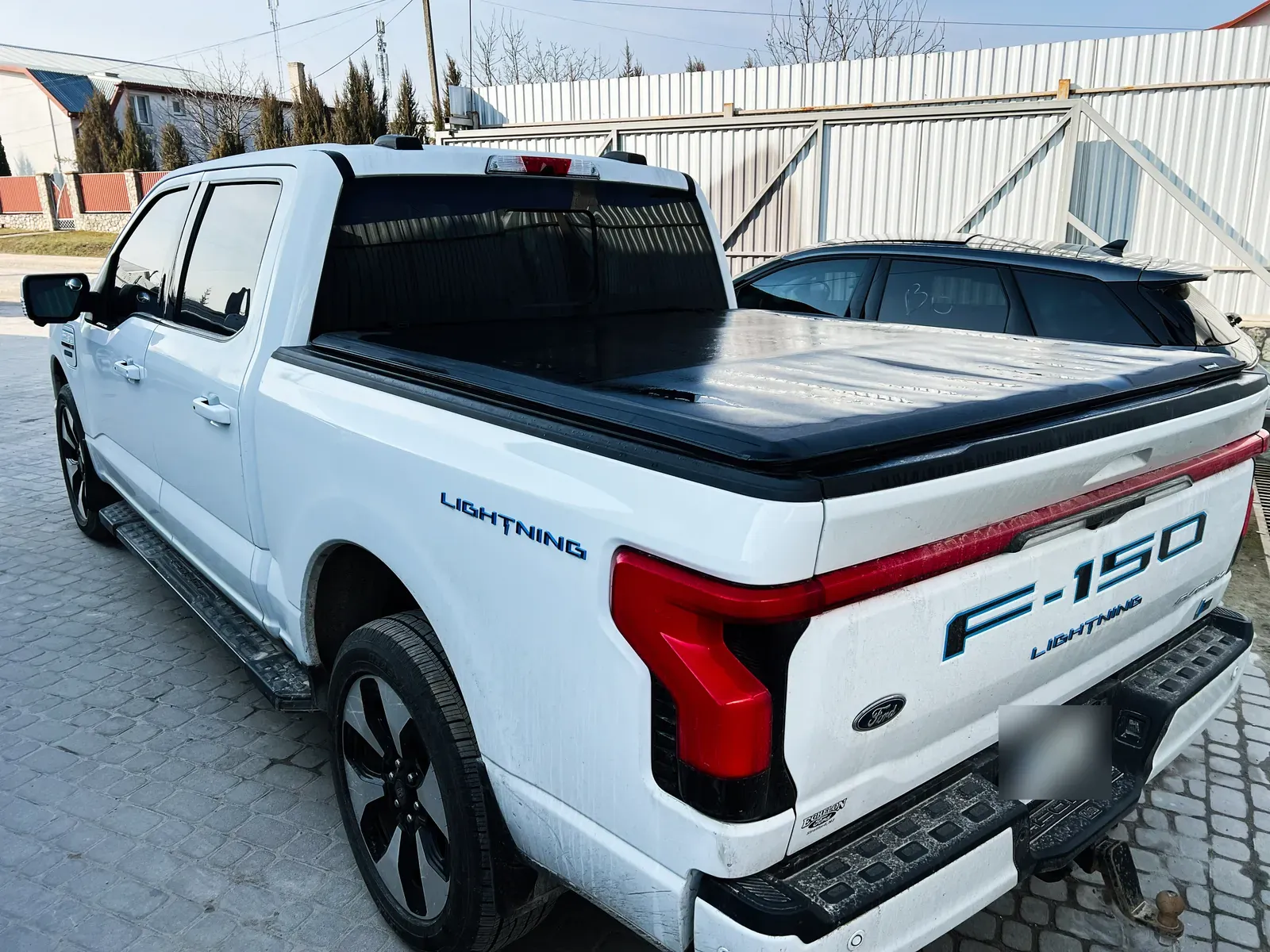
Bed sides get dented from the outside by traffic and from the inside by cargo
A pickup box collects damage from two directions. From outside come the familiar hits: a post backed into at a cottage-country gas station, a sideswipe merging onto the 400 with a trailer behind, a door swung open in a crowded plaza lot. From inside come the dents only truck owners know: a snowblower that slid during a hard stop, a load of firewood that shifted, a loading ramp that slipped off the tailgate.
Many beds are double-walled, with an inner panel facing the cargo and an outer skin facing the road. That protects the outside from small knocks but limits access when the outer skin is dented, because there is no open space behind it for a tool. Technicians sometimes reach in through tail lamp openings, stake pockets or drain holes, and a shallow dent with unbroken paint may come out without refinishing. A sharper crease is pulled from the outside, finished and painted.
Replacing a bed side is a bigger job than replacing a car fender. On many trucks it is welded or bonded to the bed floor and front panel, and the manufacturer’s procedure sets whether it is sectioned at specified points or whether the complete box is replaced.
Aluminum and composite beds call for a different repair plan
Since the 2015 model year the F-150 body and box have been aluminum, and the Super Duty followed. Dents in those bed sides are repairable, but aluminum keeps the shape it was pushed into, so the work goes in smaller steps with tools kept apart from steel. Replacement panels are often joined with rivets and structural adhesive. The answer on aluminum body panels covers the metal in more depth.
Some trucks avoid metal in the box altogether. Earlier generations of the Toyota Tacoma used a composite inner bed, and some GMC Sierra trims offer a carbon-fibre bed. Composite does not dent; it cracks, gouges or delaminates, and whether a crack is repaired or the bed replaced depends on what the manufacturer permits for that material. Some steel-bodied trucks also use an aluminum tailgate or hood to save weight, so the bed and the gate on one truck can need two different approaches.
A tailgate is now a moving electronic assembly
The rear-view camera on most trucks sits in the tailgate handle. Many gates also carry power locks, a power release or a power lift, damping struts or a torsion bar, and on some models a step, a work surface or split doors. GMC’s MultiPro, Ram’s multifunction gate and Ford’s Pro Access gate are examples of designs with extra hinges and latches that a simple drop-down gate never had.
A rear tap that barely marks the skin can still knock a hinge, bend a latch striker or tilt the camera bracket. The signs are a gate that does not close flush, a latch that needs a slam, or a camera image that suddenly looks crooked or shows the guidelines in the wrong place. After the gate is repaired or replaced, the camera, its harness and the latches are refitted and the gaps set, and the camera view or guidelines may need to be reset or recalibrated with a scan tool.
If the gate is replaced, the new one often arrives bare. Everything inside it, from cables and actuators to badges and the handle, moves over from the old gate, which is part of why a tailgate estimate carries more labour than it looks like it should.
Spray-in bedliners, overspray and the rust behind a drop-in liner
A spray-in liner bonds to the paint inside the box. When a lined bed side needs metal work or refinishing on the inside, the liner around the repair has to be cut back to sound edges, the panel repaired and primed, and new liner sprayed by an applicator to blend with the old texture. On the outside of the truck, overspray from a home roll-on job along the top rails and tailgate cap is common, and taking it off without cutting into the paint takes patience and the right solvent, not a scraper.
Drop-in plastic liners bring a different problem in a salted climate. Grit and water collect between liner and bed, and every bump rubs the trapped grit against the paint until the metal shows. Lift a drop-in liner after a GTA winter and it is not unusual to find rust started along the ribs of the floor. Pulling it out each spring, rinsing and drying the box, catches that early. Tonneau cover clamps can leave similar wear on the bed rails.
A hitch that took the hit can hide damage underneath the truck
A receiver hitch is bolted to the truck’s frame. When a car runs into the back of a hitched truck, the hitch often takes the first contact and passes the force straight into the frame rails or the rear crossmember. The bumper may look untouched while the receiver has bent, a mounting bolt has stretched or the frame horn behind it has moved. The other car usually looks worse, because the ball or the bar punched into its grille.
After a rear hit on a hitched truck, the hitch, its mounting points, the trailer wiring connector and the frame ends get inspected, and a bent receiver or mount is replaced rather than straightened. Blind-spot radar units in the rear bumper corners or near the tail lamps are checked too, and may require recalibration if the bumper moved. Anyone who tows a trailer to the cottage on the 400 each summer wants that inspection done before the first trip.
Questions people ask
My tailgate camera picture looks tilted after a light rear tap. Is the camera broken?
Often the camera is fine and the tailgate or its bracket has shifted. Check whether the gate closes flush and the gaps look even. Once the gate is set back in place, the camera view may still need resetting with a scan tool.
Does the whole spray-in liner have to come out to repair a dent in the bed?
Usually not. The liner is cut back around the repair area, the metal is fixed and primed, and an applicator sprays new liner over that section. Matching the texture closely is the main challenge, not removing the entire coating.
Can a dent in a double-walled bed side be pushed out without painting?
Sometimes. If the paint is unbroken and a technician can reach behind the dent through a lamp opening, stake pocket or drain hole, paintless repair may work. When there is no access or the dent is creased, it is pulled from outside and refinished.
Should my hitch be replaced after a rear-end even if it looks straight?
It should be inspected first. A straight-looking receiver can still have stretched bolts or a moved mounting point. Anything bent or stretched is replaced, and the frame ends behind it are measured if the hit was firm.