Check for slush first, because a dirty bumper corner can switch the system off
Before assuming the accident broke something, look at the rear bumper corners. Blind spot radar sees through the plastic of the bumper cover, and a thick crust of slush, salt and snow over that area can blind it. Many cars then display a message that the system is blocked or unavailable. In a Toronto winter, after a drive on the 401 behind trucks throwing brown spray, that message appears on perfectly healthy cars.
If wiping the corners clean and restarting the car brings the system back, the accident may not be the cause. If the message stays on with clean, dry corners, or appeared the moment after the impact, the hit is the likely reason and the car needs a proper look.
A rear-corner hit moves the radar even when the bumper looks only scuffed
The radar units are mounted to brackets that clip or bolt to the inside of the rear bumper cover or to the body just behind it. They are aimed outward and backward at a set angle so they can watch the lane beside and behind you. A sideswipe while merging onto the 404, a reversing bump into a bollard in a Fairview-area parking garage, or another car backing into your rear quarter in a plaza lot are exactly the impacts that land on that corner.
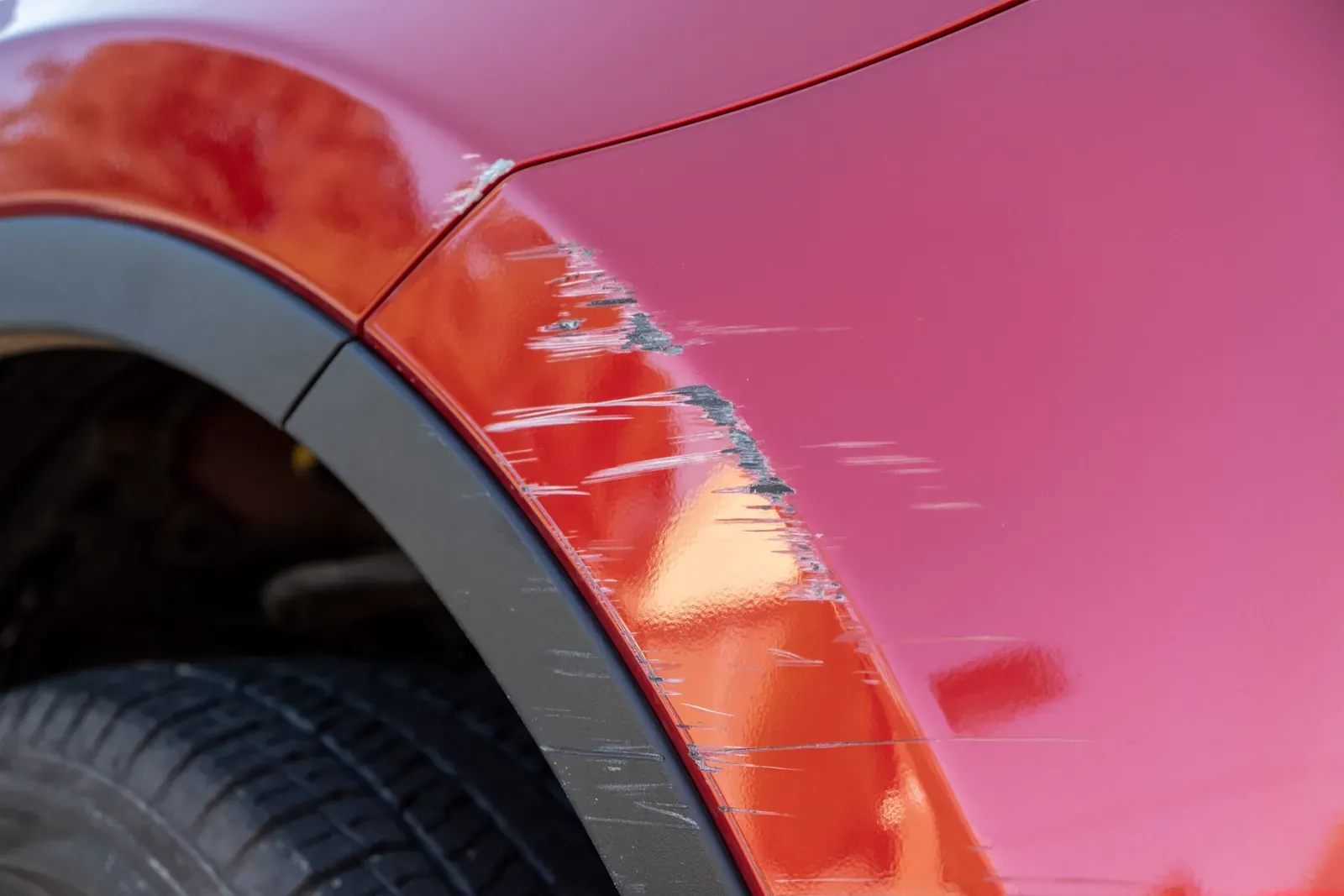
Plastic bumper covers flex and spring back, so the outside can look like it took nothing more than a scuff. Behind it, a thin bracket may have cracked or bent a few degrees, a mounting tab may have snapped, or the connector may have been pulled. A radar pointing slightly into the ground or slightly too far out reads the wrong patch of road. The car’s self-check notices some of these faults and turns the system off; others it does not notice, and the warning simply comes on late or for a car two lanes over.
Rear cross-traffic alert, the warning that beeps when someone crosses behind you while reversing, usually shares the same radar units. If both stopped working together, that points strongly at the corner sensors.
What a proper diagnosis involves, step by step
Diagnosis starts with a scan, not with taking the bumper apart. The scan tool reads stored fault codes from the blind spot module and usually names the side and the type of fault: no communication, sensor misaligned, internal fault, or blocked. That tells our estimator whether the problem is likely wiring, a bracket or the radar unit itself before anything comes off.
Then the cover is removed and the radar, its bracket and the bumper reinforcement behind it are inspected. Cracked brackets are replaced rather than glued, because the bracket sets the aim. A radar unit with a damaged housing or internal fault is replaced. Wiring and connectors are checked for pulled pins and corrosion, which in this climate shows up quickly once salt water reaches an exposed connector.
- Scan for codes before and after the repair, and keep the reports.
- Inspect the bracket and its mounting points, not only the radar unit.
- Check the bumper reinforcement and quarter panel behind the corner for hidden bends.
- Follow the manufacturer’s aiming or calibration procedure once the cover is back on.
Calibration is set by the car maker, and some systems aim themselves while others need targets
Once the parts are right, the radar may require a calibration so it knows exactly where it is pointing. The method varies by make. Some systems learn their aim during a set drive with traffic around them. Others need a static procedure in the shop with a target positioned at a measured angle and distance from the corner of the car. A few need nothing beyond a successful self-test once the fault is cleared. The repair procedure for your vehicle decides, and the estimate should say which applies.
Paint matters here too. The radar sees through the bumper cover, so a refinished corner has to stay within the manufacturer’s limits for paint over that zone. A rear cover normally goes into the booth whole, as a part; with a metallic or pearl finish, the shop often carries a light blend onto the neighbouring quarter panel, because plastic and steel take the same paint a little differently and the eye catches that at the seam. The answer on whether repainting a bumper can affect the radar behind it goes into the paint side of this in detail.
Driving without it, and what to tell your insurance company
With blind spot warning switched off, the car can generally still be driven and behaves like a model built without the feature. The risk is habit: a driver used to the mirror light may glance at it and trust an empty mirror. Until it is fixed, shoulder-check every lane change, especially on multi-lane stretches like the 401 collectors.
If the system failed because of a collision you are claiming, mention it when you report the claim. A sensor fault discovered after an adjuster has seen only a scuffed cover often becomes a supplement, which is normal, but it is smoother when the warning message is noted at the start.
Questions people ask
Only one side stopped working. Does the other side need anything?
Usually the undamaged side is left alone, but some systems pair the two units and require both to be calibrated together after one is replaced. The scan and the repair procedure for your model settle it.
Can a used radar unit from a wrecker be installed?
Sometimes, if it is the correct part number for your car and can be programmed to it. Some modules are coded to the vehicle, so a used one may still need dealer-level programming before it works.
The light flickers on and off for no reason since the accident. Is that the same problem?
It often is. An intermittent fault after an impact commonly points to a cracked bracket letting the radar vibrate, or a connector that was strained. It is worth scanning while the fault is happening.