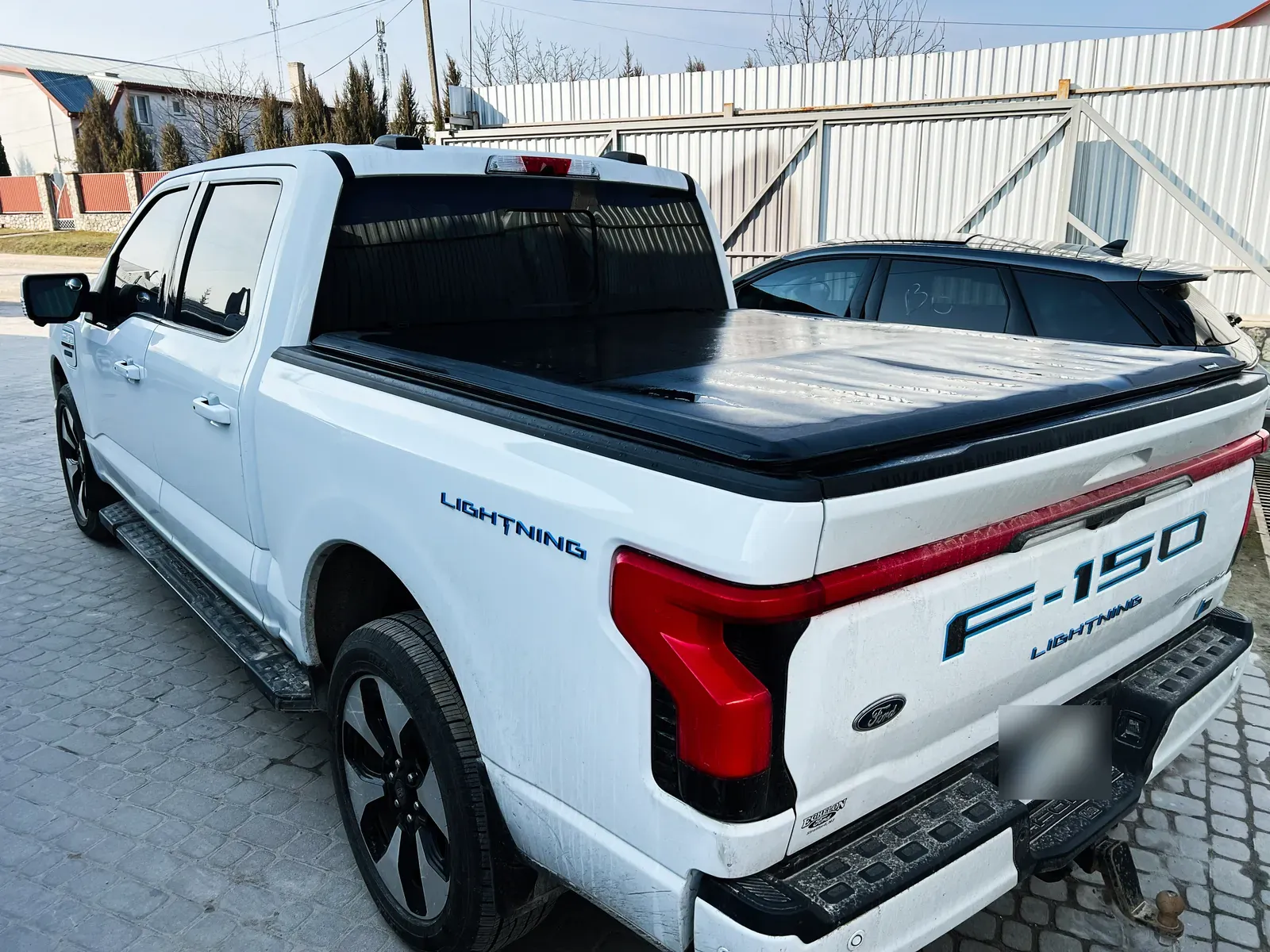
Many aluminum dents can be repaired, just more slowly than steel
Since the 2015 model year the F-150’s cab, box, doors, hood and fenders have been aluminum alloy on a steel frame, and the Super Duty followed. Plenty of luxury cars and EVs use aluminum hoods, doors, fenders and liftgates, and some have whole aluminum bodies. Drivers who park these trucks in North York driveways and Markham plaza lots want to know whether a dent means a new panel. Often it does not.
A shallow dent in an aluminum door or bed side can usually be worked back to shape. What changes is the pace and the technique. The technician applies pressure in smaller steps, checks more often, and on stiffer areas warms the metal with a controlled heat source and a temperature indicator so it moves without stressing. Paintless dent removal also works on aluminum when the paint is unbroken; it simply takes longer than on a steel panel of the same size.
Aluminum has no memory to spring back, and it hardens each time it is worked
Steel is forgiving. Push a dented steel panel from behind and much of it wants to return to its pressed shape, because steel has elasticity left in it. Aluminum is softer than steel but much less elastic. Once a dent has formed, the metal stays where it was pushed and has to be moved back deliberately, millimetre by millimetre.
Aluminum also work-hardens. Every time it is bent, hammered or stretched, the area becomes stiffer and more brittle. A panel that was dented, pushed out, dented again in a second collision and worked a second time can crack along the stressed area. This is why a skilled technician plans an aluminum repair to move the metal once, in the right order, rather than chasing high and low spots back and forth.
Heat helps, within limits. The alloys used on trucks and cars lose strength if overheated, so the temperature is watched closely and kept well below the point the manufacturer specifies. Guessing with a torch is how aluminum gets ruined.
Finishing is different as well. Filler is used sparingly on aluminum and only products made for it, and the bare metal is primed promptly after sanding, because a freshly sanded aluminum surface starts to oxidize quickly and paint bonds poorly to that oxide layer. The hood or door that leaves the booth looks the same as a steel one, but the steps beneath the colour are not interchangeable.
Aluminum work needs its own hammers, sanders and a clean area apart from steel
A shop that repairs aluminum properly keeps it separated from steel work. Steel particles left on an aluminum panel from a shared sander, a hammer or a dolly embed in the surface and start galvanic corrosion under the new paint, which shows up months later as bubbling or white powdery spots. The fix is dedicated tools marked for aluminum only, dedicated abrasives, and a separate bay or curtained area with its own dust extraction.
That extraction matters for another reason. Fine aluminum dust is combustible when it collects, so it is captured and handled differently from ordinary sanding dust. None of this is exotic, but it is equipment and floor space a shop either has set up or does not, and it is a fair question to ask any shop before you hand over an aluminum truck.
Ask what the shop does with an aluminum panel between steps, too. A half-finished door left uncovered beside a steel grinding bay picks up the very contamination the separate area exists to prevent, so good practice keeps the panel covered or in its own space until it reaches primer.
- Hammers, dollies, files and picks used only on aluminum.
- Separate sanding discs and grinding wheels, never shared with steel.
- A partitioned work area with extraction suited to aluminum dust.
- Heat control with temperature indicators rather than guesswork.
- Rivet guns and adhesive systems for joining, where the procedure calls for them.
Repair or replace on an aluminum truck: tears, creases and second hits decide it
Aluminum is replaced more often than steel for the same size of damage. A tear, a sharp crease along a body line, or metal that has stretched so it sits proud even after it is pushed back are all signs that repair would leave a weak, work-hardened area. A panel that was repaired once before and is now damaged again is another common replacement case.
Replacement on aluminum rarely means welding the way it would on steel. Many manufacturers specify self-piercing rivets and structural adhesive, and some panels are bonded at the hem flange rather than welded. Where the manufacturer allows sectioning, a damaged area can be replaced without removing a whole assembly such as a truck box. The repair procedure for the exact model and year decides the method, and a shop should be working from it.
Parts and paint also play into the decision. A new aluminum panel can take longer to arrive than its steel equivalent, and a truck that commutes the 404 every day is worth getting back on the road sooner. Our estimator can look at photos of the dent and tell you whether it reads as a repair or a replacement, and what the next step would be, before you book anything.
Questions people ask
Is my F-150 frame aluminum too?
No. On the aluminum-body F-150 the frame underneath is steel; the cab, box and outer panels are the aluminum parts. Frame damage on these trucks is assessed and repaired as steel work, with the aluminum body parts handled separately.
How can I tell if a panel on my car is aluminum?
The manufacturer’s specifications for your model year list the body materials, and our estimator can confirm it when the car is in. A simple magnet check also helps, since a magnet will not hold on aluminum, though it will not hold on plastic or composite either.
Does aluminum rust after a scratch?
Not with red rust. Bare aluminum oxidizes to a white powder, and under paint it can spread as threadlike corrosion that lifts the finish. A scratch to bare metal on an aluminum hood still needs sealing before a salted winter.