The question most drivers forget to ask
Most people pick a body shop the way they pick a dentist under pressure — the first name that comes up, the closest one to home, or whoever the voice on the claims line mentioned. In Ontario you are allowed to be far pickier than that. Your insurance company may recommend a shop. It cannot assign you one, and turning the recommendation down does not cost you coverage or push you to the back of a queue.
So if the choice really is yours, the useful question is not “which shop is best.” Nobody can answer that honestly about a trade you never get to watch. The useful question is narrower: who is going to write my estimate, and what happens when that estimate turns out to be incomplete? Almost everything else you might want to know sits downstream of those two things.
Teardown-first estimating, and why the first number moves
Every estimate written before a car comes apart is an educated guess made from the outside of a closed panel. A good estimator reads the direction of the crease, the way the gaps have opened along a door, how a bumper cover sits against the fender, and infers what is behind it. That inference is usually close. It is almost never complete.
A teardown-first shop treats the opening figure as a working document. The car goes on a bay, the cover and the brackets come off, the absorber comes out, and the second look becomes the estimate that actually gets ordered against. A shop that delays teardown until the last possible day is not necessarily cutting corners — often it is protecting a production schedule — but you will meet the missing parts eventually, usually on the morning you expected to collect the car.
Ask the question plainly: do you pull the panel before the approval, or after? The answer tells you whose calendar the repair is being run on, and how much of the timeline you were quoted is real.
Who you will be talking to for the next two weeks
A collision repair is a short, intense relationship with somebody you have not met. That person picks up when a part is backordered, when the adjuster wants a photo of one bracket, when the rental company calls about extending a booking, and when the colour on a three-stage pearl needs a second spray-out card.
At Crash Consultant that person is our estimator. The same owner reads the three photos you send, writes the estimate back the same business day, meets the adjuster at the car and calls you when the number changes. Nothing is handed from a service writer to a production manager to a parts clerk, which mostly means nothing falls into the gap between them.
That is a structure, not a virtue — plenty of bigger shops run disciplined files with several people on them. What matters is that you can name your person before you hand over the keys. If nobody at the counter can tell you who owns your file, you already have your answer.
Read the warranty before you read anything else
“Lifetime warranty” is a phrase nearly every shop uses and very few define at the counter. Ask what the words cover on paper. Ours is written against the paint and refinish work — peeling, lifting, loss of gloss, colour failure on the panels we sprayed — for as long as the vehicle stays yours.
Then ask what it excludes, because exclusions are where warranties genuinely differ. A stone chip is not a defect. Rust travelling out from inside a panel nobody opened is not a defect. Somebody else’s earlier repair on the door beside ours is not covered by ours.
Finally, ask the practical version: if the clear coat lifts three winters from now, who do I call, and what do you need from me? A warranty that cannot be described in two sentences at the counter is a warranty you will be arguing about later.
What to look at while you are standing there
You do not need to know how to weld to read a shop. Ten minutes of looking will tell you most of what you need.
- Is the floor swept and are the bays organized, or is there a car buried behind three others that clearly has not moved in weeks?
- Is there masking, prep and sanding happening in a dedicated area, or is a car being sprayed beside a car being ground?
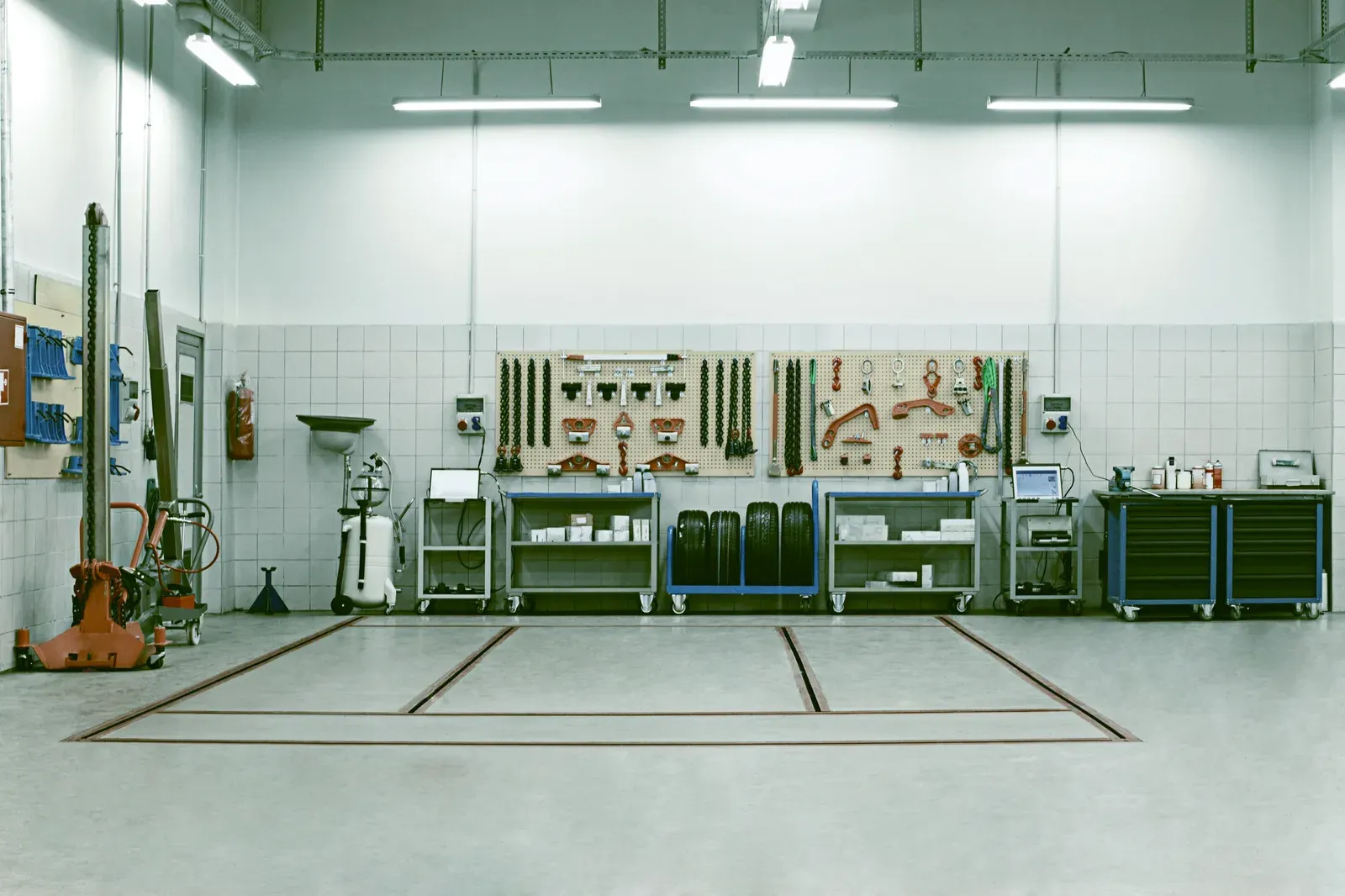
- Do the finished cars on the lot have even gaps and consistent gloss when you look down the side at an angle?
- Does somebody offer to write the estimate in front of you and explain the lines, or do you get a total on a sticky note?
- Is there a written repair authorization to sign, or are you being asked to leave the car on a handshake?
- Can they explain, without hedging, what happens to your rental if the parts are late?
Questions worth asking out loud
Ask these on the phone before you drive anywhere. The answers separate shops faster than any list of adjectives on a website.
- Who writes my estimate, and will that same person be my contact through the repair?
- When you find damage the estimate missed, who negotiates it with my insurance company — me or you?
- Do you meet the adjuster at the vehicle, or is everything done by emailed photographs?
- Will you write for original-manufacturer parts where safety is involved, and tell me when the insurance company writes for something else?
- Does this model need a radar, camera or sensor recalibration after the work, and who performs it?
- What exactly does your paint warranty cover, and can I read it before I sign?
Questions people ask
Does choosing my own shop slow down the claim?
No. The claim moves on the estimate and the approval, not on which building the car sits in. A shop that handles insurance-direct work sends the file to your insurance company the same way a recommended shop does. What changes the timeline is parts availability and how quickly extra damage gets approved.
Should I get three estimates before I decide?
Two is usually enough, and only if they were written the same way. Comparing a quick visual quote against a teardown estimate tells you almost nothing — the low number is simply looking at less of the car. Ask each shop what their number assumes, then compare the assumptions rather than the totals.
Is a shop worse because it is not on my insurance company’s list?
Being on a list is a commercial arrangement, not a quality rating. Shops join those programs for steady volume and accept conditions in return. Independent shops price and schedule on their own terms. Both can do excellent work; the difference sits in who the shop answers to when your file gets complicated.
What if I have already dropped the car somewhere and changed my mind?
You can move it. You will owe the first shop for any teardown or storage it has genuinely done, and you should ask for that in writing before the car leaves. Tell your insurance company where the vehicle is going so the file follows it instead of stalling behind you.