The van behind you is still doing ramp speed when the 404 queue stops
At the bottom of the 404 southbound ramp from Steeles, the queue on the highway is often stopped before the merge lane runs out, and the van behind you is still doing ramp speed. That is the Thornhill rear-end. What separates a scuff from a real repair is what the van carried on its rear: a plain bumper meets your cover across its full width and the absorber does its job, while a receiver hitch is a steel post that goes through the cover, past the foam, and into the reinforcement bar at one spot. The cover can look almost fine. The bar behind it has a fist-sized dent, and the sensor pocket beside it is cracked.
The other pattern is the plaza corner. Angled stalls at Bayview and John, the Bathurst plaza rows and the tight ramp of a townhouse garage put a bumper corner into a painted column, a curb or another bumper at walking pace. The cover scuffs, the column’s paint transfers, and the tab that holds the corner flush snaps quietly, which is why the corner sags by summer.
What the hitch hit and the column scuff each need, and why the fender gets blended
The column scuff starts at the counter with a solvent wipe. Column paint sits on top of your clear coat, and if what is under it is only dulled, the corner polishes and the job is over. If the clear is scrubbed through, or the corner has a short crack in the open face, the cover is plastic-welded from the back where needed, sanded and refinished. A crack that runs into a mounting tab or through a sensor pocket means a new cover, because a cover that no longer sits flush will rattle, gap and let water in behind the lamp. The broken tab bracket, the cheapest part on the estimate, is replaced with it.
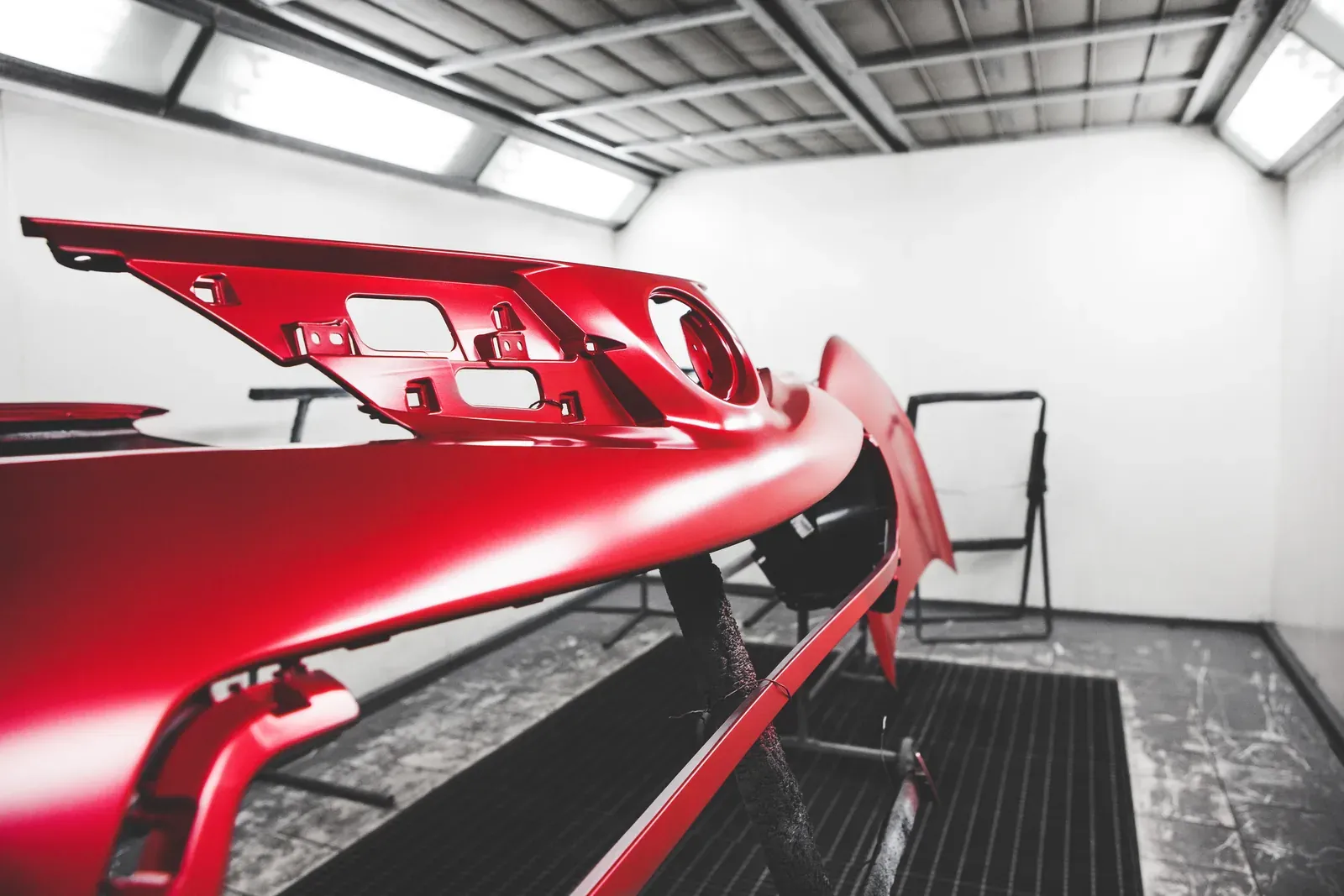
The hitch hit is priced only after the cover is off. The energy absorber is a single-use part that flattens on impact and looks fine until you measure it, and the reinforcement bar is checked for the dent the hitch left; where the bar or a sensor bracket is safety hardware, the request to your insurance company for OEM parts goes in writing. Either way, a replaced or fully refinished cover is painted complete as a part, and on a metallic or a pearl the fender beside it is blended so the plastic’s slightly different texture does not read as a colour step against steel. Rear parking sensors, a blind-spot radar or a front camera may require recalibration once the cover goes back on, and the estimate says so.
- Column transfer wiped off before the corner is priced
- Cover welded and refinished where the crack stays in the open face
- Absorber and reinforcement bar inspected behind every hitch hit
- Fender blended on metallics, recalibration flagged where the car needs it
One trip down Leslie, and whether the bumper is a claim
Bumper work is where the one-trip plan pays off: photos to our estimator, a written estimate, parts ordered before the car leaves your driveway, and a drop-off booked when everything is on the shelf. If the cover is hanging or the corner is rubbing a tire, do not run it down Leslie; we help arrange the tow and you tell the driver Sheppard and Don Mills. Otherwise the surface streets are the right route, and they spare a loose cover the 404 merge.
A corner scuff refinish usually belongs out of pocket. A cover, absorber, bar and recalibration is a bigger number; when the van’s driver stopped and is insured in Ontario, DCPD means your own insurance company pays for your car for the share you were not at fault, and we open that claim from our counter. If the van did not stop, it is a collision claim under your own coverage with a police or reporting-centre report attached. Either way you see the cash figure beside the deductible.
Questions people ask
A delivery van with a hitch tapped me at the bottom of the 404 ramp. The cover looks fine — why does the estimate mention the bar?
Because a hitch is a post, and a post concentrates the whole hit on a few square centimetres. The cover flexes around it and springs back, the foam absorber behind it is crushed at that spot, and the steel or aluminum bar takes a dent you cannot see with the cover on. We pull the cover before the estimate is final, photograph what is behind it and send that to the adjuster as the supplement. A bar that has folded is replaced; a car with a crushed absorber and an intact bar is a smaller job.
My lease is up in the spring and the bumper corner is scuffed from the garage column. Fix it or let the return inspector price it?
Fix it, almost always. Return inspections charge for scuffs past their wear guide, and a corner with the clear scrubbed through is past it. Our estimate for a refinished corner, or a cover if a tab is gone, is the number to compare with what the inspection would bill, and it is usually the better one. Column paint that only sits on the clear is polished off for much less.
Can I drive down from Thornhill with a cracked bumper?
If the cover is secure and nothing touches a tire or a lamp, yes — use Leslie or Bayview rather than the 404 so the loose corner is not flexing at highway speed. If a piece is dragging or a headlight is loose in its socket, leave the car parked and we coordinate the tow.
Why is the fender on the estimate when only the bumper was hit?
Because your colour is a metallic. A bumper cover is painted complete as a part, and plastic and steel hold the flakes at slightly different angles, so a fresh cover beside an untouched fender can read as two shades in low sun. Blending a little colour into the fender lets the eye cross the seam. On a solid colour the fender usually stays off the estimate.