The bumper takes the commute
A Richmond Hill car spends its weekdays in queues. The 407 ramps at Bayview and Leslie back up every morning with people paying to skip the 404, and the crawl onto the toll ramp — everyone looking at the merge instead of the car ahead — produces the low-speed rear-end that scuffs one cover and cracks the other. Yonge Street through the core does the same thing at every light from Highway 7 to Major Mackenzie.
The evening version happens in the lots. Hillcrest Mall at closing time, the Highway 7 plazas at Bayview when the restaurants let out, the GO lot when the train comes in: that is where the reversing bumper meets the parked one, and where the front lip of a low sedan finds the curb stop it cleared a hundred times before. They are the most common repair we do for Richmond Hill.
What a 407-ramp rear-end does to a rear radar you cannot see
The crawl onto the 407 at Bayview is a queue of newer cars, and a newer car’s rear bumper is an electronics housing: parking sensors in the cover, blind-spot radar behind each rear corner on a bracket bolted to the body. A tap at walking speed from the car behind pushes the cover in, the cover springs back, and the bracket takes the load and stays where it was pushed. Outside, a scuff; to the radar, a degree or two off its axis, enough to push the edge of the zone it watches into the wrong lane on the 404 south. The warning still comes on; it comes on late.
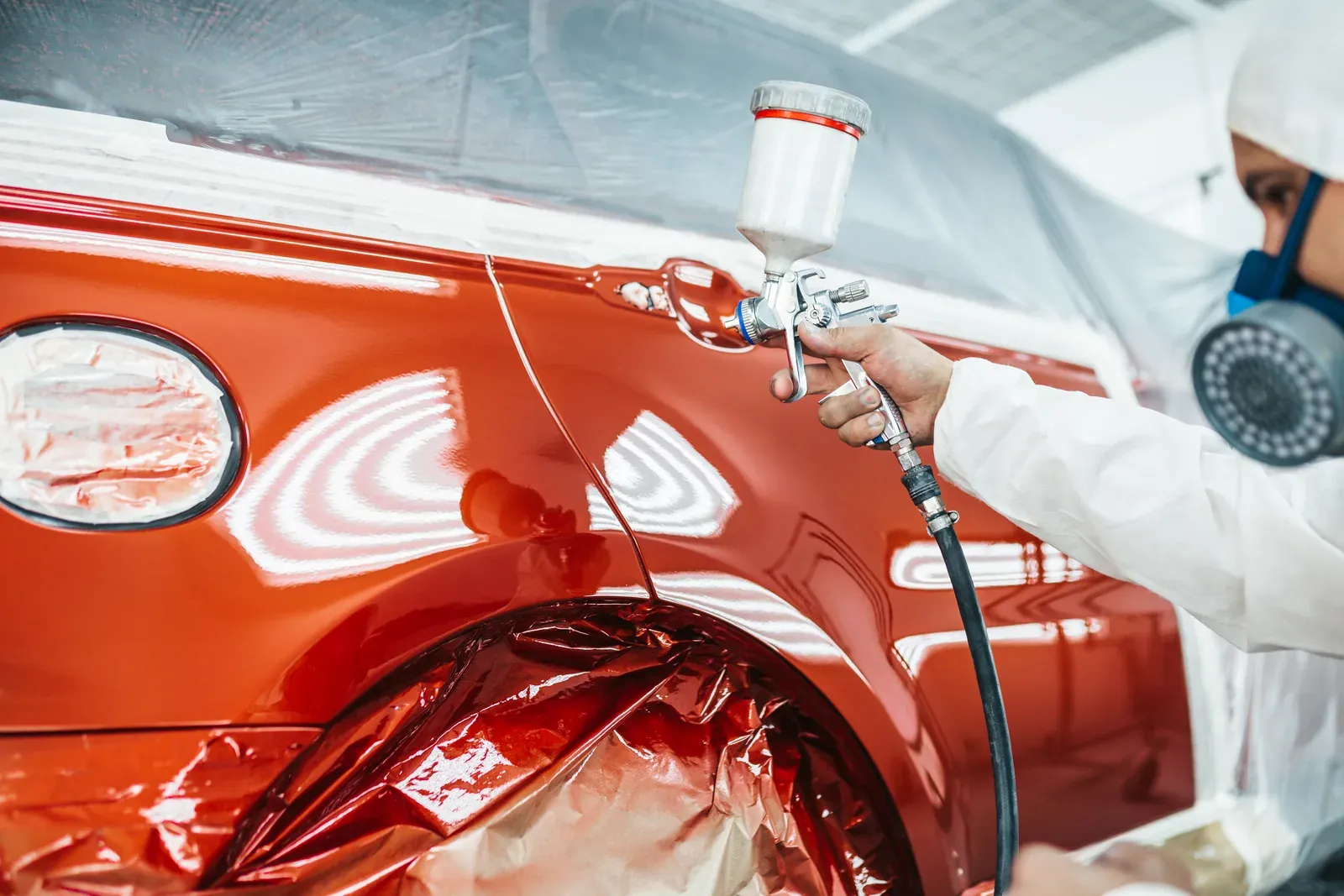
That is why the cover comes off first. Behind it, the foam absorber is checked — it does its job once and is replaced if it crushed — the bar is checked for a bend, and the sensor brackets are checked against their mounting points. Then the cover: a scuff or a short crack in a flat area is welded from the back and refinished; snapped tabs, a torn corner or a crack through a sensor opening mean a new cover, because a cover that cannot hold its line will sag, and a sensor in it will never point straight. Recalibration may be required after any of it, and the estimate says so.
- Cover off first; absorber, bar and sensor brackets checked before the estimate is firm
- Flat-area cracks welded and refinished; corners, tabs and sensor openings replaced
- Radar and parking sensors flagged where recalibration may be required
- Cover painted complete and blended into the fender or quarter on metallics and pearls
A lease return through a Yonge Street dealer changes the right repair
Many cars on Yonge north of Highway 7 are leased from the dealers along it, and a bumper is where the return inspection looks first. On a car you own, a sound repair is a sensible saving. On a car going back in eighteen months, the inspector feels for a repair edge, checks the gap to the fender and looks for a colour step at the corners; a cover that is a shade off, or repaired where a tab has since let go, is a chargeback. For a lease we lean toward a new cover where the damage is near a tab or a corner, ask your insurance company for the OEM part where a sensor is involved, and paint the cover complete, blended into the fender or quarter on a metallic or pearl so the plastic’s texture does not read as a colour step.
Whether it is a claim follows from the parts list. A corner refinish on a sound cover is usually a pay-directly job. A cover, an absorber, a bracket and a recalibration is a claim, and if the car behind you caused it, DCPD means your own insurance company pays for your car. We price it both ways from the photos, and the car comes down the 404 once, when the parts are on the shelf.
Questions people ask
The bumper is scuffed but nothing is loose. Do I really need it looked at?
Send photos and we will tell you. A cosmetic scuff on a well-attached cover is a refinish and nothing more. What changes the answer is what the photo cannot show — a crushed absorber or cracked tabs — and if the cover sits unevenly or the gap to the fender has changed, that is your sign to have it off.
Since a tap on the 407 ramp, my blind-spot light comes on late. Is that the bumper or the car?
The bumper, most likely. The blind-spot radar sits behind the rear corner of the cover on a bracket, and a push the cover absorbed without a mark can still move that bracket a degree. The cover comes off, the bracket is checked against its mounting points and replaced if it is bent, and the radar may require recalibration once everything is back where it belongs. Do not have the light reset and drive on; it is the one system you want working on the 404 south.
My lease goes back to a Yonge Street dealer next spring. Does that change how you fix a cracked bumper?
It does. For a lease we lean toward replacement unless the crack is short and sits in a flat area well away from the tabs and the corners. A repair that is right today can open at a tab after a winter of the windrow at the end of the driveway, and the return inspector will find it. A new cover, painted complete and blended into the fender or the quarter where the colour needs it, is the repair the inspection cannot see.
The front lip scraped the curb stop in the Hillcrest lot. Is that a bumper repair or just paint?
Usually paint, sometimes a little more. A curb stop takes the finish off the lower edge of the cover and often chews the plastic underneath; if the plastic is only scuffed, the edge is sanded, built back, primed with a flexible primer and refinished, with the whole cover painted as a part on a metallic. If the lip is torn or the lower grille clips broke, those parts are replaced. Send a photo from low down and one from underneath so we can see whether the under-tray took a hit too.