Eglinton after the Crosstown: shorter pockets, closer lanes
Eglinton through Leaside is a different road than it was before the trains ran under it. The stretch between Bayview and Leslie was rebuilt around the station boxes at Laird and Leslie, and the result is narrower through lanes, shorter left-turn pockets and signals that hold traffic in long platoons. A bumper does not need speed to get hurt in that. The driver ahead brakes for a pedestrian at the Laird crossing, the driver behind was looking at the turn pocket, and the contact is two bumper covers and a licence-plate bracket. The cover may spring back with only a scuff; the absorber and brackets underneath frequently do not.
The turn into the Laird lots and the plaza entrances near Vanderhoof are the other daily source. A car nosing out across eastbound traffic, a driver in the through lane who did not expect it, and the front corner of a bumper takes a hit that cracks the cover at the fog-light opening and pushes the fender liner into the tire. Photos of both cars at the scene, before anything is moved, are worth more to the claim than anything said at the time.
Curb stops, windrows and the Bayview angle
Winter is bumper season for reasons that have nothing to do with other cars. The mouth of every Leaside driveway grows a windrow each time the plough passes, and by February it is a frozen ridge that a low front bumper meets on the way out. The concrete curb stops in the Laird lots disappear under snow and reappear in a bumper cover on the first thaw. And the angled spots on Bayview put the front of the car over a high curb every time you pull in, which is why so many lower valances from the neighbourhood arrive gouged along the bottom edge.
Most of these are one-part jobs. The lower lip of a cover is scuffed and cracked, sometimes with a tab broken at the wheel-arch corner, and the bumper beam behind it is untouched. A cover with a windrow scrape and no cracks is a refinish. A cover with a tab or a split at the corner is a plastic repair and a refinish. A cover that has separated from the fender is usually a replacement, because the mounting points do not go back once they have torn.
Repair, replace, and the sensors behind the cover
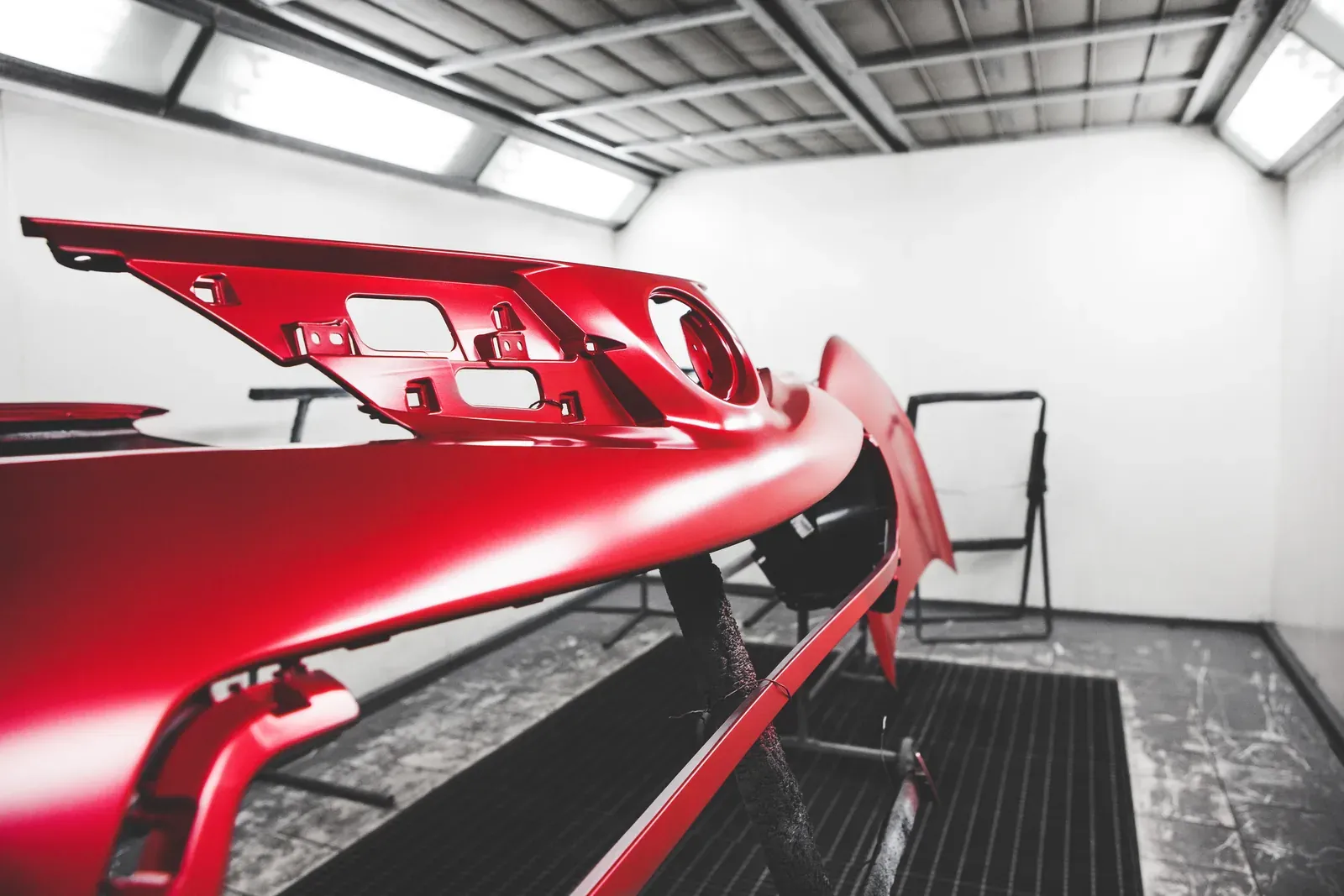
A plastic cover can be repaired far more often than people expect. Cracks are ground out, plastic-welded or bonded from behind, refilled, primed and painted, and the finish is blended into the fender on each side so the new paint has no edge. Replacement makes sense when the cover is torn at a mounting point, when the crack crosses a sensor opening, or when the cost of repair approaches the cost of a new part with the paint on it — the estimate shows both when it is close, and we are honest about which we would choose.
What sits behind the cover is what the repair is really about. Park-assist sensors, blind-spot radar, the forward camera bracket on a front bumper: all of them can be pushed out of tolerance by a tap that barely marked the paint. After any bumper work these may require recalibration, and that is done before the car goes back down Leslie. If the repair is a claim, we ask your insurance company for OEM sensors and brackets, because the aftermarket versions do not always sit where the manufacturer expects them to.
- Photo estimate says repair or replace before you drive up
- Plastic repair, refinish and blend into the fenders, lifetime warranty on the paint
- Sensors and cameras checked; recalibration arranged where the repair requires it
- Absorbers, brackets and beams inspected, not assumed
Questions people ask
The bumper is only scuffed but a parking sensor warning came on after a tap on Eglinton. What happened?
The sensor was almost certainly pushed back in its housing or its bracket cracked, even though the cover sprang back. It is a common result of a low-speed tap. The cover comes off, the sensor and bracket are checked and reseated or replaced, and the system may require recalibration afterward. Send photos of the scuff and a picture of the dash warning and we will include it in the estimate.
The corner of the bumper cover is hanging loose after a windrow. Can I drive it up Leslie?
If it is loose but not dragging on the road or rubbing the tire, a short drive at city speeds is usually fine — tape it up first so it does not catch the wind. If the cover is touching the tire or the fender liner has come down, do not drive it; call and we coordinate a tow to Sheppard and Don Mills instead.
A snow-buried curb stop in the Leaside Village lot split my lower valance. Is that a whole-bumper job?
Usually not. The lower valance or the bottom lip of the cover takes the hit, and on many cars that piece unclips separately, or the split can be plastic-welded from behind and refinished without disturbing the rest of the bumper. It becomes a bigger job only when the crack runs up toward a sensor opening or a mounting corner, or when the car sat low enough for the absorber to be caught too. Take one photo from low at the front and one from underneath if you can, and the estimate settles it.