Tourist season on Main Street is parallel-parking season
From May to October the roadside spots on Main Street turn over all day, and most get filled by feel — a reverse angle judged in a mirror with a patio watching and a car waiting behind. The tap at the end of that manoeuvre is barely a sound inside the cabin, but it swaps paint at licence-plate height and cracks the thin lower lip of a cover on the way in. Weekend visitors do the same to parked cars and drive on, which is why so many Main Street bumper jobs start with a photo of a scuff nobody witnessed.
The unwitnessed ones carry an insurance wrinkle: contact with another vehicle is collision, even when that vehicle left. The claim runs on your own collision coverage with your deductible, supported by a report — for a driver who left, that means the Collision Reporting Centre. Whether the claim is worth your deductible is exactly what the photo estimate is for.
What a cover costs to fix depends on where it cracked
A scuffed face, a small split or a pushed-in corner can be repaired: the plastic is ground back, welded or bonded from behind, filled with flexible material, primed and refinished. A tear at a mounting tab, a crushed corner or cracks running in several directions tip the arithmetic toward a new cover, because rebuilding all of that costs more than the part. Behind the plastic, the absorber and brackets are checked every time — a cover that flexed and popped back has often spent the absorber doing it, and a broken bracket is why covers sag a month later.
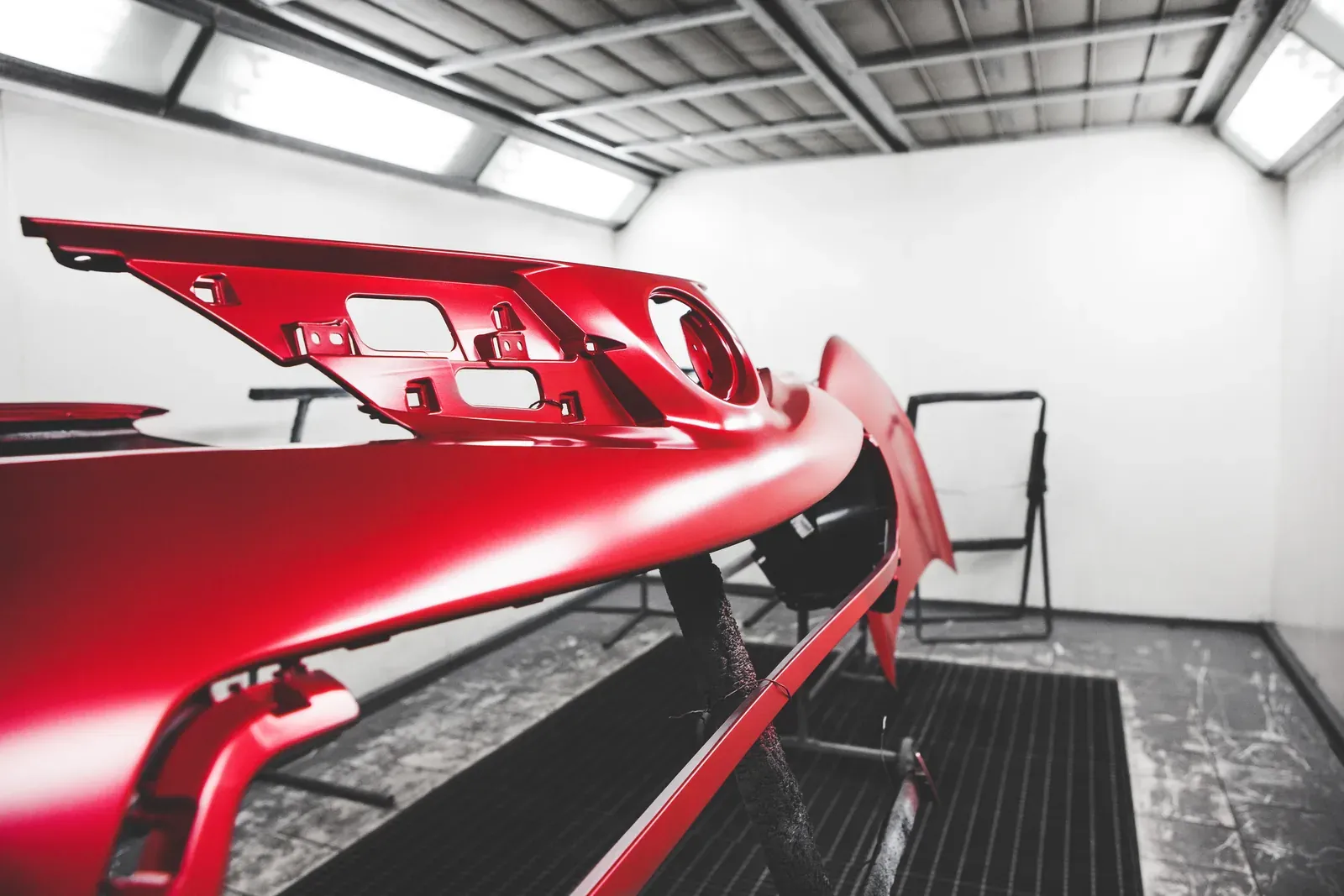
Covers are painted complete, as a part, and on a metallic or pearl the neighbouring fender or quarter is often blended, because plastic takes colour slightly differently than steel and the texture difference can read as a colour step at the panel gap. Parking sensors, radar modules and cameras come out and go back in, and the estimate flags where the driver aids may require recalibration afterward — on the newer SUVs Unionville leases, that hardware is usually there.
- Scuffs, single splits and pushed corners: repaired and refinished
- Torn tabs, crushed corners or multiple cracks: replaced
- Absorbers, brackets and clips inspected behind every cover
- Recalibration flagged on the estimate where driver aids may need it
February moves the damage to the end of the driveway
After a plow pass, the windrow across a driveway mouth freezes into something closer to concrete than snow, and the first car backing out in the dark finds it with the lower lip of the rear cover. The same ridge builds along the edges of the Toogood Pond and Civic Centre lots, where a nose-first park ends with a crunch instead of a curb stop. These are usually one-panel jobs — refit or replace the cover, check the clips and any sensor, refinish and blend — and they are the bumper repairs most often not worth a claim, so the estimate shows the number beside your deductible and leaves the call with you.
When the car does come down, it is Highway 7 to the 404 and south to Sheppard, beside Fairview Mall. A cracked cover that is still seated usually survives that trip; a cover hanging off one clip should be taped down, or the car should come on a flatbed rather than shedding parts at highway speed.
Questions people ask
The windrow pulled the corner of the rear cover off its clips. Can it just be pushed back on?
Sometimes, if the clips and the tab survived — that is a quick refit. More often the frozen ridge tore the tab or broke the clip seats, and a cover that is only pushed back works itself loose on the 404. Photos of the corner and the wheel-arch gap tell us which one you have before you drive anywhere.
Since the bump, the park-assist chimes at an empty driveway. Sensor or bracket?
Either, and the fix differs. A sensor knocked out of its seat reads the bodywork beside it; a cracked bracket lets the whole corner sit a few millimetres off and confuses the geometry. Both mean the cover comes off, and if a radar module took the hit, the system may require recalibration before the warnings can be trusted.
The lease goes back in the fall and the cover is scuffed from Main Street parking. Worth fixing first?
Usually, yes. A scuffed or cracked cover is an easy line for an inspector, and a repair or replacement done properly — with the colour blended so the plastic does not read differently than the fender — costs less than most chargebacks. Send photos well before the return date so the work is not squeezed against the inspection.