The morning queue at Sheppard and the 404
Between about seven and nine on a weekday the Sheppard exit off the 404 south is a line of brake lights that starts on the highway and ends at the Don Mills light. The tap that happens there is slow, under 15 km/h, and it produces the classic North York bumper: a cover that looks scuffed, a foam absorber behind it that has crushed and will not recover, and a set of parking sensors or a rear radar unit that has been nudged off its aim. The same thing happens in the left-turn lane into the mall, in the bus-loop approach at the station, and in the stack of cars waiting to get onto the 404 north at the top of the ramp.
The parked version is different only in speed. The parking structure’s concrete wheel stops are at exactly the height of a modern front lip, and the curb at the Sheppard mall entrance has taken the paint off plenty of lower valances. Rear covers meet columns in the condo garages along Sheppard East. Corners meet the frozen windrow at the bottom of a Henry Farm driveway.
A cover that cannot hold its alignment sags by summer
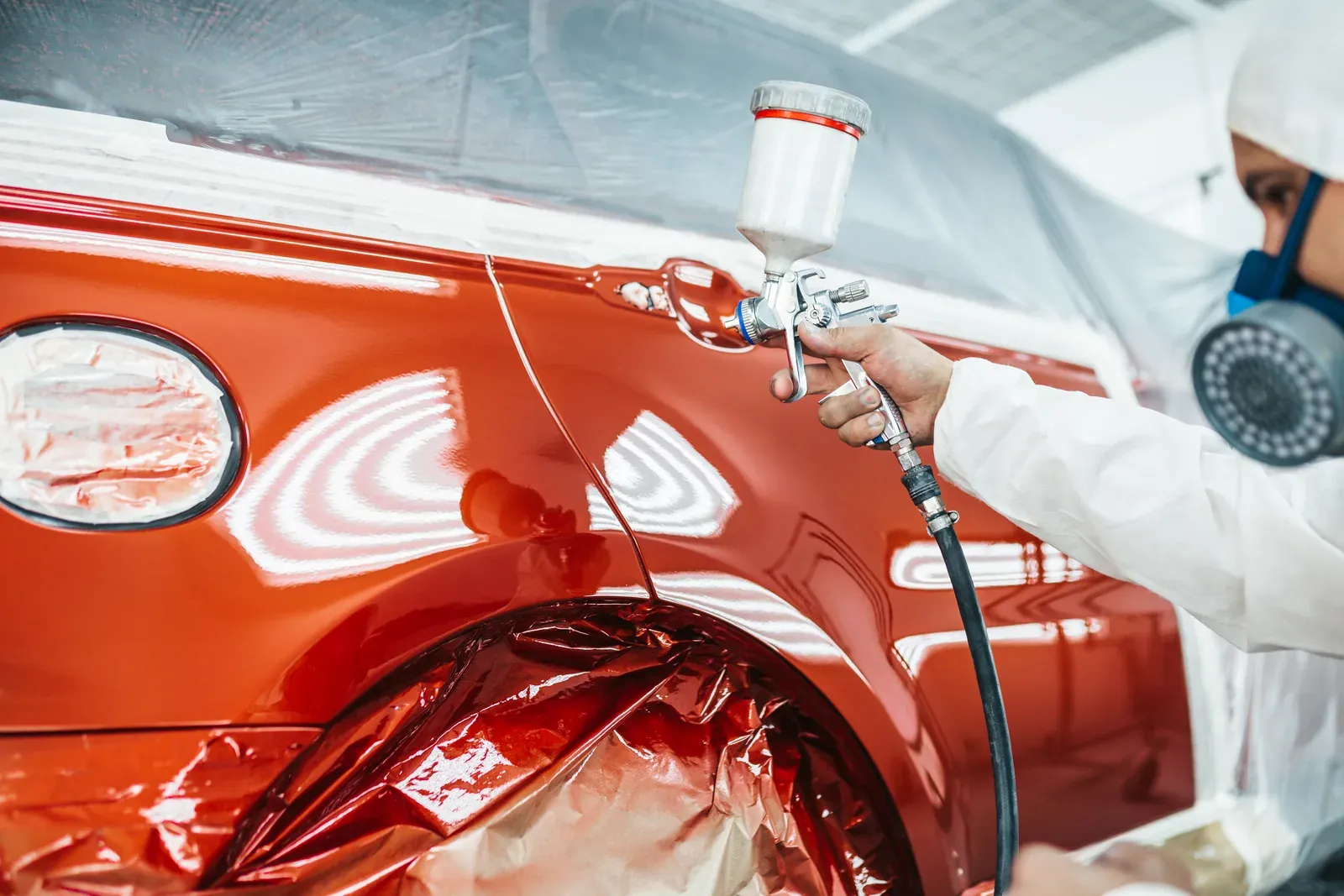
A scuffed or lightly cracked cover in a spot that can be reinforced from behind gets repaired: the plastic is welded or bonded, the surface is reshaped and refinished, and the refinish carries the same lifetime warranty as any other. A cover with mounting tabs snapped along its edge, a tear through a sensor opening, or a crack in the textured lower section usually argues for replacement, because a cover that will not hold its alignment sags by summer. Whatever happens to the cover, the parts behind it are inspected: absorbers crush once by design and must be replaced, and brackets bend more often than anyone expects.
Modern bumpers are electronics housings. Parking sensors sit in the cover, blind-spot radar sits behind the rear corners, and the front radar for adaptive cruise and emergency braking lives behind the badge or a panel in the grille. Replacing or reshaping a cover changes their geometry, so the systems may require recalibration before the car is finished. We flag that on the estimate rather than discovering it on the road test, and where a safety sensor is involved we push your insurance company for the OEM part.
- Plastic welded or bonded and refinished where the cover can genuinely be saved
- Replacement, with OEM preferred, where tabs, tears or sensor openings are damaged
- Absorbers, brackets and lamp mounts inspected behind every cover
- Parking sensors, radar and cameras checked and recalibrated where required
Paying for a bumper: three ways it usually goes
If you were hit from behind in the ramp queue, Ontario’s DCPD rules mean your own insurance company pays for your car and fault is assigned to the driver who ran into you. If you tapped the car ahead, your collision coverage pays with your deductible and the fault goes on your record, which is why for a scuff-only cover many drivers pay directly and skip the claim. If you came back to the car in the parking structure and found a broken corner and no note, it is usually your own collision coverage again, because DCPD needs a known vehicle; photograph the stall, ask mall security about cameras, and send us the pictures before deciding.
In every case the first step is the same: three photos, a written estimate the same business day, and a plain conversation about which route makes sense. When a claim goes ahead we open it and deal with the adjuster from here. The car is usually with us a short while for a repaired cover and a little longer when a replacement and calibration are involved, and the mall and Don Mills station are beside us for the wait.
Questions people ask
I tapped the car ahead at the bottom of the 404 ramp and nothing looks broken. Can I leave it?
Look behind it first. A cover that flexed and popped back often hides a crushed absorber and cracked mounting tabs, and on a newer car a rear sensor that no longer points where it should. Send a photo from each rear corner and we will tell you whether it is a wax job, a repair, or a replacement. Leaving a broken absorber means the next tap does real damage.
The parking sensor warning came on after a bump in the lot. Is that the bumper?
Usually, yes. The sensors sit in the cover, and a bump can push one out of its clip or break the wiring behind it. Sometimes it is simply misaligned and needs recalibration after the cover is put right. Either way it is a bumper job first and an electronics job second, and we handle both.
The crack is in the textured lower part of the bumper, not the painted part. Does that change things?
It leans the answer toward replacement. The texture on that lower section is moulded in rather than painted, so a repair there is hard to make invisible, and a crack in it usually means the cover flexed hard. A crack in a flat painted area repairs well and saves the original fit; through a tab, a corner or a sensor opening it tends to reopen. We look at the exact spot and recommend the one we would choose for our own car.