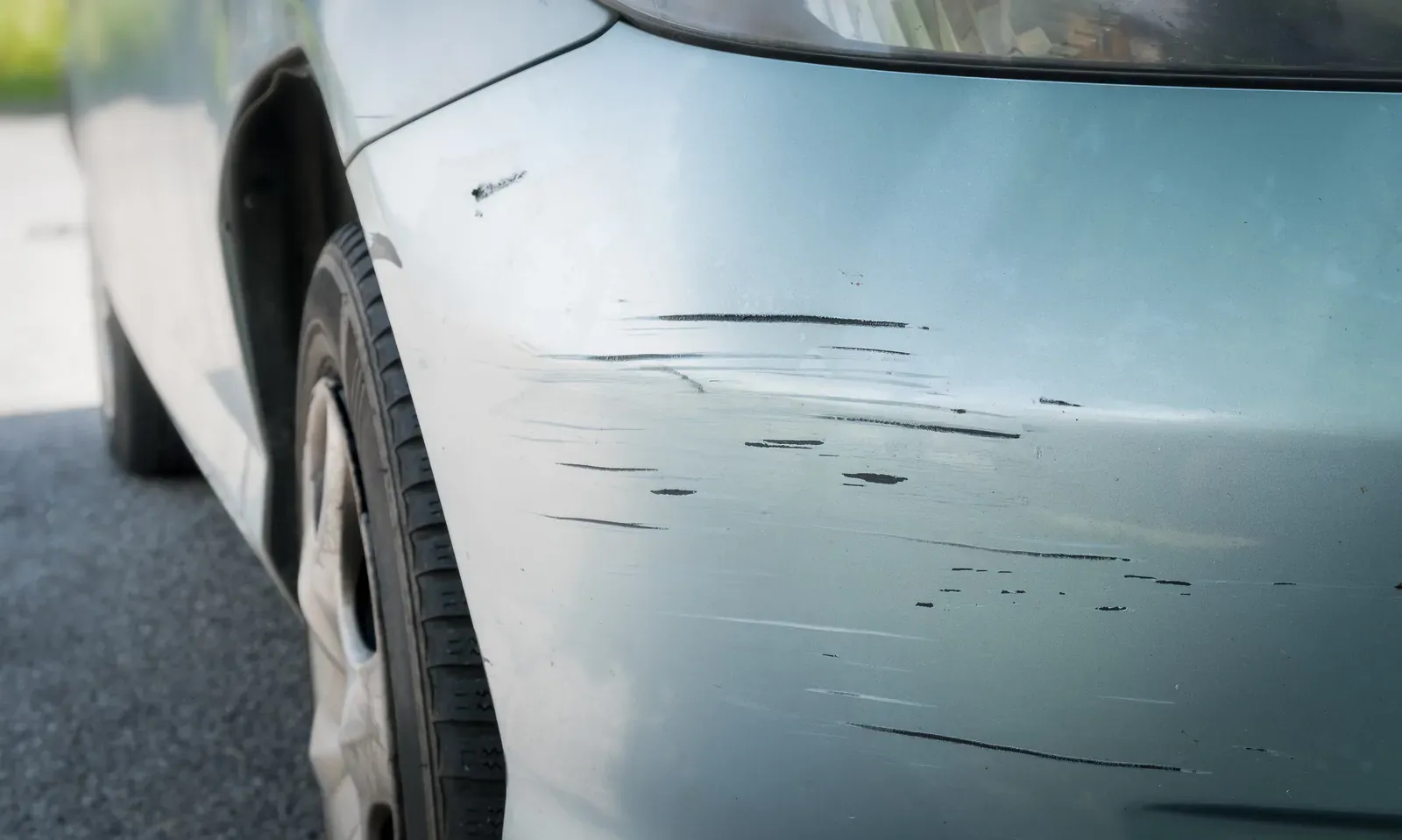
A pen seals chips first and hides them only on the smallest ones
A pen is a sealing tool before it is a cosmetic one. On a chip a couple of millimetres across in solid white, black or red, a careful fill vanishes at normal viewing distance. On anything bigger, the best it can do is keep water and salt off bare primer or metal until the panel is refinished.
Look at the chip in daylight before buying anything. A dull white bruise with no colour missing is a stone hit on the clear and needs no paint at all. A matte white, grey or tan dot is primer, and a bright silvery speck is bare steel; those are the chips worth filling before winter brine from the 401 and the side streets reaches them. A brown ring around the dot means rust has begun under the edge, and a pen over it simply seals the rust in.
- Pinhead to pencil-tip chips on a solid colour: a pen can make them close to invisible
- A cluster on the hood edge: fill the deepest few and accept that the panel still looks peppered
- Chips on metallic silver, grey or blue: expect the fill to show as a darker, flatter dot
- Scratches longer than a fingertip is wide: a pen leaves a visible line
- Any chip ringed with rust: it needs sanding to clean metal before anything goes in
Paint dabbed into a clear-coat scuff turns a polishing job into a refinish
The worst use of a pen is on a mark that never needed paint. A scuff sitting only in the clear can usually be polished away with nothing left to see. Paint dabbed into it leaves a raised coloured line that a polisher would have to cut through, and often the panel ends up being refinished instead.
Next comes the thick dab. A pen lays paint from a felt or ballpoint tip in one stroke, and the bead stands proud of the surface. Once hard, it catches light from every angle. Taking it level means sanding, and on a metallic that means sanding into the surrounding clear, which is a refinish by another name.
Then there is the pen drawn along a key line or a bumper scrape. Paint run down a groove follows every wobble of the hand and reads as a stripe. On a car you are about to sell or hand back off lease, a line of touch-up can draw more attention than the scratch did. If you later book a proper repair, tell our estimator what went on; touch-up and wax-stick products have to be stripped before primer will bond, and that goes faster when we know to look for it.
Filling a chip without a blob: use the pen as a paint supply
Do not paint with the pen tip. Use it to supply paint, apply with something finer, and build in thin layers that dry between coats.
Temperature matters more than people expect. Paint flows and bonds poorly on a cold panel, so a chip filled on a driveway in November tends to sit as a lump. Work in a heated garage, or on a mild, dry day in spring or early fall, out of direct sun.
Patience is the whole technique. Most bad touch-ups come from trying to fill the chip in one go. Five thin layers over an afternoon look far better than one fat one, and a layer that goes wrong while still wet can be lifted gently with a clean cotton swab before you start again.
- Wash the spot, then wipe the chip with isopropyl alcohol on a lint-free cloth to remove wax
- Shake the pen hard and press a drop onto a scrap of card, not onto the car
- Pick up paint on a toothpick point or an ultra-fine artist’s brush and touch it into the centre of the chip
- Let it settle and dry, then add another thin layer; stop while the fill sits just below the surrounding surface
- If the kit includes clear, add one small drop once the colour is dry
- Leave it for several days before washing, waxing or polishing anywhere near it
Dealer pens rarely match silver, grey and pearl, and the reason is the flake
A pen is mixed to the master formula for your paint code, not to the variant your car was actually sprayed in, and it is dabbed rather than atomized. Solid colours forgive both. Metallics and pearls forgive neither.
Metallic sparkle comes from aluminum flake that lies flat when paint is sprayed as a fine mist in thin coats. In a dabbed drop, the flake settles at random angles and sinks, so the dot reads darker straight on and wrong at a shallow angle. On a tri-coat pearl white, a pen holds one colour where the factory finish is three layers deep, so the fill tends to look greyer or yellower than the panel around it.
Age widens the gap. A hood that has sat in the sun on a GTA driveway for seven or eight years has moved away from the master formula, while the pen has not. On light solid colours the difference is small. On reds and dark blues, which drift more, a fresh pen can look like a different paint.
Put the pen down once the goal becomes looks rather than sealing metal
Stop when the pen is being asked to fix appearance instead of protecting metal. If the damage is a scratch rather than a chip, covers an area rather than a dot, or sits on a metallic where a dot will show, a refinish is the repair that will look right.
A body shop repair on a scratch or a dense chip pattern sands the damage out, rebuilds primer where needed, and sprays colour and clear matched to the panel as it is today, blended into its neighbours. That costs more than a pen, so it helps to know where your damage falls first. A close-up photo and one from a few steps back are usually enough for our estimator to say whether a pen is the right tool before you buy one.
A pen is also a fair stopgap when a refinish is booked but still weeks away and a chip is down to metal with salt on the roads. Seal it neatly, mention it at drop-off, and it comes off during preparation.
Questions people ask
Is an aerosol touch-up can better than a pen for a larger spot?
A spray can lays paint more like a gun does, so it can look better on a small solid-colour patch. Without sanding, masking and clear, though, it leaves a dry, rough area with a visible edge, and on a scratch longer than a few centimetres it usually adds work for whoever refinishes it later.
Should I fill chips on a car going back off lease soon?
Fill any that show bare metal so they do not rust before the inspection, and leave clear-only bruises alone. Read the leasing company’s wear guide for how it treats chips, and avoid heavy touch-up on visible panels, since a poor fill can look like a repair that needs redoing.
How do I order a touch-up pen in the right colour?
Find the paint code on the sticker in the door opening or under the hood, then order by that code from a dealer parts counter or an automotive paint supplier. Some suppliers can mix to a variant if you give them the vehicle identification number, which gets closer on metallics but still cannot fix how flake behaves in a dab.