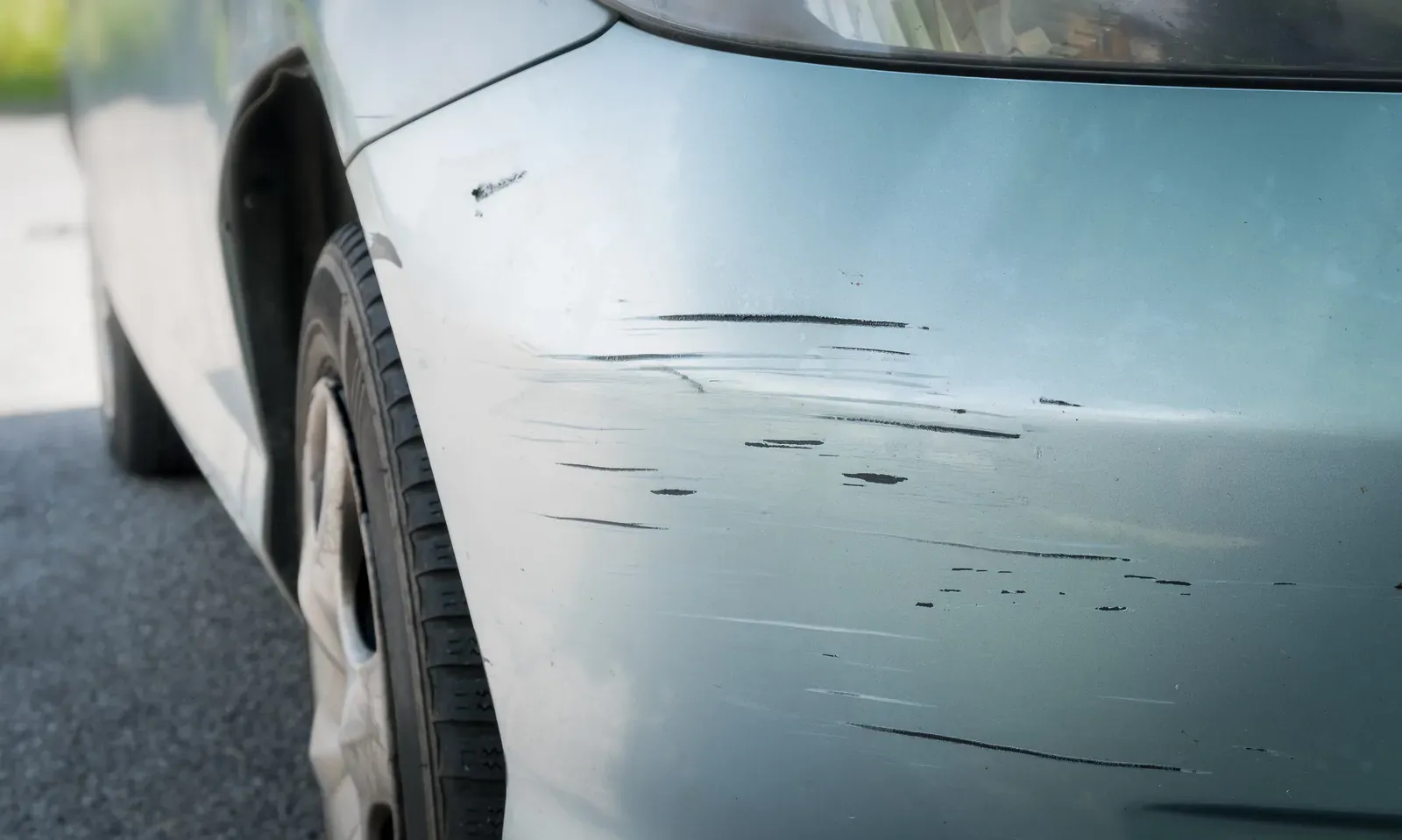
Seal any chip that shows grey or bare metal before the salt trucks come out
The reason to touch up a stone chip is protection, not looks. A chip that only nicked the clear coat is a cosmetic flaw. A chip that went through the colour shows a grey or white primer dot, and one that went deeper shows a dull grey or shiny speck of metal. On a steel hood, that speck starts to rust as soon as it sits wet, and road brine from the 401 and 404 keeps it wet all winter.
Rust that starts in a chip does not stay a dot. It spreads sideways under the surrounding paint, lifting it in a small blister that is many times wider than the original hit. Sealing the chip with primer and paint while it is still clean and small stops that. A drop of touch-up costs very little; a hood with a rash of rust blisters is a refinish.
Do it on a dry, mild day with the hood clean and cool. Paint does not level or bond well on a cold panel in a driveway in December, which is why chips are best handled before the weather turns.
Highway commuting fills the hood edge first, and that pattern tells you what you have
Drivers who run the 404 from Aurora or Newmarket every day, or the 401 across the top of the city, see the same thing: a band of chips along the front edge of the hood, across the bumper, and on the leading edge of the mirrors. Gravel trucks, construction traffic and the grit that collects on the shoulder after months of plowing throw small stones at windshield height and below, and the hood takes the first hit.
Look at the hood in low sunlight from the front corner. A dozen chips spread across the front third is a touch-up job. A hood edge so dense with chips that it looks dull and sandpapery from a few steps back has gone past that. Count roughly, and check how many show primer or metal rather than only a white bruise in the clear.
- A few chips, clear coat only: leave them or have the hood polished.
- Scattered chips to primer or metal: touch up each one before winter.
- Dense chipping across the front of the hood: a refinish will look better than fifty dabs.
- Brown edges or blisters around chips: rust has started and needs sanding out.
Done carefully, touch-up seals the chip; done thickly, it leaves a blob
The touch-up paint for your car is matched to the paint code on the door-jamb sticker. Clean the chip with a wax and grease remover, and if there is any rust, pick it out with a fine point before you paint. Apply the colour with a fine brush or a toothpick, building thin layers inside the chip rather than one big drop. Many kits include a clear coat to go over the top once the colour has dried.
The common mistake is too much paint. A blob that sits above the surface catches the light and looks worse than the chip. Patience and several thin coats give a dot that sits level or slightly below, which you will only see up close. On metallic and pearl colours, the dot will never match the factory flake exactly, and that is normal.
Touch-up is also a repair you can do again. A chip filled this autumn will hold through the winter, and a hood refinish can still be done later if you decide you want the factory look back.
When the hood is peppered past saving, a refinish brings the face of the car back
A hood refinish is the step for a commuter hood that has outgrown touch-up. The hood is sanded down past the chips, any rust spots are ground out to clean metal and treated, the surface is primed, and colour and clear go on in the booth. On metallics and pearls the colour is usually blended into the tops of the fenders so the hood does not read as a different shade beside them.
If the hood is aluminum, as it is on many newer cars and trucks, chips do not rust red but can still corrode white under the paint, and a refinish handles that the same way. Many owners pair a hood refinish with paint protection film over the front edge so the next few years of highway driving land on the film instead of the paint.
Timing still matters with a refinish. Fresh paint is softer for a while after it leaves the booth, so a hood refinished in late autumn and driven straight into a season of gravel and brine may pick up new chips faster than one done in spring. If the chips are already sealed with touch-up, waiting a few months for milder weather is a reasonable choice.
Unsure whether your hood still counts as touch-up territory? Two pictures usually settle it: the whole hood shot at an angle in daylight, plus a tight frame of the densest patch of chips. For lease returns, compare the leasing company’s wear guide against the chip count before deciding.
Questions people ask
Is stone-chip damage covered by my car insurance?
Chipped paint from normal highway driving is treated as wear and is almost never worth a claim. A single large stone that cracked the windshield is a separate matter handled under comprehensive coverage with your deductible.
Will a lease inspection charge me for hood chips?
Most leasing companies allow some chipping as normal wear and charge for chips past their guide’s limit or for any rust. Check your lease-return booklet, and touch up chips that reach metal well before the inspection date.
Can a detailer polish out stone chips?
A polish can soften chips that only bruised the clear coat. It cannot fill a chip that has removed paint, so those still need touch-up or a refinish.