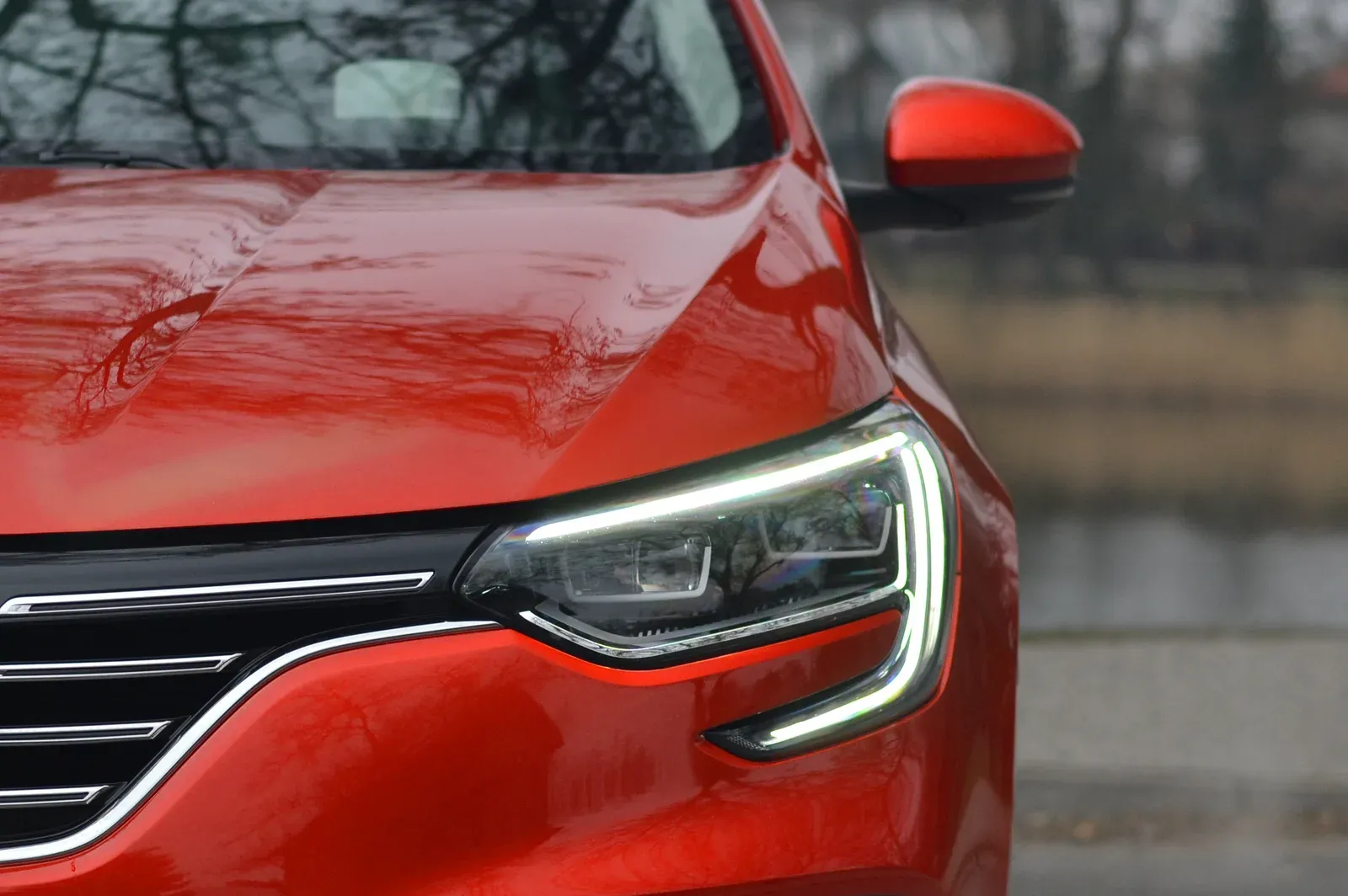
Sunlight wears through the lens’s factory hard coat first, then yellows the plastic underneath
Headlight lenses on almost every car built in the last few decades are polycarbonate, a tough, light plastic that does not shatter like glass. Polycarbonate on its own breaks down in ultraviolet light, so the factory protects it with a thin, hard UV-resistant coating. For the first years that coating does the work. Then summer sun, car-wash brushes and the grit thrown up by trucks on the 401 every winter wear it thin, and the plastic beneath begins to oxidize.
Oxidized polycarbonate turns yellow, then chalky, then rough enough to scatter light instead of passing it. The lamp still lights, but less of the beam reaches the road and more of it spills sideways as glare. Owners tend to notice on an unlit concession road north of Steeles, when the low beams seem to stop a few car lengths ahead.
Parking makes the biggest difference. A car that spends its days in a GO station lot or an open condo surface lot, nose toward the afternoon sun, usually fogs years sooner than the same model that lives in an underground garage.
Why a store-bought kit looks great until the next summer
A kit works by sanding off the damaged surface. That part does its job: the yellow layer comes away, the polish brings back clarity, and the lens looks new in the driveway. The problem is what the sanding also removed. Whatever was left of the factory UV coat is gone, and many kits finish with a polish or a thin wipe-on sealer that cannot match it. Bare polycarbonate now faces the sun with less protection than before, and it often yellows again within months, sometimes faster than the first time.
A restoration meant to last follows the same sanding path but ends differently. The lens is masked, wet-sanded through progressively finer grits until the surface is uniform, cleaned, and then sealed under a durable UV-blocking clear made to bond to polycarbonate, sprayed or applied in controlled conditions and allowed to cure fully. That final coat replaces the protection the factory gave the lens. Leaving it out is the reason so many restored headlights are foggy again by the following August.
Haze inside the lamp, water droplets or deep crazing put the lens past saving
A quick test sorts most cases. Wipe the lens with a wet cloth and look while it is still wet. If the water makes it look nearly clear, the damage is on the outer surface and sanding can reach it. If the haze stays, or you can see a film, a brown tint or droplets behind the plastic, the problem is inside the sealed lamp, and nothing done to the outside will touch it.
Internal haze can come from coatings breaking down inside the housing or from moisture that got in through a failed seal or vent. Reflectors can also deteriorate, the bright silver surface clouding or flaking away behind the bulb; once that happens the lamp cannot focus its beam no matter how clear the lens is. Opening a factory-sealed headlamp to clean it is rarely a lasting fix.
Crazing is the third limit: a network of fine cracks running into the plastic, not just a dull surface. Light crazing sometimes sands out. Deep crazing would mean removing so much material that the lens thins and distorts, so replacement is the sounder choice. Moisture that appeared right after a collision is a separate fault, covered on the cracked headlight page.
How the restore-or-replace decision usually falls
The lamp’s technology does most of the deciding. An older halogen assembly is a fairly simple part, and replacing a badly crazed one with a new or recycled unit can make more sense than heavy sanding. A modern LED or adaptive assembly costs far more, so restoring a lens whose only problem is surface yellowing is usually the better use of money.
After a collision repair the question often comes from the other side of the car. A new headlight on the damaged corner sits beside a seven-year-old lens on the other, and the difference is obvious. Restoring the older one at the same visit is a common way to make the pair match. Any lamp removed for restoration or replacement should have its aim checked before it goes back into service.
Two practical points for Ontario owners. Yellowing is wear, so it is not something your auto policy covers. And if the car is going through a Safety Standards Certificate inspection, the lamps are part of what the mechanic examines, so clear, aimed headlights are worth sorting out before the car is licensed to a new owner.
Keeping a restored lens clear through Toronto summers
A sealed lens still lives outdoors. A few habits slow the next round of fog.
- Park in shade or underground when you can, especially through July and August.
- Rinse winter salt and grit off the front end gently rather than scrubbing the lens dry.
- Skip abrasive polishes and cutting compounds on the lens once it has its new clear.
- Look at both lenses each spring; a dull patch caught early is a light polish, not a resand.
- Keep fuel, solvent and bug-remover sprays off the plastic, which some products can etch.
Questions people ask
Does car insurance pay to fix yellowed headlights?
No. Yellowing and fog come from age and sun exposure, which are wear rather than insured damage. A headlight broken in a collision is part of that claim; one that faded over time is a maintenance cost.
Should I restore just the worse headlight?
Doing one side leaves an obvious contrast, because the untouched lens keeps its yellow tint. Restoring both at the same visit gives an even look, and the second lens adds less time than the first because masking, setup and curing are shared.
How long does a properly sealed headlight lens stay clear?
Much longer than an unsealed kit job, though it depends on how much sun the car sees and on the clear used. A car parked outdoors all day will wear its coating faster than one kept in a garage.
Can toothpaste or bug spray clear a foggy headlight?
Toothpaste is a mild abrasive and can brighten a lens briefly, but it leaves the plastic unprotected, so the fog returns quickly. Solvent-based sprays can damage polycarbonate and are best kept off the lens altogether.