Two kinds of fade look alike from the curb and need opposite fixes
Faded paint comes in two forms: oxidation sitting on the surface of a film that is still whole, and breakdown of the film itself. The first is a polishing job. The second is a refinish. From the end of the driveway both read as a tired, flat colour, which is why owners sometimes pay for a correction that cannot work, or book a repaint they did not need.
Single-stage paint carries its colour and its gloss in one layer, with no separate clear on top. You find it on many older vehicles, on some work trucks and fleet vans, and on certain restorations. When it oxidizes, the top of the pigmented layer turns powdery. Reds drift toward pink, blacks toward charcoal grey, whites toward a yellowish chalk. The colour a few microns down is usually fine; it is buried under a thin dead skin.
Basecoat and clearcoat paint, found on nearly every modern car, ages in a different way. The clear can go dull and hazy from wash marring and mild surface oxidation while staying firmly bonded. Or it can start to degrade through its thickness, going milky and eventually lifting. Only the first of those responds to a polisher.
Five checks to run in the driveway before paying anyone
Wash and dry the panel, then run these in shade on a mild day. None of them harms the paint, and together they sort most cars into a polishing job or a paint job.
- Cloth check: rub a little cleaner wax on a white microfibre against a hidden spot such as the lower door. Colour on the cloth means single-stage paint; a clear coat leaves it clean.
- Water check: mist the dull patch with a spray bottle. If depth and colour jump back while it is wet, the dullness is on the surface and usually correctable.
- Edge check: look where the dull area ends. Soft, gradual edges suggest oxidation; a crisp outline, like a map drawn on the roof, suggests clear that is breaking down.
- Palm check: brush a clean, dry hand over it. Powder on your palm is classic single-stage chalking, while a sandy feel after washing is bonded grime that a clay bar lifts before any polishing.
- Flake check: any spot where a translucent skin is curling up, or matte lighter colour shows underneath, is past polishing.
A machine polish brings shine back by spending film that never grows back
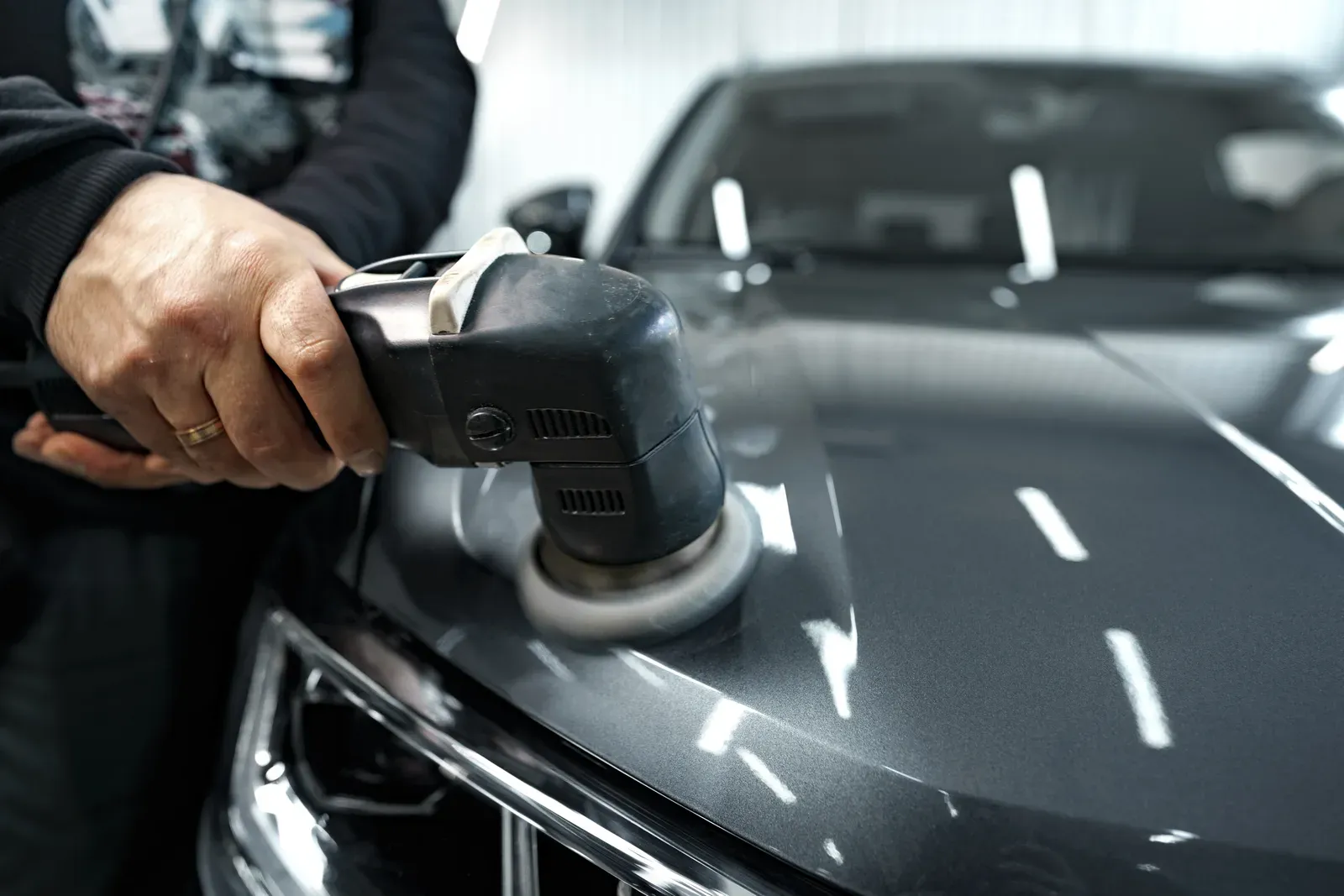
A compound-and-polish correction removes a very thin slice of the surface, taking the oxidized or marred top with it and exposing fresh film underneath. On single-stage paint that fresh layer is the colour itself, so the shine returns with real depth. On dull but intact clear, the correction levels the haze so light reflects cleanly again.
The catch is that every correction uses up material. Factory clear is thin to begin with, and a hood compounded hard by two previous owners may have little left to give. A careful detailer or painter measures film build with an electronic paint gauge before cutting, then picks the least aggressive pad and compound that does the job. Hood edges, body lines and the crowns of fenders burn through first, so those are worked lightly or taped off.
Polishing also does nothing about the cause. A corrected single-stage panel left bare on a south-facing driveway goes flat again within a season or two. A sealant, wax or coating on top, renewed on schedule, is what keeps the result.
What a polisher cannot do is restore film that has broken down. On clear that has gone milky, cutting only thins the weak layer, and the cloudiness often looks worse once the thin gloss sitting over it is gone.
Milky patches, crazing and a low gauge reading mean the panel needs paint
Once clear coat is degrading through its thickness, the only lasting fix is to sand the panel back to sound material and refinish it. The signs are consistent from one car to the next.
If two or more of the signs listed below show on a panel, money spent on correction will be spent again on paint. A refinish is quoted panel by panel, so a car with a failing roof and hood and healthy doors does not need a full repaint.
Mixed cars are common: a roof that needs refinishing above doors, fenders and bumpers that only want a correction. Doing both in one visit makes sense, because the polished panels then sit closer in colour and gloss to the fresh paint beside them, and the colour is matched against the corrected surface rather than the faded one.
- A white or milky cast that stays the same when the panel is wet
- Patches with a sharp border, usually starting on the roof or the front of the hood
- Fine cracking visible at a low angle, often called crazing
- Any lifting skin, or flat lighter colour showing through
- A gauge reading too low to cut safely, even where the panel still looks merely dull
GTA cars fade in the same places, and slowing it on the next panels is cheap
Sun and winter grime do most of the work here, and they hit the horizontal panels of cars that live outdoors. A vehicle parked year-round on a Scarborough driveway or in an open GO station lot takes direct July sun on its roof and hood, then spends November to April under a film of brine from the 401 and the side streets.
That salt residue dulls the surface, and owners who scrub it off in brush washes or with a stiff snow brush add fine marring on top. By spring the car looks a shade lighter and flatter than it did in the fall. Much of that is surface and comes back with a decontamination wash, clay and a polish.
Protecting what you have is simple and unglamorous: rinse the salt off through the winter in a touchless bay, keep a sealant on the roof, hood and trunk lid, and park under cover where you can. Cars that live in a condo garage downtown fade far more slowly than driveway cars for exactly this reason.
Fade from sun and age is wear, so in Ontario the owner pays for it and there is nothing to claim. Panels refinished here fall under our lifetime warranty on paint and refinish, which is one more reason to repaint a failing roof properly once rather than polish it twice.
Questions people ask
Will a polish make my faded red pickup look new again?
If the truck wears single-stage red, it can get close. The pink, chalky top comes off on the pad and the red underneath is usually rich. If the cloth stays clean and the red sits under a clear coat that has gone milky, polishing will brighten it for a while and the cloudiness will stay.
Can I polish oxidized paint myself with a compound from the parts store?
By hand, a mild polish is low risk and can lift light oxidation on single-stage paint. An aggressive machine in inexperienced hands is how edges and body lines get burned through to colour, which turns a cheap fix into a refinish. Start with the gentlest product on a hidden spot and work up only if you need to.
How do I know how much clear coat is left before anyone polishes it?
Only by measuring. A paint thickness gauge reads total film build at each point, and a detailer or body shop can take readings across the hood and roof in a few minutes. A panel that reads far thinner than the doors has usually been polished heavily before, or was repainted at some point.
Is it worth correcting faded paint before I sell the car?
On panels that are only dull, usually yes. A flat, chalky car photographs badly and invites low offers, and a correction costs far less than paint. If the roof is already milky, a buyer will spot it either way, so price that panel as a refinish or disclose it.