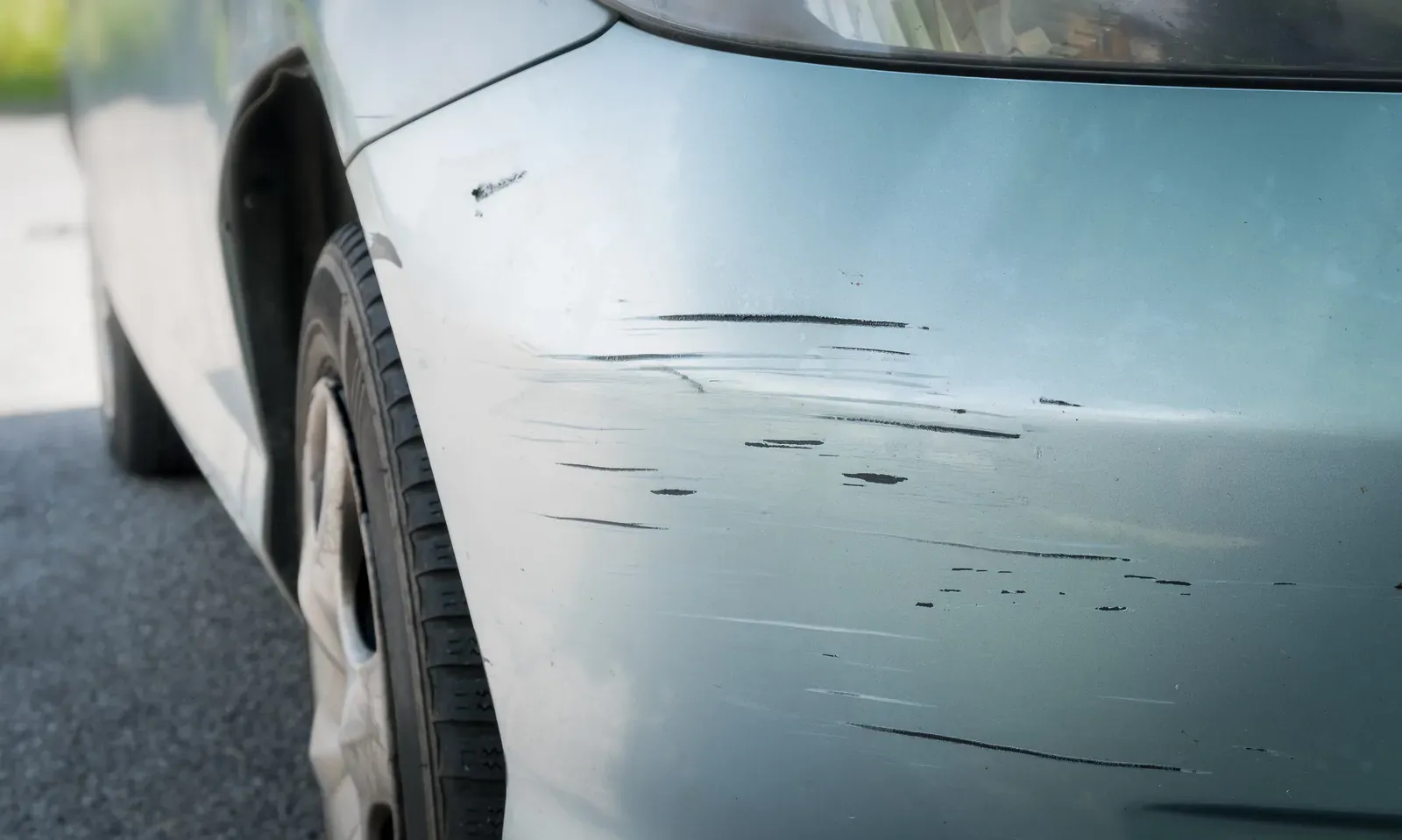
The layer the scratch reached sets the price, not its length
Catch the edge of a fingernail against the scratch and feel what it does. If it glides over without catching, the mark is in the clear coat only and can usually be removed with compounding and polishing in an hour or so, with no paint involved. That is the cheapest outcome and the one drivers hope for after a shopping-cart brush or a bush on a cottage road.
If the nail catches lightly, the scratch is through the clear into the colour. Polishing will not fix that, because there is nothing left to polish; the panel has to be sanded, colour applied and cleared again. If you can see white primer or grey metal in the groove, the scratch is through everything, and the repair adds filling and priming before the colour goes on, plus corrosion treatment if bare metal has been sitting exposed through a winter.
The step from polish to paint is the big one on the estimate. Once the panel is being painted, whether the scratch was four centimetres or forty makes only a modest difference; the booth time, materials and blend are largely the same.
Where the scratch sits matters as much as how deep it is
A scratch in the flat centre of a door is the friendly case. A scratch that runs across a body line, over a door edge, or onto a bumper corner needs the whole shape restored, not just a groove filled, and the paint has to wrap around the edge. Marks on plastic bumper covers behave differently from metal panels: plastic scratches deep quickly and often needs a flexible filler and adhesion promoter before paint.
The number of panels is the multiplier. A key line dragged along the whole side of the car crosses a fender, two doors and a quarter panel, and every one of those panels is a separate refinish. That is why a keyed car is often a claim rather than a cash job, and it has its own situation page on this site.
Trim in the path adds time as well. A scratch that passes under a door handle, a mirror or a piece of moulding means those parts come off to paint properly, and go back on afterward.
Colour and blending move the number more than people expect
Solid white and solid black are the easiest colours to repair and match. Metallics, pearls and tri-coat reds and whites are harder, because the flake or pearl has to lie the same way it did at the factory, and the safe way to guarantee that is to blend the new colour into the neighbouring panels so there is no hard edge for the eye to find.
On a scratch that is confined to one door on a solid colour, a blend may not be needed. On a metallic silver door the estimate often includes blend time on the fender and the rear door as well, which is paint on panels that were never scratched. That is not padding; it is the difference between a repair you can find and one you cannot.
The age of the paint matters too. Clear coat that has faded or chalked over years of Toronto summers will not match fresh clear beside it, and the fair estimate may say so and recommend a wider blend or, on a very tired finish, a full panel.
Getting a real number for your scratch
Photograph the scratch in daylight, once from a couple of metres back so the panel and its edges are visible, and once close up at a low angle so the depth shows. Send them with the make, model and colour, and the owner will tell you, usually within the day, whether it is a polish, a spot repair or a panel refinish, and what a blend would add.
If the car is new or leased, say so. The estimate for a lease return that has to pass inspection can be written to the standard the inspector uses, and a first scratch on a new car is worth doing properly once rather than touched up twice.
Plan for the car to be away longer than the scratch suggests. A polish is usually done while you wait or the same day. Once paint is involved, the panel has to be prepped, sprayed, baked and left to harden before the trim and handles go back on, so even a single door is typically a two- or three-day visit, and a keyed side with a blend across four panels is closer to a week. If the scratch is a comprehensive claim, a rental depends on whether you carry loss-of-use coverage; on a cash job you are without the car for those days, which is worth weighing before choosing a polish that will not quite hide it over a refinish that will.
Questions people ask
Can I use a touch-up pen instead?
On a chip or a very short deep scratch a touch-up pen keeps rust away and is fine if you accept that it will be visible up close. On a long scratch it tends to look worse than the scratch and has to be sanded off before a proper repair.
Does a scratch need fixing right away?
If it is into primer or metal, yes, before winter salt gets into it. A clear-coat-only scratch can wait, though it will not polish out as cleanly once the edges have weathered.
Will a scratch repair be covered by insurance?
A scratch from vandalism is a comprehensive claim; one from a hit-and-run while parked is collision, rated not-at-fault once a report is on file; one you caused is at-fault collision. Whether it is worth claiming depends on your deductible, which the answer on paying out of pocket walks through.
Is a mobile scratch repair as good as a body shop?
For clear-coat polishing it can be. For anything that needs paint, the finish depends on a dust-free booth and a proper cure, which a driveway cannot offer.