Winter and the underground ramp
From the first salt in December to the last freeze in April, the front bumper takes the season. Slush thrown up on the Don Valley Parkway coats the lower cover in a salt film that dulls the clear and works into every stone chip. The ramp out of a Cumberland or Yorkville Avenue garage grows a lip of frozen slush at the top, and a car with a low front splitter catches it every morning until something cracks. Snow piled by the plough at the mouth of a laneway off Davenport hides a curb, and a rear bumper backs into it. The rest of the year the pattern moves to the curb: a rear cover clipped by a delivery van reversing on Bloor, a corner scuffed by the column at the turn into a stall, a taxi at a hotel forecourt on Bay nosing into a parked car’s tail. The plastic scuffs, the paint scrapes, and the question is what is underneath.
A painted skin over radar: why some covers cannot be repaired
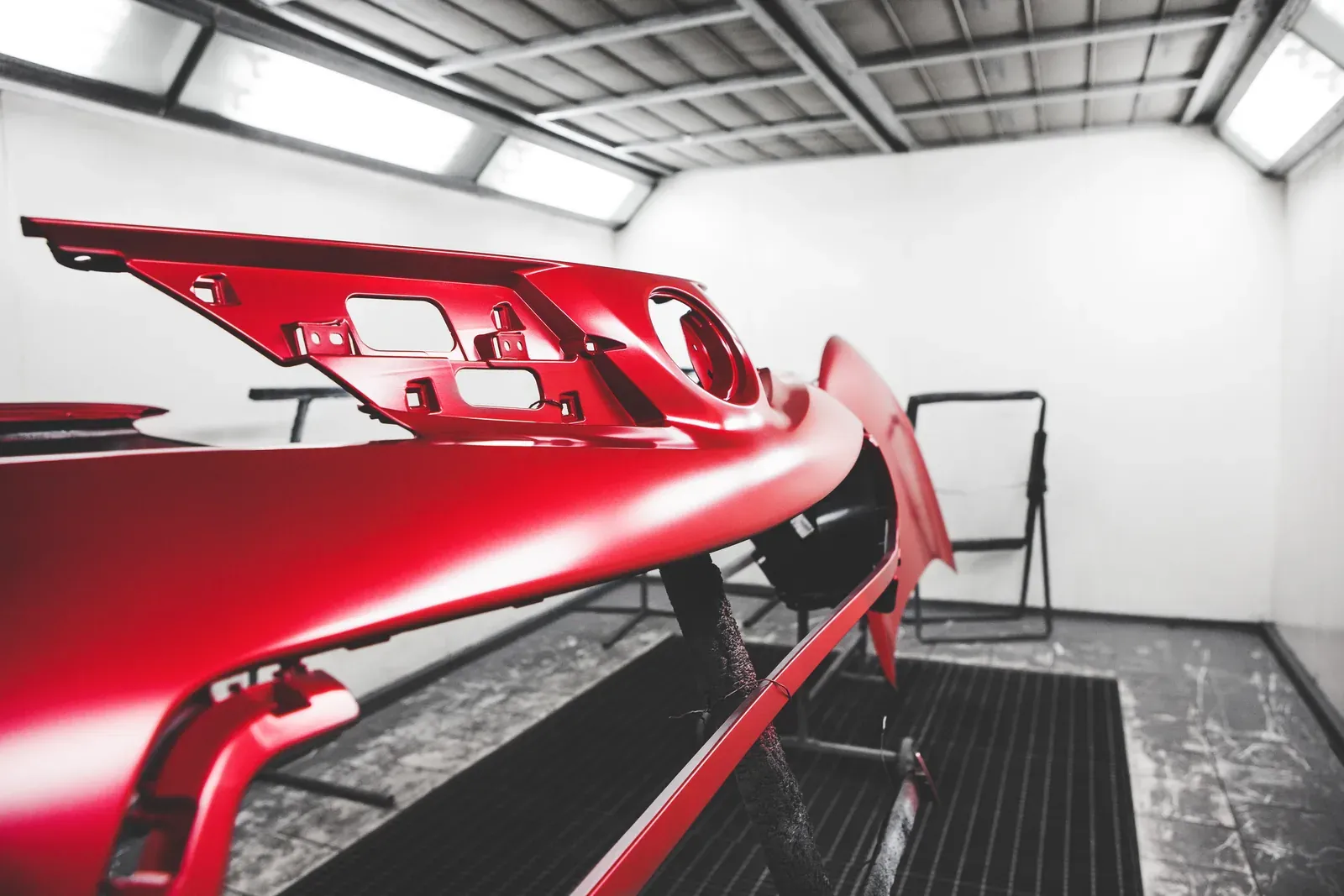
A modern bumper cover on the cars this neighbourhood drives is a painted skin over a foam absorber, a steel or aluminum beam, and a set of parking sensors, a radar module for the cruise control and often a camera in the lower grille. A scuff or a shallow gouge in sound plastic is repaired: the cover comes off, the damage is ground, filled with a flexible compound, primed, refinished in the matched colour and blended into the fender. A cover cracked through, or one whose mounting tabs have snapped, is replaced, and on a car with radar behind the badge that usually means OEM, because an aftermarket cover can be a millimetre off where the sensor reads through it. Any time the cover has been removed or a sensor bracket has been touched, recalibration may be required, and we write it into the estimate. Behind all of that, the beam and the absorber are checked; a parkway bump that looked like a scuff sometimes bent the beam, and a bent beam is replaced, not straightened.
Forecourt taps and ramp scrapes: what gets claimed, what gets paid
A scuffed corner is usually paid for directly, because the repair often lands near the deductible and a small claim is not worth the record. A replaced cover with a radar recalibration on a leased German SUV is a different number and is normally claimed. The hotel forecourts on Bay and Yorkville Avenue add a third path: when a valet or a taxi taps the car while it is in the operator’s care, the operator’s liability coverage is the first conversation, your own collision coverage the fallback, and the incident report you file before leaving is what keeps that conversation short. If someone hit the parked car on Bloor and left, it is claimed as a hit-and-run under your own collision coverage once a police or Collision Reporting Centre report exists. A low-speed bump on the parkway where the other driver stopped runs through DCPD: your own insurance company pays for your damage to the extent you were not at fault, and our estimator runs the file with the adjuster. Where the choice is close, the estimate is written both ways so you can see the gap, and the cover is ordered before you drive up so the car is apart only once.
Questions people ask
Every winter the front lip catches the hump of ice at the top of our garage ramp. Repaint it each spring, or wait?
If that hump is a fact of your garage, waiting is usually the better arithmetic: one proper repair and refinish before the lease return covers three winters of scrapes, where an annual respray pays for the same work three times over. The exception is a crack or a loose mounting tab, which spreads under vibration and should be fixed when it happens. A photo each spring keeps a record of what is cosmetic and what has changed.
Can a scraped front splitter be repainted without replacing the whole bumper?
Often. If the splitter is a separate piece it is repaired or replaced on its own and refinished in the matched colour; if it is moulded into the cover, the lower section is repaired and blended. A splitter that has cracked or lost its mounting points is replaced.
Is it safe to drive up to you with a bumper cover hanging loose at one corner?
Not on the parkway. A cover that is loose at one corner can drop under the wheel at speed. Tape it firmly or have the loose section removed first, or, if it is dragging, we help arrange a tow and the operator collects it from the garage entrance.