Seventy kilometres a day on the 404
Newmarket is a commuter town, and the commute runs through our exit. Drivers heading to offices in Markham, the hospital corridors of North York or the warehouses along Steeles do the Davis-to-Sheppard run and back every weekday, and the bumper is the part of the car that pays for it. Southbound mornings the traffic compresses at 16th Avenue and again under the 407, and a two-second lapse becomes a rear-end at walking speed — enough to crack a cover and crush the absorber behind it without leaving much to see.
Northbound Fridays in summer are the same in reverse: the cottage crowd from Toronto fills the 404 to Bloomington, and the chain tap at the back of a queue is a Newmarket driver’s most common bumper claim. The 407 ramps add a specific case — the merge is fast, the following distance is short, and the front cover meets a trailer hitch. Weekends bring the slower version: the Yonge Street lots, the curb at Davis and Yonge that is exactly the wrong height for a modern front lip, and the frozen windrow that grabs a corner in January.
The plastic hides the damage; the sensors make it matter
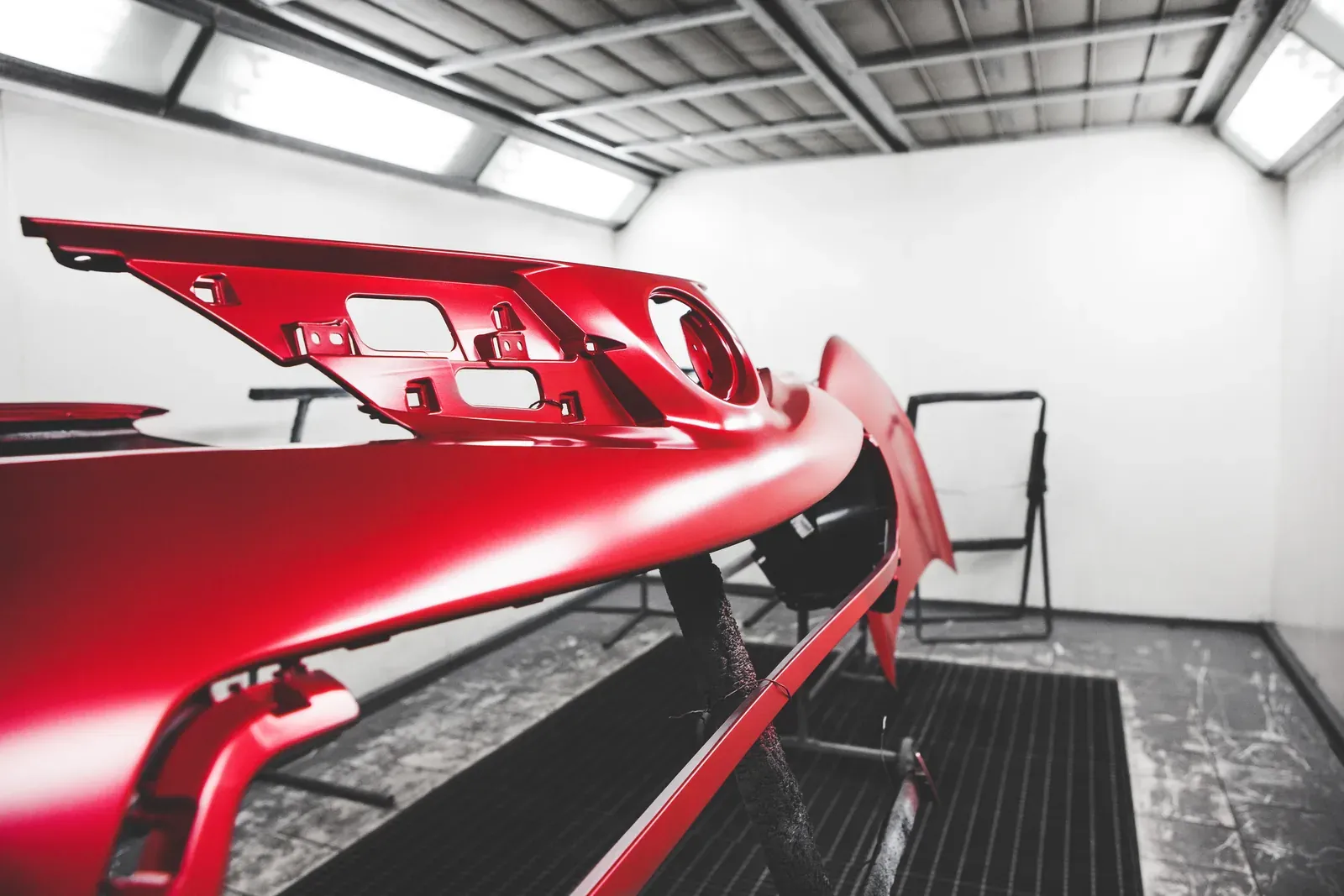
A modern bumper cover is designed to flex and return, which is why so many of them look scuffed rather than broken after a hit that has cracked the mounting tabs and flattened the foam absorber. On the cars Newmarket drives — the three-row SUVs, the pickups, the newer sedans — the cover is also a housing for parking sensors, blind-spot radar and sometimes the front camera. A repair that ignores them is incomplete, and a replacement cover that shifts a sensor by a few millimetres can leave the driver aids seeing the wrong thing.
The logic is simple. A scuffed or lightly cracked cover in a repairable spot is plastic-welded, refinished to your colour and warranted like any refinish. A cover with snapped tabs, a torn corner or damage across a sensor housing is replaced. Either way, the absorber and brackets behind it are inspected, and on equipped vehicles the sensors are transferred or replaced and a recalibration may be required before the car goes back on the 404. Our estimator writes the photo estimate as a starting number and firms it up once the cover is off.
- Plastic repair and refinish where the cover can genuinely be saved
- Replacement where tabs, corners or sensor mounts have failed
- Absorber, brackets and clips inspected behind every cover
- Sensor transfer and recalibration where the vehicle needs it
DCPD covers the crawl tap; the windrow crack is your call
Bumper work sits right on the claim-or-cash line. A corner scuff refinish is often a sensible out-of-pocket job; a cover, absorber, brackets and a recalibration is a claim, and if another driver caused it Ontario’s DCPD rules mean your own insurance company pays without it costing you the repair. We open the claim, supply the teardown photos and manage the adjuster from our office.
If the cover is hanging after the hit, do not drive it down the 404 — a cover that lets go at highway speed is a hazard for everyone behind you. Tie it up for the drive if you can, or leave the car in Newmarket and let us coordinate the tow to Sheppard and Don Mills. The rental through your coverage is booked to be waiting when the car arrives.
Questions people ask
Someone tapped me in the 404 crawl at Highway 7 and the bumper only looks scuffed. Is it worth checking?
Yes, because the scuff is the part you can see. A cover that flexed and returned can be hiding cracked tabs and a crushed absorber, and if the car has parking sensors or radar in that corner they may have been pushed off aim. Send photos; our estimator will tell you whether it needs the cover off to price honestly.
The scraped part of my bumper is black textured plastic, not painted. Is that cheaper to fix?
Usually, and sometimes it is not a refinish at all. Textured mouldings leave the factory unpainted, so a scuff on one cannot be polished or blended — the fix is a texture-matched repair or, more often, replacing the moulding, and on many models that piece costs less than a paint cycle. Send a photo of the whole corner; the estimate will say whether your trim needs paint, a texture repair or a bolt-on part.
Three of us tapped in the Friday crawl near Bloomington. How is fault split down a chain?
Each pairing is assessed separately under the Fault Determination Rules. The driver behind is normally at fault for the car ahead, but a middle car pushed into the lead car is not at fault for that contact either — the statements and positions decide which happened. Every vehicle claims its own damage through its own insurance company under DCPD, and both ends of your car go on one claim, because it is one incident. Photograph all the positions before anyone moves.