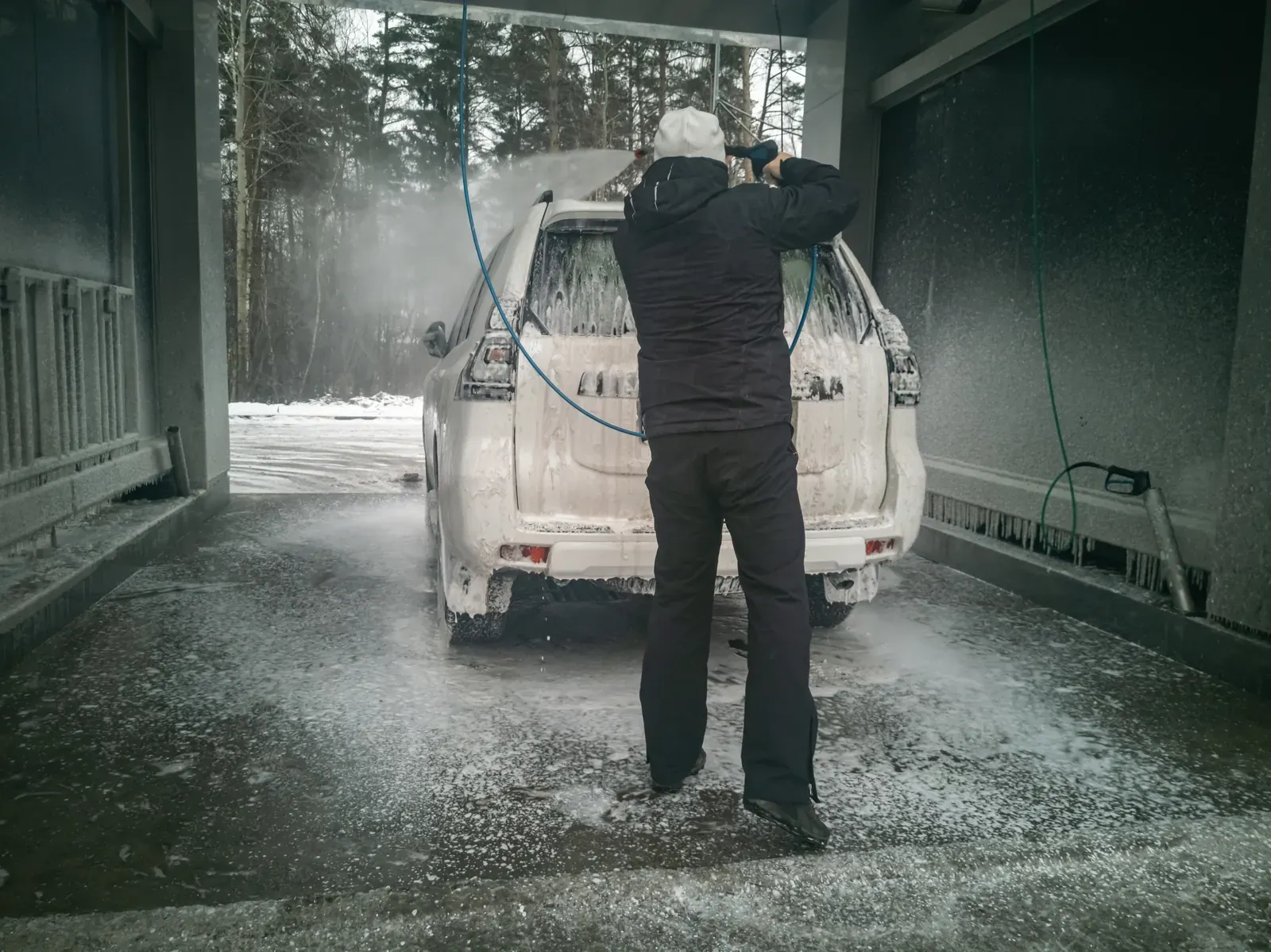
Wash on a rhythm, then add one after every storm
A steady interval beats a heroic spring detail. Somewhere between every week and every second week is a sensible baseline for a car that commutes on the 401, the DVP or the 404 through January, and a car that only does school runs on side streets can stretch toward the longer end. What matters more than the exact count is the extra wash after a storm. Brine and rock salt are heaviest on the pavement for the first few dry days after the plows have been through, and that is when the lower half of the car picks up the thickest coat.
Waiting for the first warm weekend in April means the residue has had months to sit in seams and cavities. The guide on road salt and rust explains the chemistry. The practical point here is timing: a rinse in the middle of February does more for the metal than three careful washes in May.
The thermometer decides which day you go
Go on the mildest day of the week, ideally one forecast to stay near or above zero into the evening. A wash at minus twelve turns into a car glazed with ice: water freezes in the door seals, locks and mirror folds, and the next morning a door that will not open gets yanked hard enough to tear a weatherstrip. Afternoon is better than morning because the car has a few hours of daylight to drip and dry before the overnight low.
Hot water on frozen glass is a separate risk. A windshield that has spent the night at minus fifteen can crack when a jet of warm water hits a chip, so let the cabin heater take the chill off the glass on the drive to the wash rather than going straight from a frozen driveway into the bay.
A heated underground garage is the odd case. Slush that comes in on the car melts down there and stays wet against the arches and rockers instead of freezing solid, so condo dwellers in Willowdale or along Yonge often need the wash rhythm more than drivers who park on a cold driveway.
Most of the wash should be aimed underneath and low
Point the effort where the salt lands, which is the bottom third of the car. The roof is clean by comparison. A touchless bay with an underbody spray, or a self-serve wand you can aim yourself, will reach places a brush tunnel never touches. If you use a wand, work from the bottom up on each side and spend most of your time in these areas:
- Inside each wheel arch, aiming up behind the plastic liner where slush packs in
- Along the rocker sills and the pinch weld underneath them
- The rear bumper’s lower edge and the hitch area, which catch spray from the back tires
- Behind the front licence plate and inside the lower grille openings
- The door bottoms and their drain slots, which fill with grit
- Brake calipers and wheel faces, where brine and brake dust bake on together
Finish with the jambs, seals and locks
The minute after the wash matters as much as the wash. Open every door, the trunk or liftgate and the fuel door, and wipe the jambs with a towel. Salty water sits on those ledges and in the hinge pockets, and it is exactly the water that freezes the door shut overnight. Run the towel along the rubber seals as well. A thin wipe of a silicone seal conditioner in late fall keeps the rubber from bonding to the frame when it does freeze.
Cycle the power mirrors once or twice so water does not freeze in the fold mechanism, and tap the brakes gently on the way out of the bay to dry the rotors. On a car with a power liftgate, open and close it before you leave, because a gate that freezes half open in a plaza lot is a sore way to finish the errand.
What waiting until spring costs, in paint and in metal
Putting it off lets small problems grow on two fronts. On the paint, the grey film that builds up on a dark car is abrasive. Every time a glove, a snow brush or a jacket sleeve rubs across it, that grit is dragged across the clear coat. On the metal, any stone chip that reached steel on a front edge or rocker spends the whole season sitting in brine, and by April it has grown a brown halo that has to be sanded out rather than touched up.
Hand-washing in your own driveway is not much use from December to March in Toronto. The water freezes on the asphalt, the hose freezes, and the car never dries. A heated bay is the realistic option until the thaw. In late March or early April, once overnight temperatures stay above freezing, give the car one thorough wash with a proper underbody rinse and a look along the rockers and arches. Bubbles you find then are much easier to deal with than the same bubbles found the following fall.
Questions people ask
Is a brush tunnel at the gas station good enough for a salt wash?
It cleans the panels but barely reaches underneath, and the brushes drag winter grit across the paint. In salt season a touchless bay with an underbody spray, or a self-serve wand aimed at the arches and rockers, does more for the parts of the car that rust.
Should I wash the car before a cold snap or after it?
Before, if you can find a mild afternoon to do it and the car can dry. Salt is less active when it is frozen hard, so the urgent window is the slushy, above-freezing days when brine stays liquid against the metal.
Does a wax in the fall make winter washing less important?
It makes the salt film easier to rinse off the painted panels and protects the clear coat a little. It does nothing for the underbody, the arch seams or the inside of the rockers, so the rinse schedule stays the same.
My door froze shut after a wash. What is the safe way to open it?
Push firmly inward on the door first to crack the ice along the seal, then pull the handle. Prying with a scraper or yanking repeatedly tears the weatherstrip and can chip the paint on the door edge.