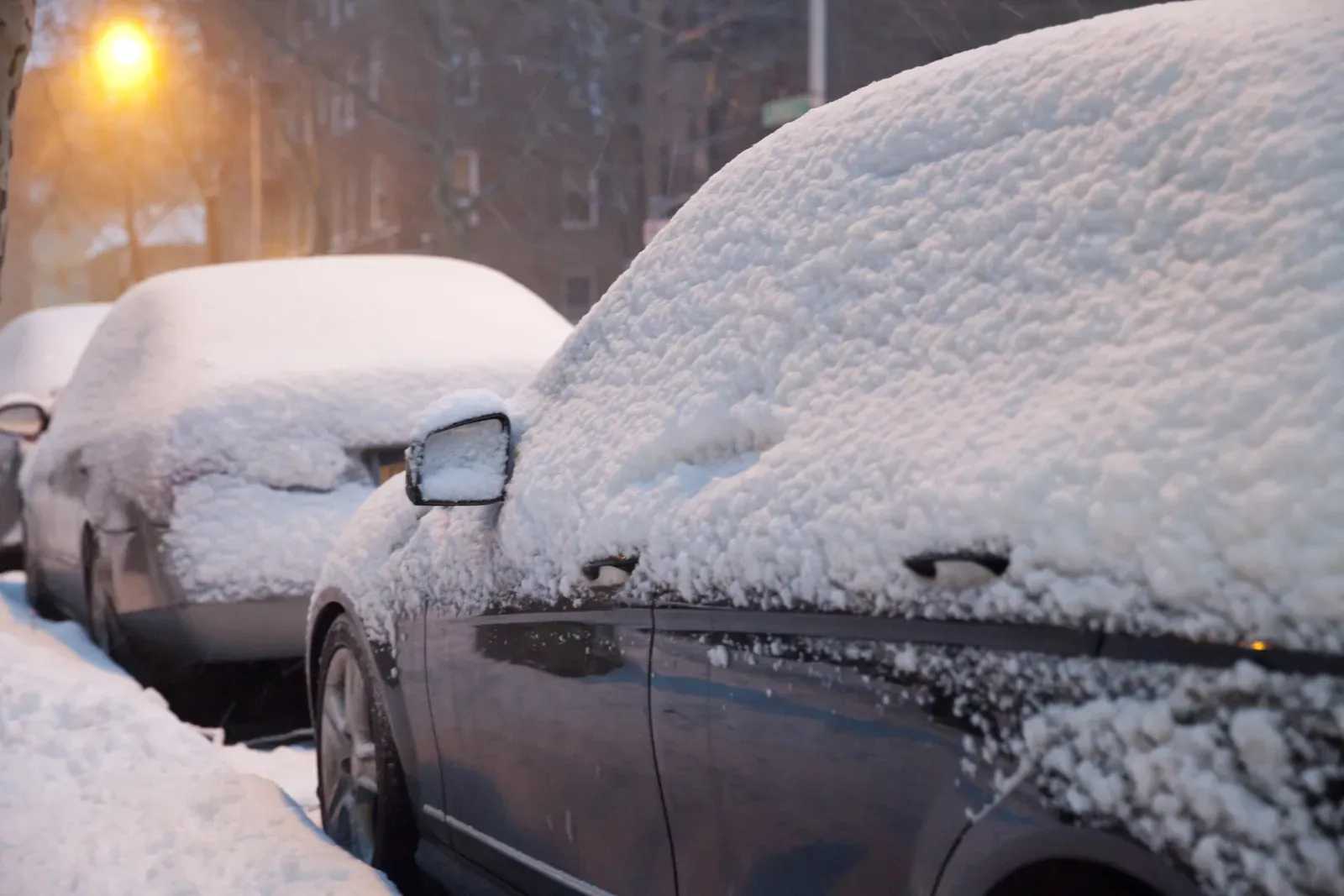
Scrapers belong on glass and nowhere else
The scraper blade is harder than the clear coat, and ice is not smooth. Every time someone chips a sheet of freezing rain off a hood or a roof with the plastic edge, the blade skips and digs, and each skip leaves a short straight scratch. After an ice storm the damage can be dozens of little marks clustered where the ice was thickest, usually on the hood near the windshield and along the roof edge.
Glass is much harder than paint, which is why the same tool is fine on the windshield. Even there, keep it off the painted pillars and the plastic cowl at the base of the windshield, and do not use it to hack ice off the wiper arms where the blade can slip onto the fender.
A snow brush is only as gentle as what is caught in its bristles
The brush is the quieter culprit. It lives on the floor or in the trunk all winter, picks up road grit and dried salt from boots and slush, and then gets swept across the paint every morning. The bristles themselves are not the main problem; the sand caught in them is. The result is a pattern of fine parallel lines across the roof, hood and trunk lid that shows up in the first sunny days of March.
Two habits make it worse. Pressing hard to push heavy, wet snow, and sweeping a car that is already filmed with brine from the commute, because the brush then grinds that film into the clear.
- Swap to a brush with a foam or soft rubber pushing head for painted panels, keeping the bristle side for the glass and wipers.
- Knock the brush against a tire and rinse it in warm water every so often to clear grit out of the bristles.
- Push snow off in long strokes away from you rather than scrubbing back and forth.
- Leave the last thin layer on the paint; it will melt off on the drive, and it is not worth the scratches.
- Store the brush in a bag or a bin so it does not pick up whatever is on the floor mat.
Let heat do the hard part on an iced-over car
The safest way to deal with freezing rain is to start the car, set the defroster and rear defogger, and wait. Several minutes of warm air loosens the ice on the glass so it lifts in sheets, and the roof and hood begin to release as well. Where your building or municipality has idling rules, follow them, but the principle stands: patience is what saves the paint.
Do not pour hot water on the car. On a cold windshield it can crack the glass, especially if there is a stone chip, and on the body it simply refreezes in the seams. De-icer spray is fine on the glass and the locks. A thick layer of ice on the hood that will not shift can stay there; it will soften as the engine warms up.
Clear the roof all the same. A slab of snow sliding forward onto the windshield at the first hard stop on Sheppard is a real hazard, and ice flying off a roof on the 401 can damage the car behind you. A long-handled foam broom reaches the middle of an SUV roof without leaning a jacket zipper against the door.
Frozen doors and seals cause their own chips
A door frozen to its weatherstrip tempts people to pry at the gap with the scraper edge. That chips the paint on the door edge and the frame, often right down to metal, and it is a common source of small rust spots on the lower door corners by spring. Push in firmly on the door first to break the ice along the seal, then pull. Try the passenger side or the hatch if the driver’s door will not budge.
A silicone conditioner wiped on the rubber seals in late fall stops them from bonding to the frame. The same goes for mirrors: let the heated mirror clear itself rather than scraping the glass, which can pop it off its mount, and do not force a power mirror that has frozen in its folded position.
Most winter scratches can be fixed, and the order you fix them in matters
Brush marks and fine scraper lines usually sit in the clear coat. Once the weather warms, a machine polish levels them out and the finish looks right again. Look at the panel in sun after a wash: lines that disappear when you change your viewing angle are shallow, and lines that stay put from every angle, or show a lighter colour at the bottom, went deeper.
Deeper scraper gouges and door-edge chips that reached primer or metal are a different job. Through a salt season they need sealing quickly, even with a touch-up dab as a temporary measure, so moisture does not get under the paint. Come spring the area is sanded, filled where needed, primed and refinished, with colour blended into the neighbouring panel if the paint is metallic. Winter clearing damage you did yourself is an owner-paid repair, and in most cases it is small enough that a claim would not make sense anyway.
Questions people ask
Are foam-head snow brushes worth buying?
For a car you care about, yes. The foam or rubber head pushes snow without bristles to trap grit, and most have a regular brush on the other side for the glass.
Can I use a leaf blower to clear snow off the car?
For light, dry snow it works well and nothing touches the paint. It does nothing for wet snow or ice, and it should not be aimed at a car covered in grit, which it will sandblast across the surface.
Why are there scratches only on the top of my car and not the sides?
Because the roof, hood and trunk lid are the panels that get brushed and scraped every morning. The sides only get the windrow spray and the occasional sleeve, so their damage looks different: chips low down rather than lines across the top.
Will a ceramic coating protect against snow brush scratches?
A coating is harder than bare clear coat and makes snow slide off more easily, so it helps. It is still thin, and a gritty brush or a scraper blade will mark it. The habits matter more than the coating.