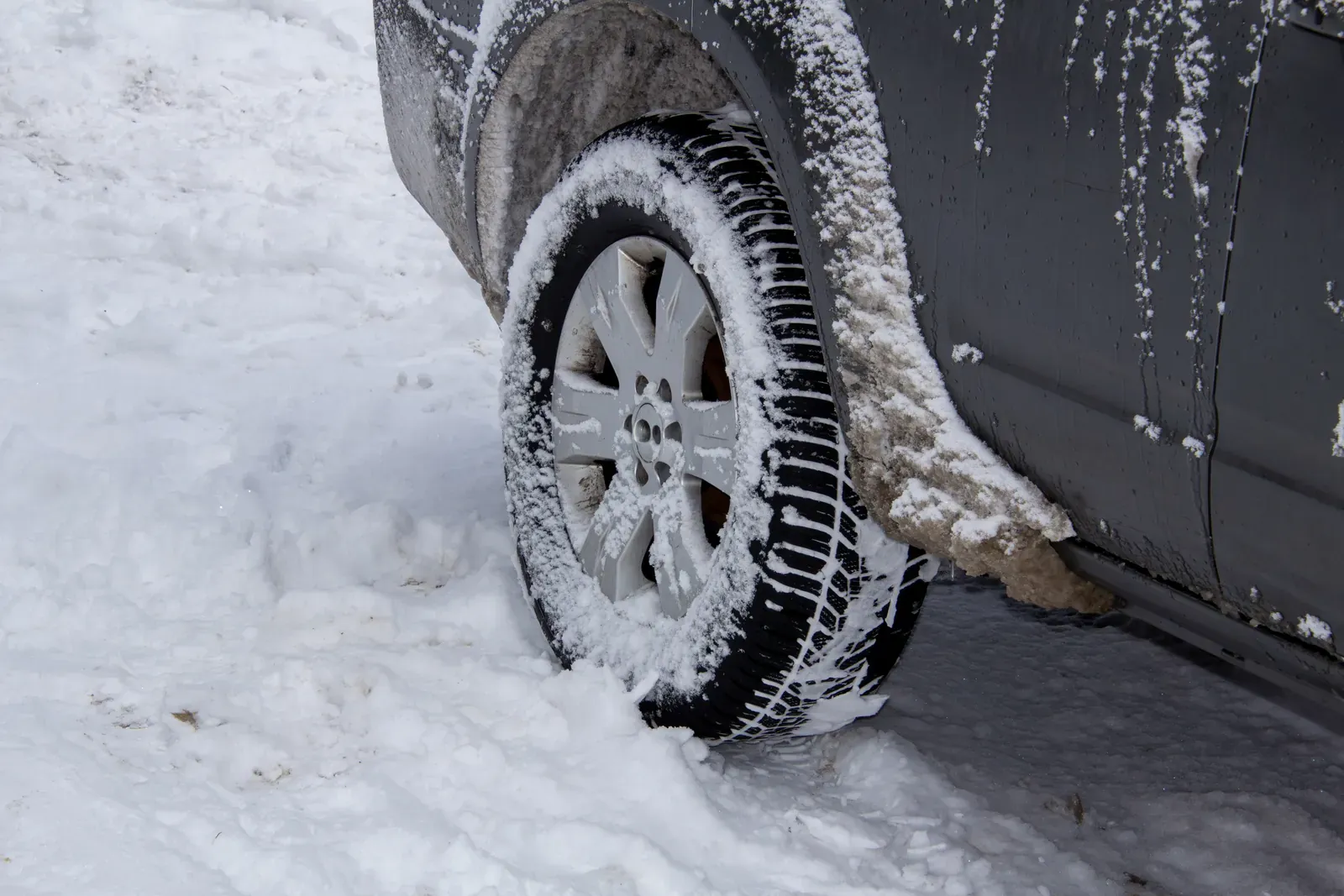
Open paint plus a salt season is the deciding question
Look first at whether the paint is still whole. If the film is intact, a dent is a cosmetic problem and the season does not make it much worse. If the paint is cracked, chipped or scraped through to primer or metal, the next five months of brine on Sheppard, the 401 and the DVP will find it. Bare steel on a door edge or a fender lip can start to show surface rust well before the winter is out, and by spring the job is no longer a paint repair but a rust repair at the edge of a dent.
Crease lines deserve particular attention. A sharp fold in a door or quarter panel often cracks the paint microscopically along the crease even when it looks intact, and that hairline lets water in. If you are not sure, a close look under bright light, or photos sent to a shop, will usually settle it.
Bumpers and their clips do badly in the cold
Plastic gets stiffer and more brittle as it gets colder. A bumper cover that took a fall tap and now has a crack, a popped corner or a broken mounting tab will usually get worse once the temperature drops: the crack runs, the loose corner flaps at highway speed, and slush packs into the gap and pushes it further out. Snow windrows at the end of the driveway and frozen ruts in plaza lots give a sagging lower edge plenty to catch on.
Anything that holds the bumper on, protects a light, or houses a parking sensor or radar unit is worth doing before the snow. A sensor behind a misaligned cover may give false alerts or switch off in winter conditions, and after the repair the system may require recalibration. A cracked headlight lens fills with condensation and then ice. None of that is improved by a winter of salt spray.
What can sensibly wait until spring
Some damage really does keep. A shallow door ding with no broken paint, a soft dent in the middle of a panel, or a light scuff that only marked the clear coat will look the same in April as it does in October. Paintless dent repair works on many of those dents in any season, but if you would rather not give up the car during the busy months, waiting is a reasonable call.
- Dents with no cracking, chipping or creasing in the paint
- Scuffs that wash and polish back without showing primer
- A bumper scuff where the cover is still tight to the body and every clip is holding
- Wheel curb rash that is cosmetic and has not bent the rim
- Damage on a car that will sit in a garage all winter and not see salt
The insurance clock does not wait for the weather
Choosing when to repair is your decision; choosing when to tell your insurance company is not really optional. If the damage came from a collision and there is any chance you will claim it, notify the company promptly. Ontario policies expect notice within seven days of the incident, and a call in April about a fender bent in November raises questions you would rather not answer. Reporting to police runs on its own timetable as well: if anyone was hurt, that was a 911 call from the scene, and if nobody was hurt but the combined damage looks likely to pass the provincial reporting threshold, or the other driver left, the nearest Collision Reporting Centre expects you promptly, generally within 24 hours.
Reporting it now does not mean you have to fix it now. Once the claim is open and the estimate is on file, you can usually schedule the repair later. If you are paying yourself rather than claiming, the policy still expects you to report the collision; the answer on telling your insurance company about a minor accident goes through that. Waiting also costs you evidence: photos of the scene, the other driver’s details and your own memory of the lane are sharpest in the first few days, and those are what the adjuster leans on when fault is assigned.
Booking in fall versus booking in spring
Fall is often the easier window. Once the first storms arrive, a single icy morning can send a run of damaged cars into shops across the GTA, and the guide on winter timelines explains why that stretches waits through January and February. Pothole season from February into April brings its own wave of bent wheels, torn liners and cracked bumpers. A repair booked in October or early November usually avoids both.
Spring has its own advantage if the damage is the kind that keeps: the car has finished its salt exposure, any rust that has started along the damage is visible, and you fix everything at once. What works poorly is the middle path, driving all winter on damage you meant to fix, then discovering in March that the clips are gone and the edge has started to bubble.
If you cannot tell which side of the line your damage falls on, send three photos to our estimator: one straight on, one from an angle, one close up. You will get a written estimate the same business day with a plain answer on whether it can wait, and our estimator can talk it through in English or Mandarin. The shop is off the 404 at Sheppard, so a quick look in person before winter is easy to fit around an errand at the mall.
Questions people ask
Will a touch-up pen get a chipped dent through the winter?
It can, as a stopgap. Clean the chip, dab enough paint to cover the bare metal, and let it dry before the next salting. It will not look like a repair, but it keeps water off the steel until the panel can be fixed properly in spring.
Is it worse to repair a car in January than in October?
The finish is no different, because the work happens inside a heated booth. What changes is the wait: winter brings more damaged cars into shops at once, so the same repair often waits longer for a booking in January.
Can I tape a loose bumper corner until spring?
Only for a few days. Tape fails in cold and wet weather, and a corner that comes loose at highway speed can tear the cover or hit another car. A shop can often refasten or plastic-weld a broken tab quickly.
Does salt damage the inside of a dent even if the paint looks fine?
Not if the paint is truly intact on the outside. The bigger risk is the back of the panel, where a collision may have cracked the factory coating inside the door or fender. A shop can check that from the inside when the trim comes off.