Film pays off where the stones hit, which on a GTA commute is the front third of the car
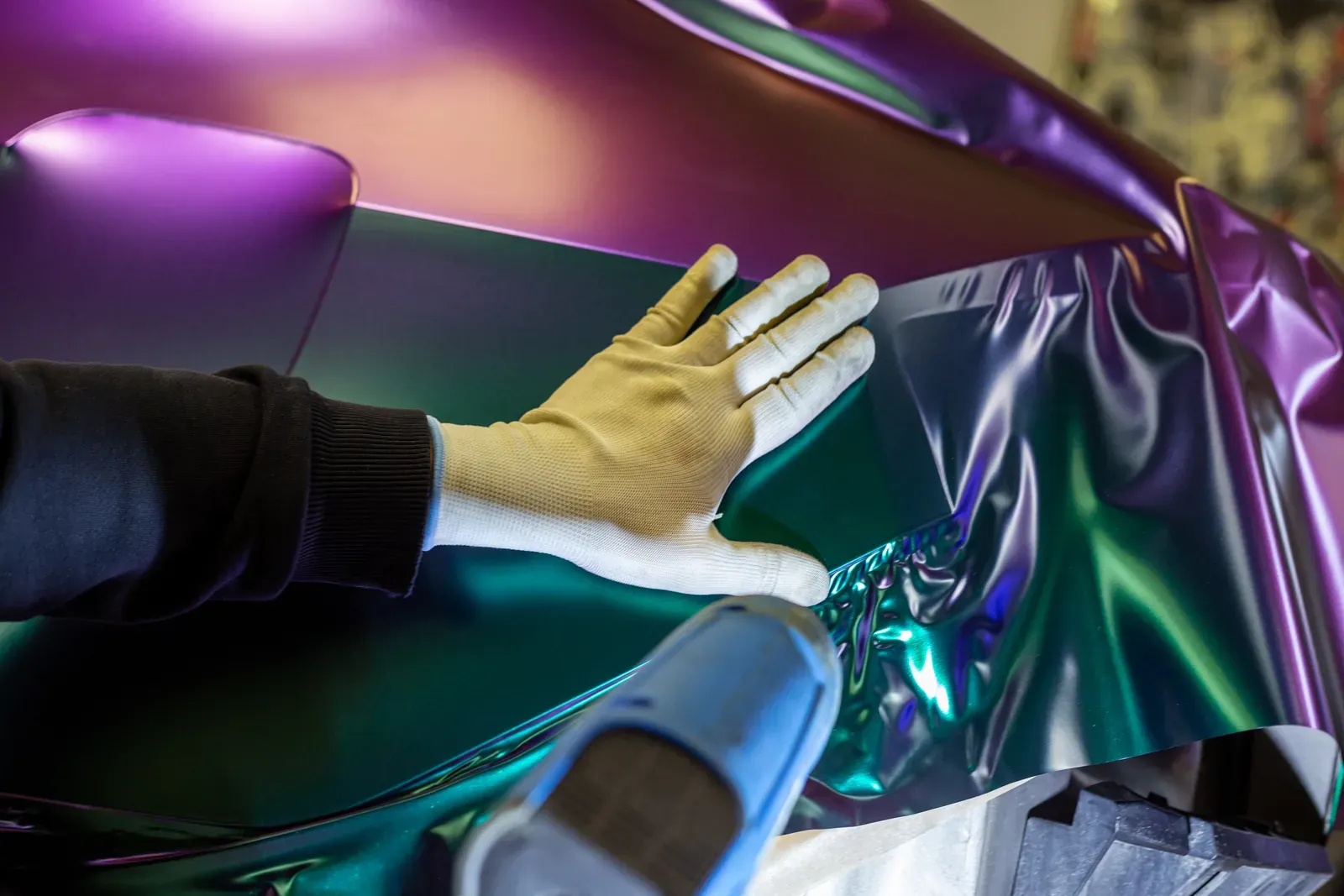
Paint protection film is a clear urethane sheet, much thicker than any clear coat, applied over the factory paint. Its job is narrow: absorb the impact of grit and small stones so the paint under it never sees them. That is why the useful question is not whether film is good in general but how much of your driving puts a dump truck or a salt-spreader in front of your bumper.
A daily run in the 401 collectors past Yonge, the 404 between Steeles and the DVP, or the 407 at highway speed exposes the leading edge of the hood, the bumper cover, the headlights and the mirror caps to a steady sandblast. Through the winter the road surface carries salt, grit and broken asphalt from fresh potholes, and every truck ahead throws it back. By spring, a hood that faced that for a few seasons often shows a dense pepper of chips, each one a small hole in the clear and colour. A car that mostly goes from a Don Mills driveway to a plaza on Lawrence sees far less of it, and film there is more about peace of mind than about damage it will prevent.
So the rough rule: high highway kilometres, a newer car you plan to keep, or a colour that is expensive to refinish all push toward film. Low kilometres, an older finish already chipped, or a lease you will return in a year push away from it.
Ceramic coatings and wax solve a different problem from stone chips
A ceramic coating is a thin, hard, slick layer that makes the paint easier to wash and slower to dull. Wax does a gentler version of the same thing for a shorter time. Neither has the thickness to absorb a stone. A pebble that would chip bare paint will chip coated paint too; the coating simply sheds the road film and salt residue around the chip more easily.
That makes coatings and film complementary rather than competing. Many owners put film on the front and a coating on the rest of the car, or a coating over the film. If your main worry is winter grime and how fast the car looks tired after a Toronto February, a coating or a regular wax routine addresses that. If your main worry is the hood looking sandblasted by year three, only film addresses it.
Neither film nor coating does anything for rust that starts from below. Salt spray in the wheel arches, rockers and seams is an underbody problem, and the guide on whether rust-proofing is worth it in Toronto covers that side separately.
Coverage choices, and what film does once it ages through a few winters
Installers usually offer a partial front, which covers the bumper, the first part of the hood and fenders and the mirrors, and a full front, which covers the whole hood and both front fenders so there is no visible edge line across the hood. Some owners add the rocker panels and the area behind the rear wheels, where tire spray throws slush and grit. Each step up covers more paint and costs more.
Good film stays clear for years, and many current films have a top layer that lets fine swirl marks fade with warmth. What to watch for as it ages: edges that start to lift and collect dirt, yellowing on some older or cheaper films, and a visible line where film meets paint if the car is a dark colour. Edges matter in this climate, because grit and salt water work into a lifted edge, and pressure washing too close at a self-serve bay can peel it further.
- Ask whether the installer wraps edges around panels or stops short of them.
- Ask how the film is cut: from a pattern for your model or trimmed by hand on the car.
- Ask what the film maker’s warranty says about yellowing and lifting.
- Keep pressure-wash nozzles well back from film edges through the winter.
What happens to the film when a panel needs body work later
Film does not survive a repair on the panel it covers. If the bumper cover is cracked in a collision, or the hood takes a hit, the film on that part comes off before any sanding or painting, and new film goes on after the panel is refinished and cured. Film over undamaged neighbouring panels can usually stay, although the colour under old film and the freshly painted panel next to it are then compared carefully, because film can slightly change how a colour reads.
Removal is a step with its own small risk. Pulling film off factory paint is normally clean. Pulling it off a panel that was repainted at some point in the past can lift poorly bonded paint with it, which is one reason we ask about previous repairs. When we repair a filmed panel, the estimate lists film removal and notes that replacement film is a separate line, and on an insurance claim we raise the film with the adjuster so it is part of the conversation from the start. The guide on paint protection film after a collision repair walks through whether to replace, re-cut or skip it.
Timing also matters. Fresh refinish needs to cure before film is laid over it, and the paint and film makers set that window. Putting film on too soon can trap solvent and mark the surface, so we hand the car back with a clear note on when the installer can go ahead.
Questions people ask
Will film stop the chips I already have from getting worse?
It seals over them, which keeps water and salt off small chips, but it does not fill them. Chips that reach bare metal on the hood edge are better touched up or repaired before film goes on, or the film simply preserves the damage under a clear layer.
Is film worth it on a leased car I am returning in two years?
Sometimes. Lease inspections often charge for chipped hoods and bumpers, so a commuter who drives the 401 daily may come out ahead. A low-kilometre lease used mostly around town usually does not need it.
Does an insurance claim pay for the film if the panel under it is damaged?
Film installed on the car is part of what was damaged, so it is reasonable to raise it with your insurance company. Keep the installer’s invoice, because the adjuster will want to see what was on the car and what it cost.