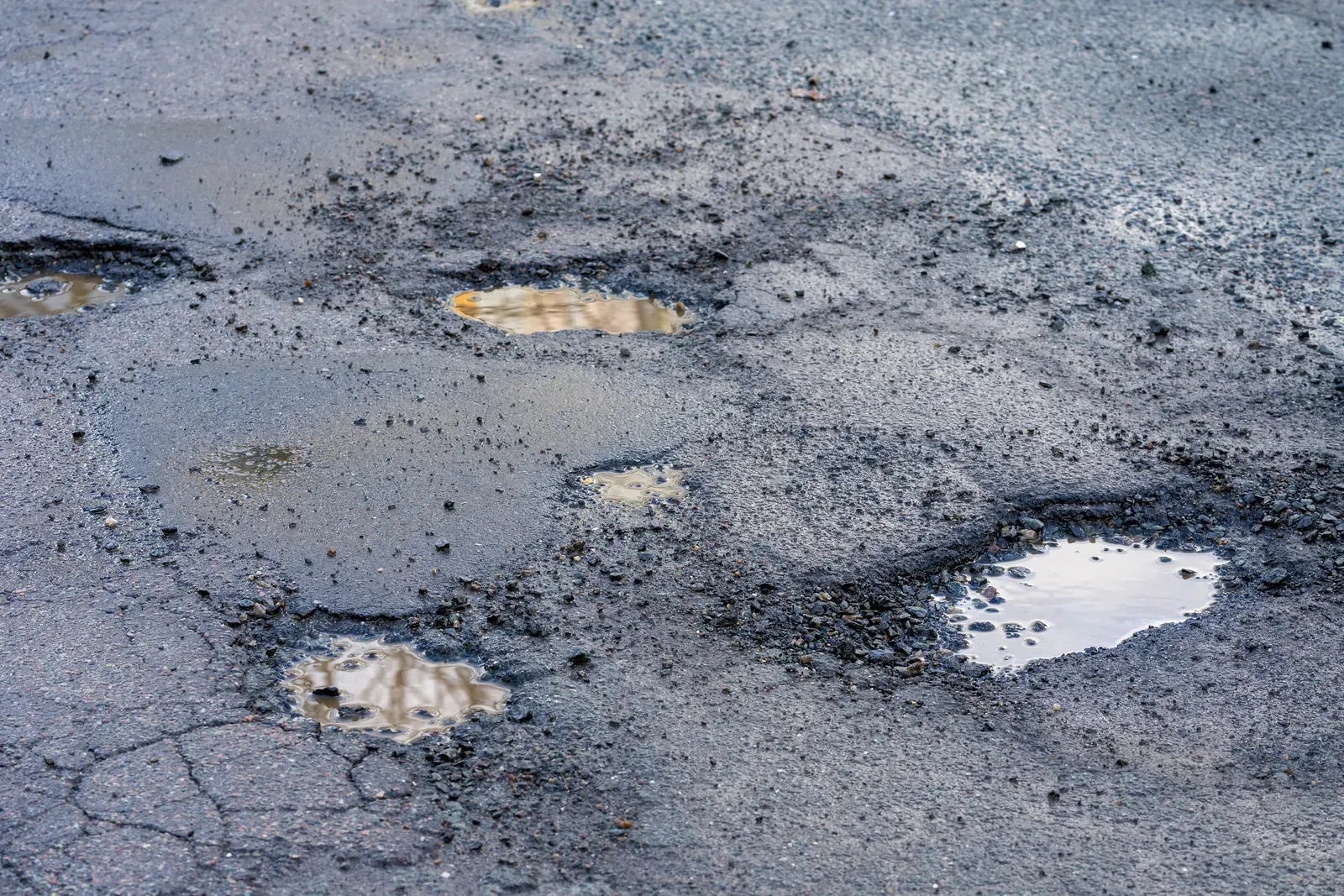
Yes, through your own collision coverage, with a catch
Hitting a pothole is a single-vehicle collision as far as your policy is concerned. If you carry collision coverage, the damage is claimable: bent wheels, a torn tire, a cracked bumper cover, a scraped underbody, or the suspension parts that let go on a bad one along the 401 collector lanes. You pay your collision deductible and the insurance company pays the rest.
The catch is fault. There is no other driver to share it with, so under Ontario’s fault rules a pothole strike is generally treated as an at-fault accident on your record. Some policies include a forgiveness feature that shields your first at-fault claim, and some insurance companies handle road-hazard damage differently, so read your own policy or ask your broker before you decide. The page on whether a claim raises your rates covers what at-fault means over the years that follow.
If you carry only comprehensive, the pothole itself is not covered. Comprehensive is for things that happen to the car while it is not driving into something: theft, hail, a deer, a falling branch. A pothole is driving into something, however little choice you had about it.
DCPD does not come into it either. Direct compensation only applies when another insured driver is involved, and a pothole has no other driver. It is your collision coverage or nothing, which is why drivers who dropped collision on an older car end up paying for a bent wheel themselves.
The city claim exists, but do not count on it
Toronto and the other GTA municipalities each run a claims process for damage caused by road conditions. You file a form, describe the location, attach photos and your repair invoice, and the city investigates whether it knew about the pothole and whether it repaired it within the standard the province sets for that class of road. If the city met its standard, the claim is refused. Most are.
The notice window is short, and it is measured from the date of the damage, not from the day you got around to it. If you intend to try, do it the same week: photograph the pothole with something for scale, note the exact location and the time, and report the pothole to the city separately so there is a record it existed. Keep the shop’s invoice and the wheel or tire that was damaged if you can.
We do not discourage anyone from filing. It costs nothing but an evening. But nobody should skip the insurance claim or delay the repair while waiting for a city decision that may take months and usually says no.
When it is worth claiming and when it is not
Run the arithmetic honestly. A claim makes sense when the repair cost sits well above your deductible and you can live with an at-fault mark, or your policy forgives it. It makes less sense for a single scuffed wheel or a cracked bumper cover that costs a little more than the deductible, where the rating effect over the following years can outrun what the insurance company paid. The page on paying out of pocket versus going through insurance walks through that trade-off for small repairs.
There is a middle path that many drivers miss. You can get a written estimate first, then decide. The estimate does not open a claim. Send photos of the damage and our estimator writes it up the same business day, with the parts and labour laid out so you can hold it beside your deductible and choose with the number in front of you.
- Photograph the pothole and the damage before the car moves, if it is safe to do so.
- Get a written estimate before you call the insurance company.
- Check the policy for a forgiveness feature or a road-hazard clause.
- Report the pothole to the municipality so the next driver has a chance.
What pothole damage looks like when we see it
The wheels take it first. Steel wheels bend; aluminum alloy wheels crack or go out of round, and a cracked alloy is replaced rather than straightened. Tires can bulge at the sidewall from the pinch, and a bulged tire should not be driven on the 404 at speed. Behind the wheel, we look at tie rods, control arms and the steering alignment, and we send the car for an alignment check as part of the repair.
Bodywork follows. Front bumper covers crack at the lower lip when the nose dips into a deep hole, and underbody panels and splash shields tear away. On lower cars the rocker or the side skirt can take a hit. Everything gets photographed and listed on the estimate, and if we open the car and find more, that goes on a supplement to the insurance company rather than to you. For the season-by-season version, see the pothole season checklist and the situation page on hitting a pothole in the spring.
One more thing worth knowing: February to April is when the freeze–thaw cycle opens the roads, and it is also when every shop in the GTA is busiest. A car with a bent wheel and a pulling steering wheel should not wait, but a cosmetic bumper lip can be scheduled for a quieter week without any harm done.
Questions people ask
Will my rates go up if I claim pothole damage?
Often, because a single-vehicle claim is generally rated as at-fault. Whether that follows you depends on your record and whether the policy carries accident forgiveness. Ask your broker before you file, with the estimate in hand.
Do I need to report a pothole strike to police?
Only if the damage appears to exceed the provincial reporting threshold or anyone was hurt. A bent wheel and a torn tire rarely get there; a car that lost its suspension in a deep hole on the 401 might. When in doubt, report.
Is a 407 or provincial highway pothole claimed the same way?
The insurance side is identical. The road-authority claim goes to whoever maintains that road, which for provincial highways is the province rather than the city, and the 407 has its own operator. The notice windows are just as short.
Can you check the alignment and suspension too?
Yes. A pothole repair here includes an inspection of the steering and suspension parts on that corner and an alignment, and anything we find goes on the estimate or the supplement.