The inside curb of the P2 spiral grinds the same corner every night until the plastic is gone
Coming home to a tower on Yonge means turning off a busy street into a ramp, then dropping two levels on a spiral tighter than the car was designed for. The inside curb catches the lower corner of the front bumper on the way down and the rear corner on the way out, a few millimetres each time, and the driver never hears it. After a winter the corner is scuffed; after three, it is worn through the paint, the primer and into the black plastic, and the shape of the corner is gone with it. That is wear rather than an event, and it decides the repair differently from a hit.
A single tap does the opposite. The queue for the 401 at Yonge every weekday morning moves a car length at a time, and a foot off the brake at the wrong second puts one cover into another at parking speed. The cover flexes and springs back looking scuffed while the foam absorber behind it is crushed, the tabs holding the cover to the fender are snapped, and a parking sensor is reading the bumper itself. The worn corner is a refinishing question — how much plastic is left. The tap is a teardown question — what broke behind the paint. We ask which one it was before we say anything about the number.
Fog-lamp pockets and lower valances are where the tower garages take their toll, and where the parts list changes
The cars in these garages tend to be newer, and the bottom of a modern bumper is busier than it looks: a lower valance, sometimes a separate part clipped to the cover and sometimes moulded into it; fog-lamp pockets with a bezel and a lamp behind; a textured lower lip that is meant to take the first scrape. When the valance is a separate part, a ground-off corner is often a new valance and a refinished cover rather than a rebuilt corner, and that is cheaper and better. When it is moulded in, the corner is rebuilt with flexible filler where the shape has been worn away, then the cover is refinished as a whole. A cracked fog-lamp pocket is repaired from behind if the crack is short and replaced if it reaches the lamp mount.
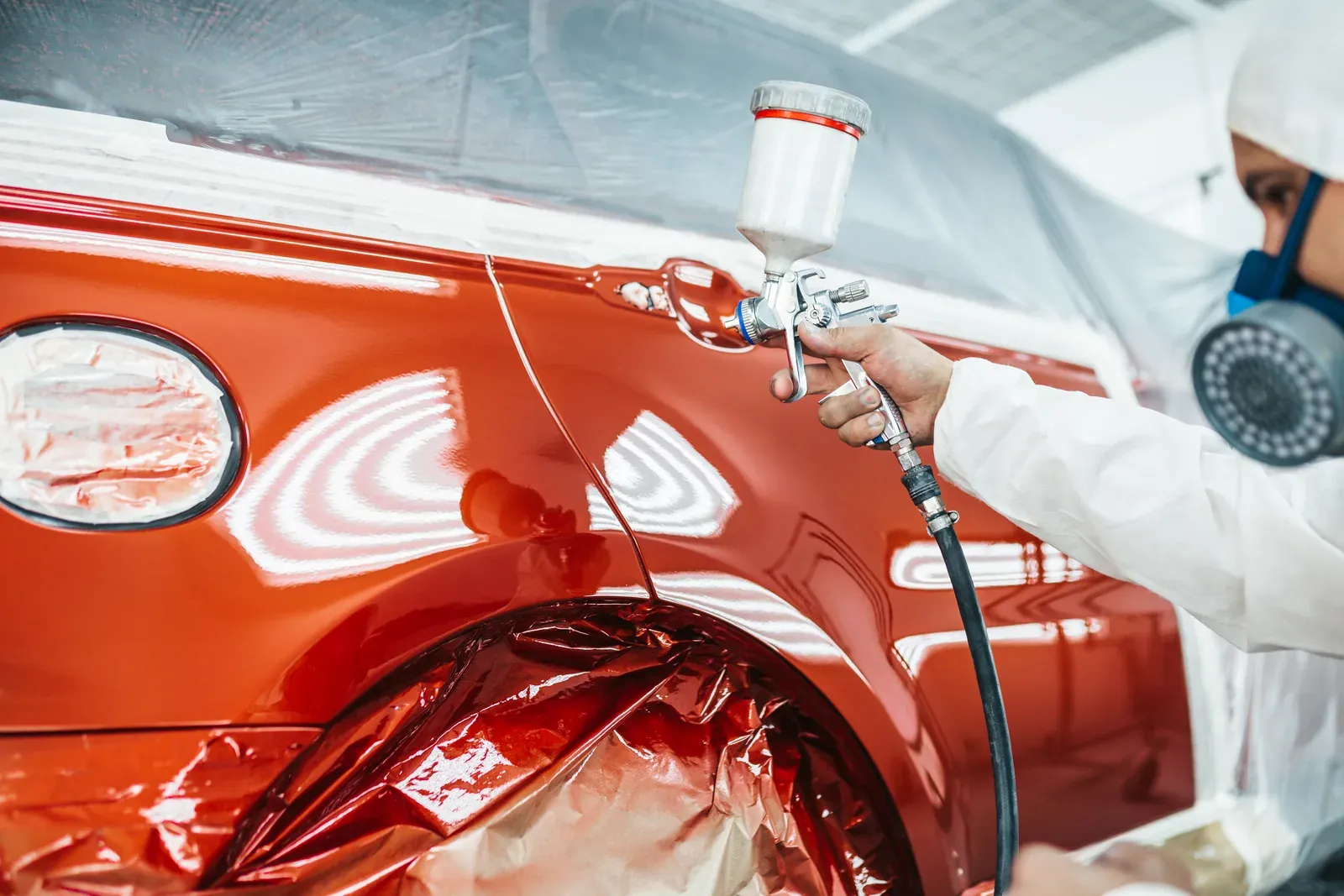
Recalibration is the question that separates the front-lip scrape from the rear tap. A corner worn on the ramp curb usually does not touch anything electronic — the sensors sit higher, and the radar for adaptive cruise sits behind the grille badge — so a refinish on its own rarely triggers a recalibration. A rear tap is different: parking sensors and blind-spot radar live in and behind the rear cover, and once the cover comes off and goes back on, those systems may require recalibration before the car is finished. We say which on the estimate. On colour, the cover is painted complete as a part, and on a metallic or pearl the fender beside it is blended so the plastic’s slightly different texture does not read as a step.
- Separate valances replaced, moulded corners rebuilt and the cover refinished whole
- Fog-lamp pockets repaired from behind or replaced where the lamp mount is cracked
- Front-lip scrapes rarely need recalibration; rear taps with sensors often may
- Cover painted complete, adjacent fender blended on metallics and pearls
A tap in the Yonge queue where the other driver drove off is still a collision claim
The 401 queue produces its own hit-and-run: a tap from behind, a driver who waves and then takes the ramp. That is a collision with an unidentified vehicle, and it is claimed under your own collision coverage with your deductible, rated not-at-fault, on the strength of a report at a Collision Reporting Centre; comprehensive never covers contact with another car. Get the plate if you can, because an identified and insured driver moves the file to DCPD, where your own insurance company pays for your car for the not-at-fault share and your deductible normally does not apply. The other driver’s liability coverage does not pay for your car in either case.
The ground-off corner is simpler. It is wear with nobody else involved, so it is either a collision claim with the deductible or a bill you pay, and a corner rebuild and refinish usually lands near enough to a typical deductible that paying directly is the plain choice. A cover hanging low enough to catch on the road should be tied up for the drive along Sheppard or towed; a cover pulled under a wheel on the 401 turns a small repair into a bumper, a fender and a liner. Drop-off is at Sheppard and Don Mills, on the north side, and a repaired cover is usually back in a couple of days while a replacement waits on the part.
Questions people ask
The front corner has been scraped on the ramp curb every winter for three years. Is there enough plastic left to repair?
Often, if the scrape has thinned the corner without going through it. The worn shape is rebuilt with flexible filler, the cover is refinished as a whole, and the repair stands up to another few winters of the same curb. Once the corner has worn through or the lower lip has split, a new cover — or a new valance where it is a separate part — is the better answer. One photo of the corner straight on and one from underneath tells us which.
Why does the estimate for my rear tap include a calibration line when the front-corner scrape last year did not?
Because of where the electronics sit. The front lip is below the sensors and the radar, so a refinish there rarely disturbs anything. The rear cover carries the parking sensors and often the blind-spot radar, and removing and refitting it can shift their aim by enough to matter, so the vehicle may require recalibration after a rear repair. The line is there so it is priced up front rather than found on the road test.
I was tapped in the queue for the 401 at Yonge and the driver left. Which coverage does that come under?
Collision, on your own policy, with your deductible — an unidentified vehicle is still a vehicle. Report it at the nearest Collision Reporting Centre, note the time and the lane, and if a dashcam caught a plate, tell your insurance company, because an identified and insured driver turns it into a DCPD claim where the deductible normally does not apply.