The Sheppard commute and its bumpers
Agincourt commutes in two directions at once. Half the neighbourhood heads to Agincourt GO for the Stouffville line, and the other half drives Sheppard west toward the 404 or south down Kennedy to the 401. Both routes meet at the rail crossing on Sheppard just east of Kennedy, where the gates drop, the queue stacks back past Midland, and the last car to notice does it with a bumper. We see that tap every week: a cracked lower grille, a cover pushed in at the corner, a licence plate bracket folded into the absorber.
The GO lot adds its own. Cars parked in the Agincourt station lot at a quarter to seven are reversing out at six, in the dark, in a hurry, and the concrete curb stops at the end of each row are exactly bumper height. A rear cover scuffed white along the bottom edge is the signature. Kennedy and Sheppard, where the left-turn lanes fill twice a day, contributes the slow nose-to-tail that cracks a cover without marking the paint.
A cracked cover can be welded; broken mounts mean a new one
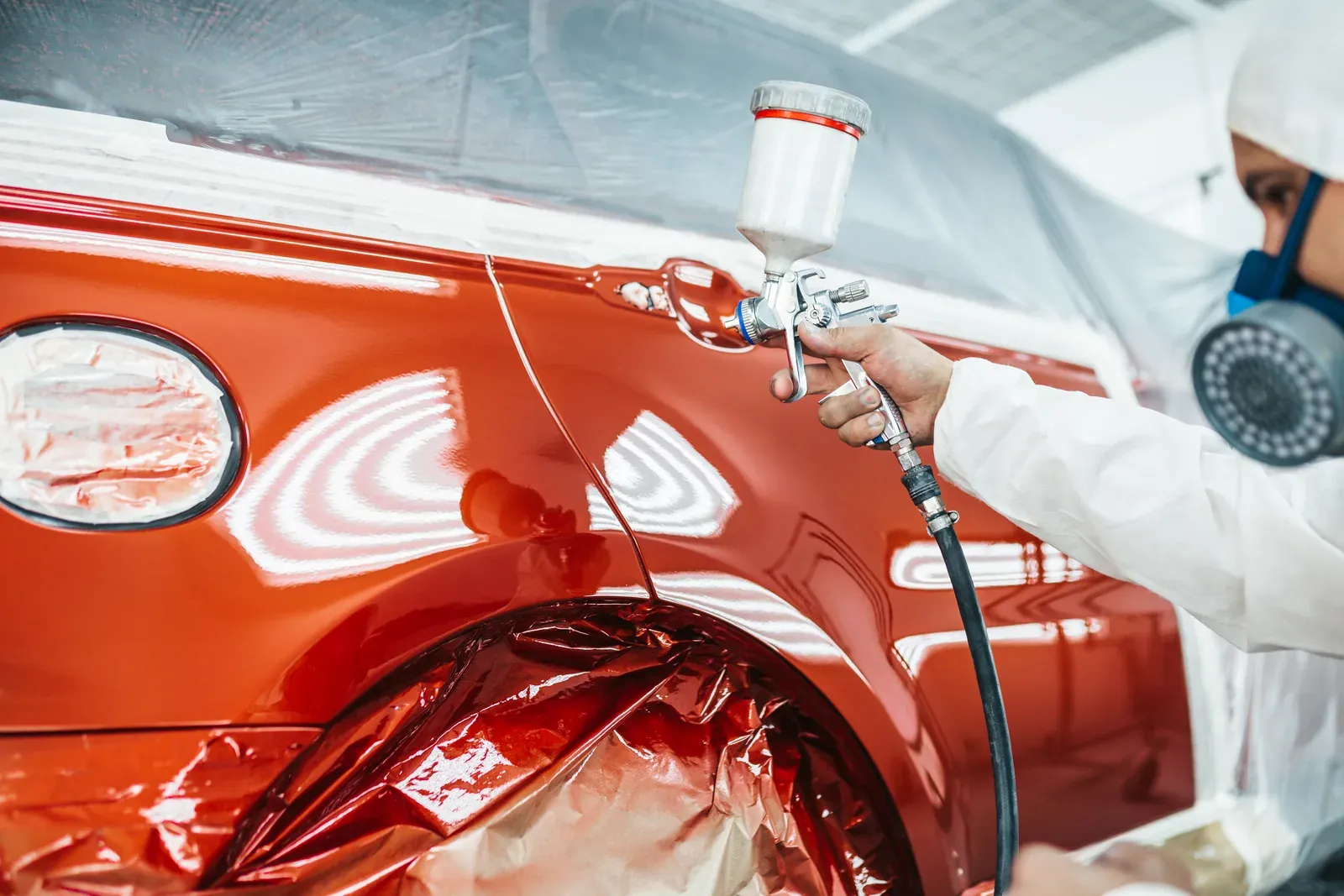
A modern bumper is a painted plastic cover over a foam or crushable absorber, with a steel or aluminum beam behind that and, increasingly, sensors and a radar unit inside. A scuffed or lightly cracked cover can be repaired: the crack is ground, plastic-welded from the back, reshaped, and refinished to match. A cover with tabs snapped off or a split through a sensor mount is replaced, and we push for the OEM cover where the sensor fit depends on it.
What hides behind the cover matters more than the cover. The absorber crushes on impact and does not recover, and a reinforcement bar that bent at 15 km/h will not protect anyone at 50. Both are inspected on every bumper job, photographed, and replaced if they have done their work. Parking sensors are tested after reassembly, and a car with a radar or camera in the bumper may need recalibration before it can be trusted to brake for the car ahead at the GO crossing.
- Cover repaired where the plastic and mounts allow, replaced where not
- Absorber and reinforcement checked on every bumper
- Sensors tested; recalibration arranged where needed
- Refinish blended into the fenders with a lifetime warranty
Winter cracks and spring scrapes
Between January and March the driveways do more bumper damage than the roads. The plow leaves a windrow across every driveway mouth in Agincourt, and a car pushing through frozen crust at an angle cracks the lower lip of the front cover or tears the splash shield underneath. Cold plastic breaks instead of flexing, so a bump that would scuff in July splits in February. Then the potholes open up on Midland and Kennedy in March and April, and a front cover that hangs low meets the far edge of one.
Most winter bumper cracks are pay-it-yourself repairs, and a crack caught early is a repair rather than a replacement. If the hit was another driver’s fault, DCPD puts the claim on your own insurance company and we run it. Either way, send pictures — the corner, close on the crack, and underneath if you can — and our estimator prices the repair from those before you commit to anything.
Questions people ask
The parking sensor warning came on after a tap at the GO crossing. Is that the sensor or the bumper?
Usually the sensor has been pushed out of its mount or its wire has pulled loose; sometimes the sensor itself is cracked. Either way it is part of the bumper repair. We test every sensor after reassembly, and if the car has a radar unit behind the cover recalibration may be required — we arrange it when it is.
Can I keep driving with a cracked front bumper cover?
For a short time, if nothing is hanging and the lights and plate are secure. A loose cover can catch the wind on Kennedy or the 401 and tear further, and a dragging splash shield can take the cover with it. Send photos and we will tell you whether it is safe to wait a week.
Is a repaired bumper as strong as a new one?
The cover is cosmetic; its strength barely matters. What protects you is the absorber and the reinforcement bar behind it, and those are replaced when damaged, not repaired. A plastic-welded cover over sound impact parts is a proper repair.