Seven in the morning on Stouffville Road
Every weekday the town empties west. Stouffville Road collects traffic from Hoover Park, Millard and the streets east of Ninth Line, funnels it through the light at Highway 48 and the narrowing past Warden, and delivers it to the 404 ramp in a single line that stops and starts without warning. Highway 48 south to Major Mackenzie does the same thing for the south end. The classic Stouffville bumper hit lives in that line: a low-speed nudge in the queue, plastic that bows and recovers, and an exchange of shrugs on the shoulder. What the plastic recovers from, the parts behind it do not. The foam absorber crushes and stays crushed, the tabs that hold the cover square snap, and the parking sensors and radar unit on most cars built in the last decade end up aimed at the pavement instead of the road.
The evening version happens in reverse, with the sun low over the fields on Stouffville Road and a driver braking for a turn into Ballantrae that the car behind never saw coming.
Windrows, culverts and the lip of a new driveway
The other half of Stouffville bumper work has no second driver in it. New driveways off Hoover Park and Millard are cut with a steep apron that catches a low front lip on the way in, and the temporary curbs and construction fencing along Main Street and Tenth Line sit at bumper height exactly. Rural driveways in Ballantrae and along the concessions end at a culvert in the ditch that a rear bumper finds while turning around. In winter the windrow at the mouth of the driveway freezes solid overnight, and a corner that pushed through it in December cracks against it in January.
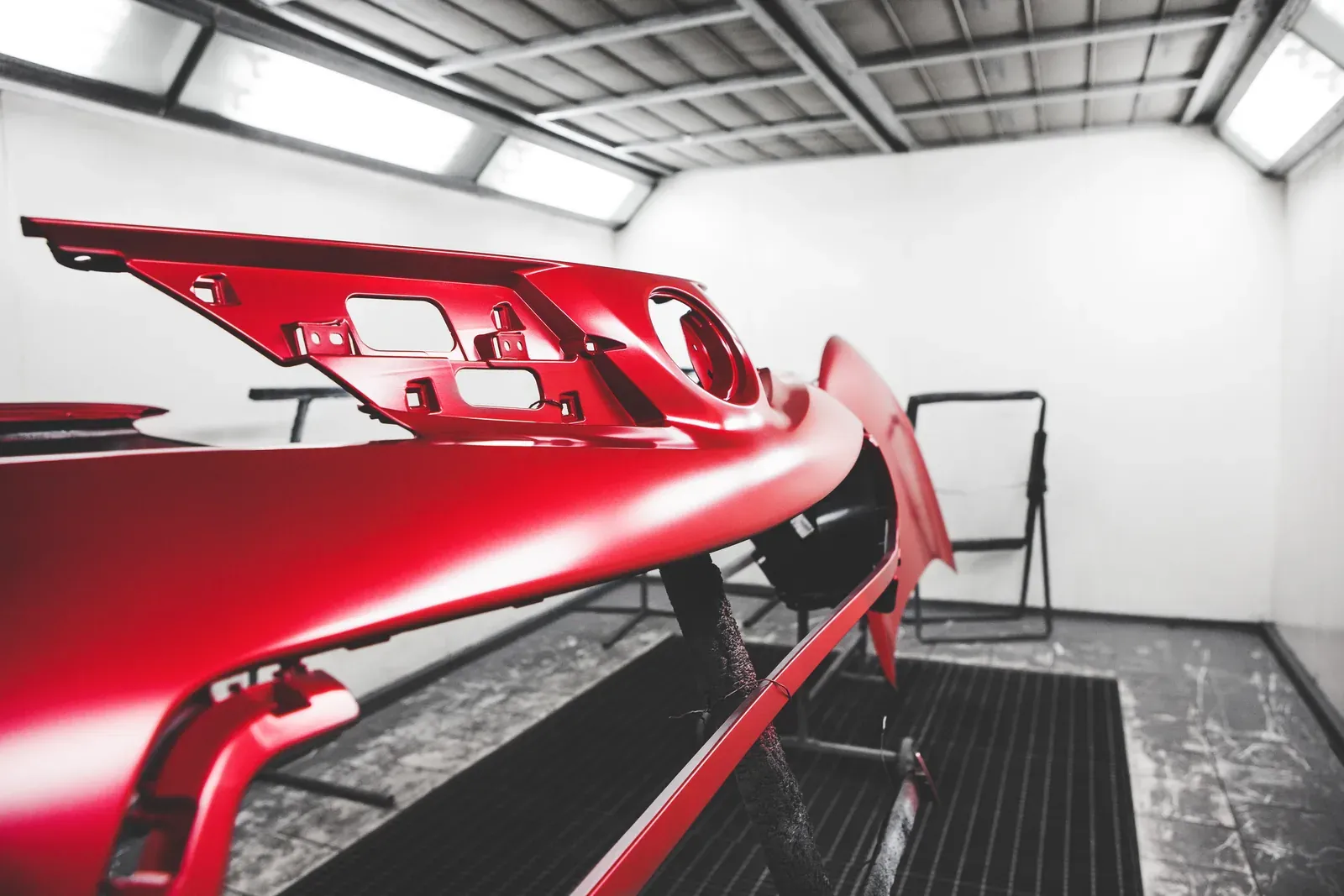
The judgement here is repair or replace. A scuffed or cracked cover that still sits square on its tabs is repaired: the plastic is ground back, welded or bonded from behind, refinished to your colour and covered by the same lifetime warranty as any panel. A cover with the corner tabs gone or a tear through a sensor housing is replaced, because a cover that cannot hold alignment sags by summer and the sensors never aim right again.
- Cover repaired from behind and refinished when it still sits square on its tabs
- New cover when the tabs, corners or a sensor housing are gone
- Everything behind the cover — absorber, bar, brackets, shields — inspected before the number is final
- Radar and sensor recalibration booked where the repair may call for it
Pricing the outside, then finding out what the inside costs
Three photos price the outside of a bumper; the cover coming off prices the rest. The absorber, the reinforcement bar and the brackets decide whether this is a refinish or a proper repair, and a phone camera cannot see any of them. That matters more from Stouffville, because you do not want to learn the number has changed after a 30-kilometre drive. So the estimate from your photos states plainly what is priced and what is not, and anything extra found on teardown is photographed and sent to your insurance company as a supplement rather than argued by phone.
Whether to claim depends on that number. A corner scuff is usually paid directly. A cover, absorber, bracket and recalibration is a real claim, and if the driver behind you on Stouffville Road caused it, DCPD means your own insurance company pays without the repair touching your pocket. The rental through your coverage is booked for the hour you hand over the keys.
Questions people ask
I was tapped from behind in the Stouffville Road queue and the bumper looks fine. Do I bother?
Photograph both cars and exchange information before you leave the shoulder, then send us the pictures. A cover that looks fine can be sitting over a crushed absorber and cracked tabs, and a rear radar that was moved may throw a warning days later. A look behind the cover settles it, and a claim reported promptly is easier than one reported after the light comes on.
Since the nudge in the Stouffville Road queue my park-assist beeps at nothing. Is that connected?
Very likely. The sensors and rear radar are aimed to precise positions, and a shunt that moved the cover, a bracket or the bar behind it can leave them reading the pavement or thin air. After the repair the systems are checked, and where the manufacturer’s procedure calls for it we arrange recalibration before the car goes back up the 404 — it may be required, and no one can promise in advance that it will not be.
The frozen windrow at my driveway cracked the bumper corner. Can that corner be saved?
It depends where the crack runs. A crack in the body of the cover with the mounting tabs intact is repaired from behind and refinished. A crack that runs through the corner tabs or a sensor housing means replacement, because the repaired corner will not hold its shape. Photos of the corner from the side and underneath tell us which.