Five minutes in the driveway first
Before booking anything, rule out the things that cost nothing. Warm water and a soft cloth over every sensor face on the bumper, front and rear. Winter slush, salt crust, a smear of wax left over from a detail, a bug layer in August or a dealer sticker sitting over a sensor will all produce a fault message that looks alarming and means nothing.
Dry it, shut the car down completely, wait a minute, and restart. Many systems clear a stored fault on the next drive cycle if the obstruction is gone. If the warning returns immediately, note exactly what the message says and which system it names — front parking sensors, rear sensors, blind spot, forward collision, lane keeping and adaptive cruise all use different hardware and different fixes.
Then note the behaviour, because it narrows the diagnosis before anyone touches the car.
- Is the warning constant, or does it appear only on cold mornings or in rain?
- Does one corner of the bumper beep at nothing, or has the system gone silent altogether?
- Did a camera view go dark, wander off-centre, or lose its guide lines?
- Did anything else change at the same time — cruise control refusing to engage, lane assist switching itself off?
What usually turns out to be wrong
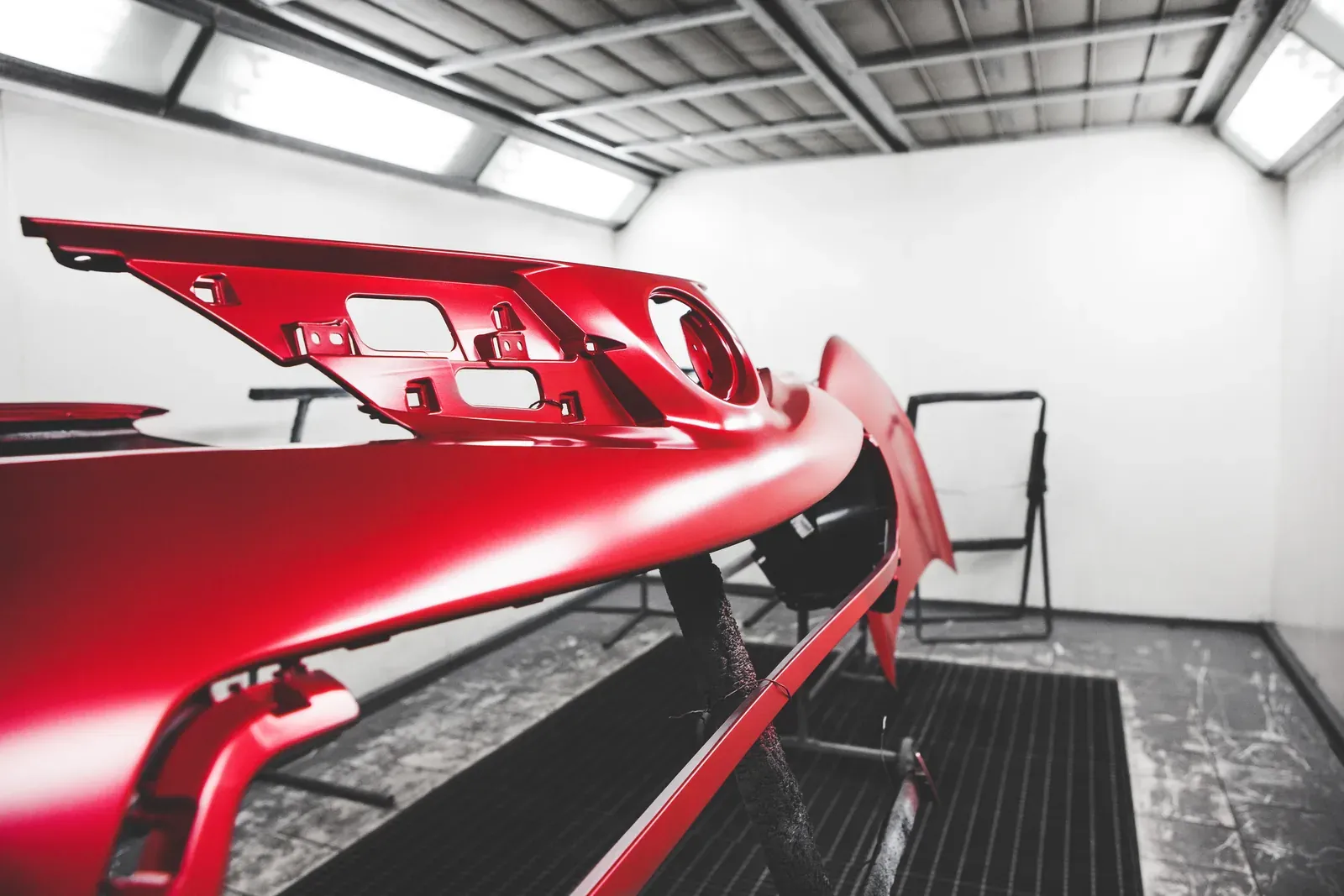
Ultrasonic parking sensors sit in rubber retaining rings moulded into the back of the bumper cover. They are held by a few millimetres of plastic and they aim by that mounting. A knock hard enough to flex the cover pops a sensor off its seat, and it is now looking at the pavement or at your own bumper instead of at the space behind you. The sensor itself is often perfectly good.
After that, in rough order: a snapped retaining ring, a wiring connector pulled apart behind the fascia, a wire pinched between the absorber and the reinforcement bar, a foam absorber shoved backward so it now presses on a sensor body, and — on cars with radar behind the grille badge or a camera in the fascia — a mounting bracket bent by a few degrees. A few degrees is enough. Radar aims a long way down the road, and a small angle at the bumper becomes a large error at distance.
There is one cause that comes specifically from repairs done elsewhere: paint film. Sensor faces have a maximum coating thickness, and a bumper that has been primed, colour-coated and cleared without regard for that becomes a bumper whose sensors read short. It looks like an electronics fault and it is actually a paint fault.
What we do about it
Every car gets scanned before we start. That pre-scan pulls the stored codes and tells us which module is unhappy and whether the complaint is electrical, mechanical or aim. It also creates a record of what the car looked like electronically before we opened anything, which matters when a supplement has to be justified later.
Then the cover comes off. We check every retaining ring, connector and wire loom, seat any sensor that has jumped its ring, replace what is cracked, and verify the absorber and reinforcement bar are sitting where the vehicle maker put them. If a radar or camera bracket is deformed, it is replaced rather than bent back, because a straightened aim bracket is a guess.
Refinishing then respects the coating limits on sensor faces — correct primer choice, controlled film build, no shortcut where an extra coat of clear would hide a flaw.
Finally the car is scanned again, and recalibration may be required depending on what was disturbed. Some systems calibrate statically against targets set at measured distances on a level floor. Others need a dynamic road drive at a steady speed on clearly marked lanes, which is why Sheppard and the 404 get used more often than anyone expects. Either way you get the documentation on the file.
Who pays for the calibration
Calibration is not a courtesy step folded into the price of a bumper. It is its own operation with its own equipment and its own time, and on a claim it appears as its own line. Insurance companies pay for it routinely when the estimate explains why the operation is needed and what was disturbed to make it necessary.
Problems arise when calibration was never written into the original estimate. That is a supplement — an addition to the approved work discovered once the car is apart — and it needs to be documented and approved before it happens. We send the scan reports and the photographs, and the adjuster approves or asks questions. It is a normal part of a modern claim, not a sign anything went wrong.
Where safety hardware is involved we push for original-equipment parts. A like-kind-and-quality bumper cover with slightly different sensor boss geometry is the kind of saving that produces a car that never quite calibrates.
If the warning appeared after somebody else repaired the bumper, bring it in anyway. A scan and a look behind the cover tells you whether you are dealing with a sensor sitting loose in its hole, a connector nobody plugged back in, or paint laid on too thick — and it gives you something specific to take back to whoever did the work.
Questions people ask
The beeps still work at low speed. Can I ignore the warning light?
Treat it as a system telling you it no longer trusts itself. Ultrasonic sensors that survive a knock frequently keep beeping while aiming somewhere useless, which is worse than silence because you keep relying on them. A scan takes minutes and tells you whether the fault is a dirty face, a loose sensor or a module that has lost its aim.
Will this repair definitely end with a calibration bill?
Not definitely, and any shop that promises either answer up front is guessing. It depends on the vehicle, on which systems live in that bumper, and on what had to come apart. The honest position is that recalibration may be required, that the pre-scan and the vehicle maker’s procedure decide it, and that you should see the documentation either way.
Another shop painted my bumper and now a camera warning is on. Will you look at it?
Yes. We scan it, pull the cover and report what we find, whether that is an unseated sensor, a disconnected loom, a bent bracket or excessive coating over a sensor face. You get the findings in writing. What you do with them — come back to us or take them to the original shop — is entirely your call.
Can a warning appear weeks after the hit rather than right away?
It happens often. A sensor left half-seated works loose over speed bumps, a pinched wire chafes through, and moisture finds a cracked connector across a few damp weeks. If a bumper took a knock earlier and a fault shows up now, mention the earlier hit — the two are usually the same event with a delay.