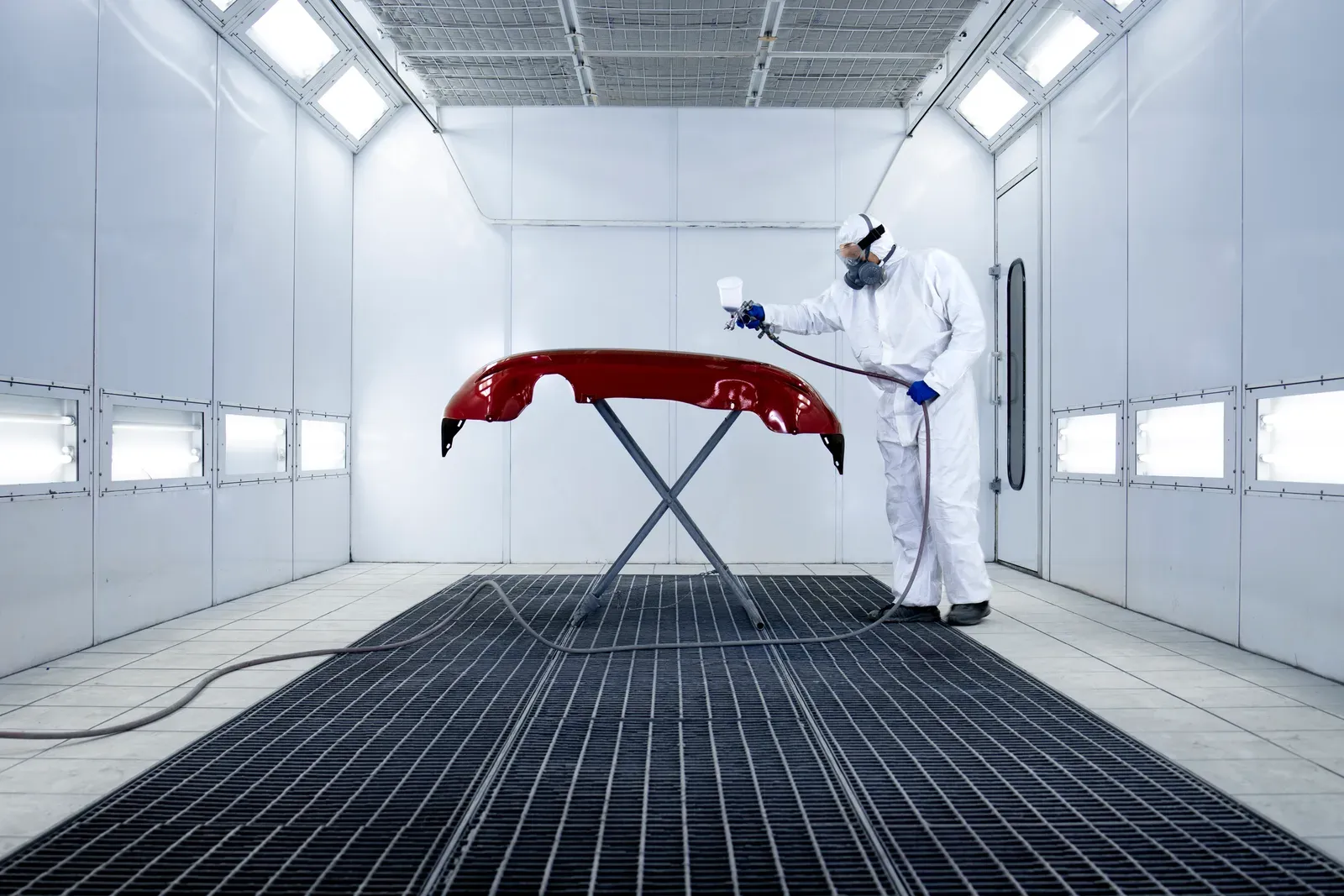
Cure happens in three stages: flash, bake, harden
Flash is the first stage. Each coat of base colour and clear is sprayed and then left for several minutes in the booth so the fastest solvents leave and the surface goes from wet to tacky. The painter waits for the flash between coats; rushing it traps solvent under the next coat and causes problems that only show up weeks later. Flash times shift with the temperature and humidity in the booth, which is why the booth is climate-controlled and not just a clean room.
Bake is the second stage. Once the final clear is on, the booth switches to bake mode and holds the car at an elevated temperature, usually somewhere around 60 °C, for an hour or so. That drives out most of the remaining solvent and crosslinks the clear enough that it is hard, glossy and able to be handled. When the car cools it can be reassembled, polished if needed and driven.
Hardening is the third stage, and it is the one people forget. The clear goes on curing at room temperature for weeks, as the last of the solvent works its way out and the film reaches its final hardness. The paint is dry, it is safe to drive in the rain, but it is still slightly softer than it will be, and a little porous. Everything you should and should not do in that period comes from that fact.
What you can do on day one
Drive it. A car that has been baked and cooled is ready for the road, including the 401 in the rain. Rain, snow and road spray do not harm curing paint; the film is sealed enough to shed water. What you should avoid is anything that leaves a residue sitting on the surface or presses into it: a bird dropping left for days, tree sap, a bug-covered front end left to bake in the sun, or a car cover dragged over the hood.
Park it thoughtfully. A shaded spot is better than direct sun in the first days, and a garage is better still, not because sun damages the paint but because it accelerates whatever is sitting on it. Do not put magnetic signs, dealer stickers or a bike rack pad on a freshly painted panel. Anything clamped to the surface can leave an impression while the film is still soft.
Washing and waxing: what to hold off on
Hand wash only, gently, for the first few weeks. Use a clean wash mitt, plenty of water, a mild car soap and no pressure. Avoid automatic car washes in that period, especially the ones with spinning brushes, and avoid pressure washers pointed at panel edges, because the paint at an edge is thinnest and the film is not at full strength yet. Dry with a soft towel rather than letting it spot in the sun.
No wax, no paint sealant and no ceramic coating until the paint has fully hardened. All three seal the surface, and a sealed surface traps the solvent that is still trying to leave, which can cloud or soften the clear from below. Wait a month or so, longer in winter when the garage is cold, and then wax as usual. Ask us when you pick the car up and we will give you a date that fits the colour and the weather.
- First few weeks: hand wash only, no brushes, no pressure washer at the edges.
- Remove bird droppings, sap and bugs promptly with water rather than letting them sit.
- No wax, sealant or ceramic coating until full hardening; ask for a date at pickup.
- No stickers, magnets, rack pads or covers pressed on the new panels.
- Winter cars: cold slows the cure, so give it more time before sealing.
Why winter and cold garages change the timeline
Solvents leave a film faster when it is warm. A car painted in July and parked outdoors reaches full hardness sooner than the same car painted in January and left in an unheated garage on a February night at minus 15 °C. The booth bake is the same, so the paint is equally safe to drive, but the weeks of hardening stretch out in the cold. That is why the advice about wax and car washes is longer in winter, and why the guide on winter repair timelines exists.
None of this affects the warranty. Our lifetime paint warranty covers the refinished panels against peeling, fading and delamination for as long as you own the car, and a properly cured finish does none of those things. What the warranty does not cover is a panel that was sealed under a ceramic coating in its first week and clouded, or a rock chip on the DVP a month later. Give the paint its weeks and it will give you years.
If you are picking the car up in the middle of a snowy week and cannot avoid salt spray, do not worry about it. Salt on cured-enough paint rinses off with water. Just skip the brush wash, rinse the car by hand when you can, and keep the wax for spring.
Questions people ask
Can I drive my car in the rain right after it is painted?
Yes. Once the paint has been baked and the car has cooled, the film is sealed enough for rain, snow and road spray. What to avoid is residue sitting on the surface or pressure applied to it.
How soon can I take it through an automatic car wash?
Hold off for a few weeks, longer in winter. Spinning brushes and high-pressure jets at panel edges are hard on paint that is still hardening. Hand wash gently in the meantime.
When can I wax or ceramic-coat the new paint?
After full hardening, which is usually a month or so in warm weather and longer in the cold. Sealing the surface earlier traps solvent under the coating. Ask for a date when you collect the car.
Why did a bird dropping leave a mark on new paint?
The film was still slightly soft and porous, and the dropping is acidic. On fresh paint it etches faster than on fully cured paint. Rinse droppings off promptly with water in the first weeks and the risk is small.