Parking lots follow the same Fault Determination Rules as any road
A parking lot being private property does not put it outside the insurance rules. Ontario’s Fault Determination Rules assign fault in set steps, and adjusters apply them to the Fairview Mall garage exactly as they apply them to Sheppard Avenue. What changes is that police rarely attend a lot collision, so the account of what happened comes from the two drivers, any witnesses, the damage itself and, increasingly, cameras.
That is why the position of the cars matters so much. The rules are written around who was moving, where they were moving, and who had the right of way. A photo of both cars before they are moved answers most of that.
One misunderstanding is worth clearing up. Drivers sometimes assume that because a lot is private property, no report can be made and the collision “doesn’t count”. It counts. A Collision Reporting Centre will take a report on a lot collision, and the insurance companies on both sides will apply the rules to it the same way they would to a fender-bender at a stop light.
The common parking lot situations and how fault usually lands
Most lot collisions fall into a handful of patterns, and the rules treat them consistently.
These are the usual outcomes, not guarantees. An adjuster can weigh evidence of speed, lighting or a driver who was clearly not looking, and shift the split. The fixed steps are none, a quarter, half, three quarters and all of the fault, so the answer will always be one of those.
- A moving car hits a parked car: the moving driver is fully at fault. Whether the parked car was over the line rarely changes it.
- Two cars reversing out of opposite spots at the same time: fault is usually split evenly, because both drivers had the same duty to look.
- A car backing out of a spot hits a car driving down the aisle: the reversing driver is usually at fault, because traffic in the aisle has the right of way.
- Two cars going for the same spot: the one leaving the aisle to enter the spot is generally treated like a driver turning across traffic, and often takes most of the fault.
- A door opened into a passing car: the person opening the door is generally at fault.
- A shopping cart or a pedestrian: no other driver is involved, so it is your own collision or comprehensive coverage, depending on the cause.
What “both cars moving” means for your claim
When fault is split, each driver’s own insurance company handles their own car, and each claim is part DCPD and part collision. The not-at-fault share of your damage runs under DCPD, usually with no deductible; the at-fault share runs under your collision coverage, with the collision deductible applied in that same proportion. If you have no collision coverage, your at-fault share is simply not paid.
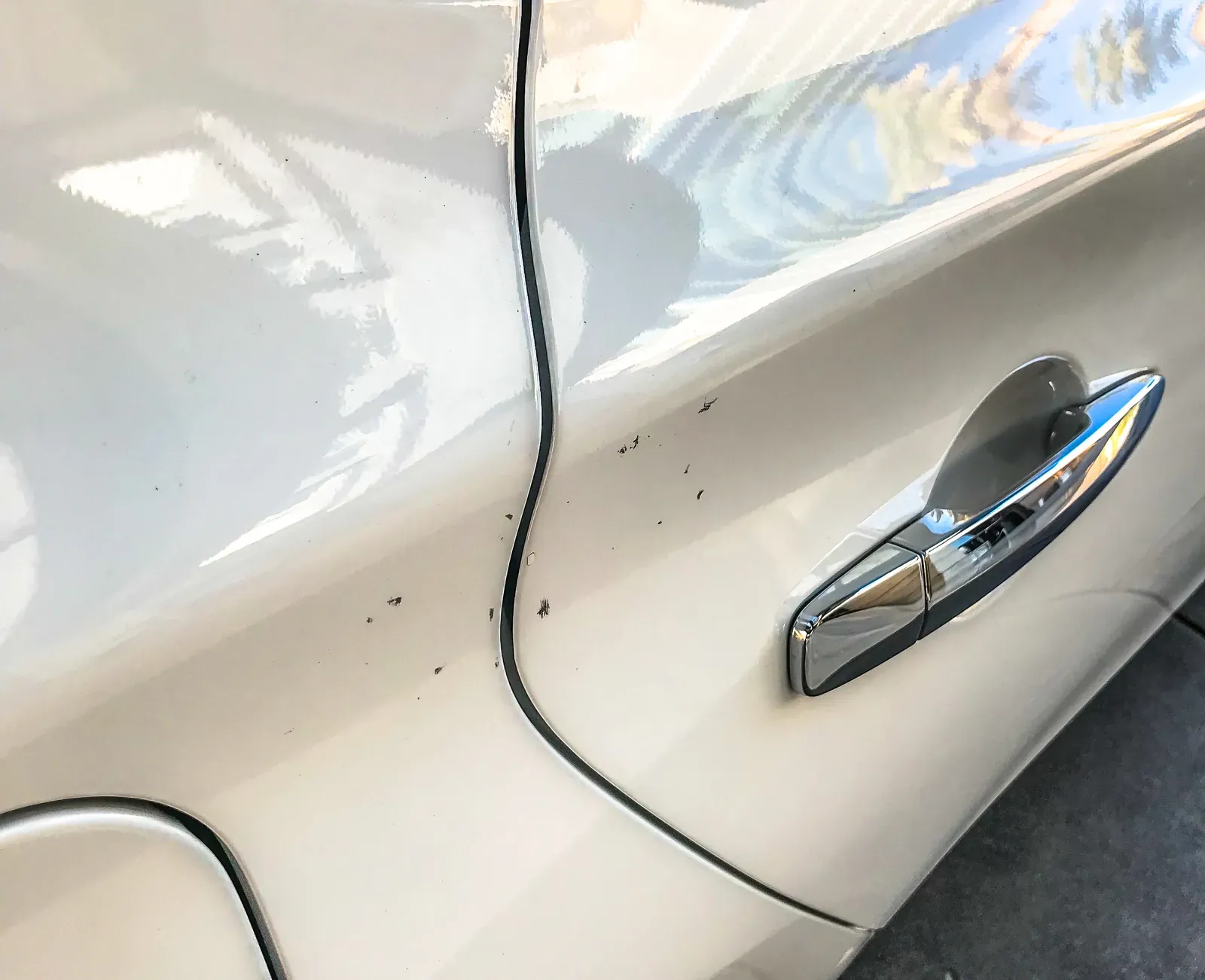
Low-speed collisions in lots are deceptive on cost. A bumper cover that scuffed at walking pace can hide a broken absorber, a bent reinforcement bar or a parking sensor knocked out of alignment, and modern bumpers may need the sensors recalibrated after the work. The estimate from photos gives a starting number; the teardown gives the real one.
If you think the split is wrong, ask the adjuster which rule was applied and why, and send whatever supports your account: photos, a witness, camera footage from the store. The decision sits with the insurance companies, not with the shop, so we cannot argue fault for you, but we can give you a dated set of photos of the damage that shows the direction and height of the impact, which is often the most persuasive evidence there is.
What to do in the lot, in the next ten minutes
Do not move the cars until you have photographed them where they stopped, from several angles, including the painted lines and any signage. Exchange names, plates, licence and insurance details. Note the lot, the level, the time and any store cameras overhead. If the other driver says “let’s not involve insurance”, get their details anyway.
Police attend few parking lot collisions, but the reporting rules still apply, and they split two ways. Anyone hurt, even slightly, means calling 911 from where you are and letting officers come to you. With nobody hurt and combined damage that looks likely to cross the provincial threshold, the trip is to the nearest Collision Reporting Centre instead, and sooner in the day is better than later. For a scuffed bumper and no injuries, there may be no obligation to report to police at all, but you still have a duty to notify your own insurance company if you intend to claim, and doing so within a few days keeps the claim clean.
Then send us the photos. We can tell you from three pictures whether the bumper is a scuff or a replacement, which helps you decide whether the claim is worth opening at all.
The other driver was gone before you got back
That is a hit-and-run rather than a parking lot dispute, and it runs under a different part of your policy. It has its own page. The short version is to photograph the damage, report it to the police or a Collision Reporting Centre, and then call your insurance company. Mall garages and plaza lots often have cameras, and the property manager will usually pull footage for a police report number.
Questions people ask
Does the insurance company automatically split fault in a parking lot?
No. It applies the Fault Determination Rules to what happened. A moving car that hits a parked one is fully at fault. Both cars moving is where the split often appears.
The other driver admitted fault in the lot. Is that binding?
Not by itself. Adjusters decide fault from the rules and the evidence. Get the admission in a text message or a note if you can, but rely on photos.
Do I need the police for a parking lot collision?
If anyone is injured, yes — call 911 and let officers attend. With nobody hurt, the test is the damage: over the provincial reporting threshold it goes to a Collision Reporting Centre, and under it the claim can proceed on the exchange of details and photos.
Can I pay out of pocket for a low-speed lot bump?
Yes, if only your own car is damaged or the other driver agrees. Get an estimate first. If the other driver later claims through their insurance company, you want your own on notice.