Yes, for how the money moves
Ontario runs a no-fault system for the mechanics of a claim. If another driver damages your car, you claim from your own insurance company under Direct Compensation – Property Damage. If you are injured, your own policy’s accident benefits respond. You do not have to establish that the other driver was at fault before anyone will pay you, and you do not have to deal with a stranger’s insurance company at all.
That is what the phrase was meant to describe: the driver who was hit gets compensated by the company they know, without a fight about blame standing between them and a repaired car. On that definition, Ontario has been no-fault for a long time.
No, for who is to blame
Where the phrase misleads is in suggesting that nobody is found at fault. Every collision between two insured vehicles still gets a fault finding, assigned by pattern under the Fault Determination Rules; the page on DCPD walks through the shares and the mechanics. The finding happens whether or not either driver thinks it is fair, and it ignores excuses — a driver rear-ended while stopped at a red light on Sheppard is at zero even if the car behind slid on black ice.
So a driver who says “Ontario is no-fault, so it doesn’t matter who hit whom” is wrong in a way that costs money. It matters a great deal. It simply does not matter for the question of which insurance company you call.
Where fault still reaches into your wallet
Fault determines four things you will feel. First, whether the repair falls under DCPD, which usually carries no deductible on the not-at-fault share, or under your collision coverage, which does. Second, whether a rental is covered as part of the claim or depends on an OPCF 20 endorsement. Third, whether the collision is rated against you at renewal — an at-fault finding usually is, a not-at-fault finding is generally not supposed to be, and where the cut-off sits for a partial share is each insurance company’s own rating rule. Fourth, the settlement when the car is a total loss: the payout is the car’s actual cash value, but the at-fault share of that value still runs through your collision coverage with its deductible, and a driver who carries no collision coverage absorbs that share of the car’s value personally.
A 50/50 finding on a parking lot bump at Fairview Mall, which feels like no-fault in the everyday sense, is in fact two at-fault accidents from the insurance companies’ point of view. That is worth knowing before you shake hands and agree that it was nobody’s fault.
“It’s no-fault — let’s leave insurance out of it” is the sentence to watch for
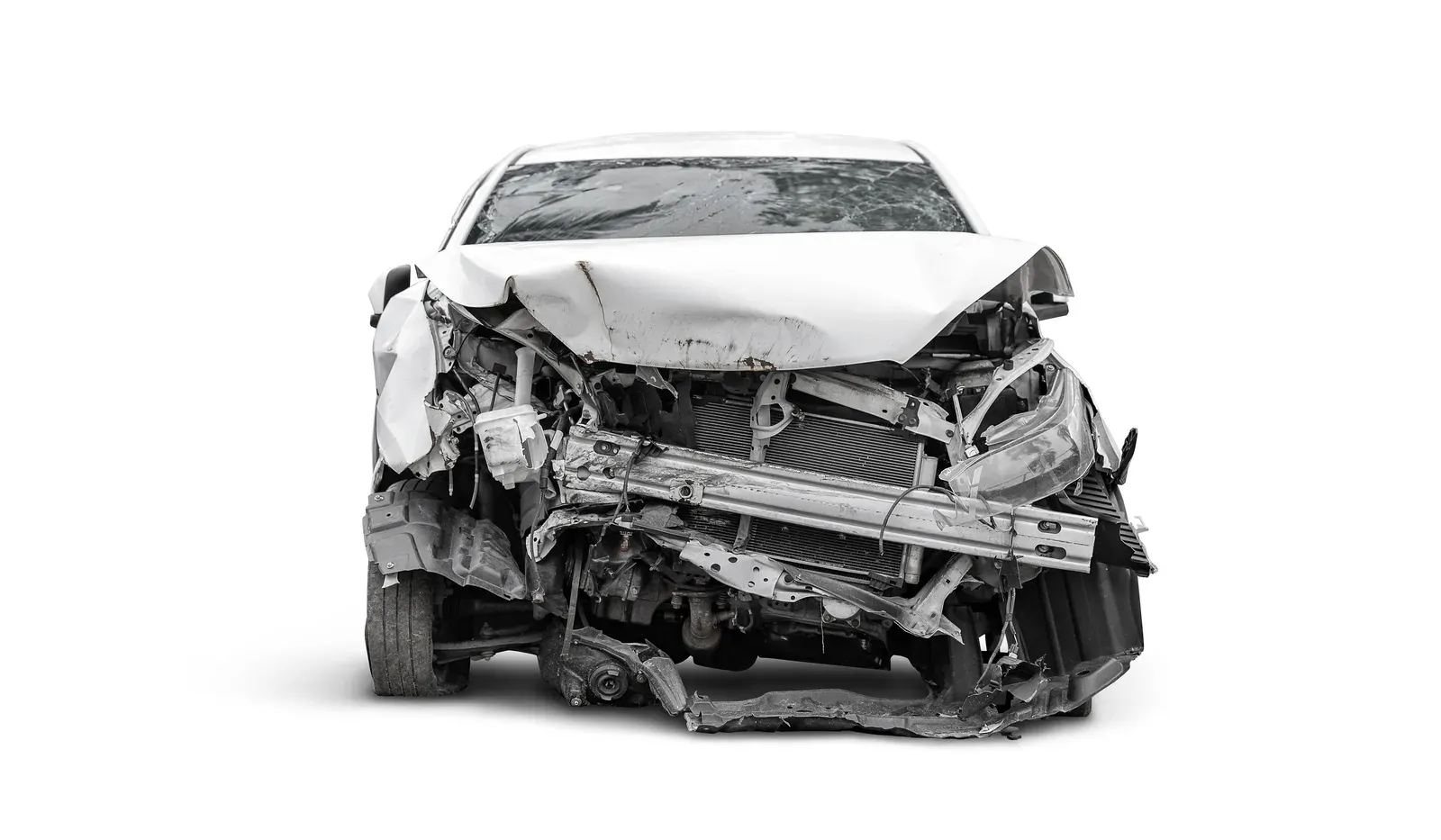
This is the scene the question usually comes from. Two drivers standing beside touching bumpers, and one of them says Ontario is no-fault, so there is no point involving anyone. Every word of that is backwards. Fault will still be assigned if a claim is ever opened; your policy still expects prompt notice of the collision whether or not you claim; and if the combined damage looks likely to pass the provincial reporting threshold, the law expects a Collision Reporting Centre visit regardless of what the two of you agree. A handshake also prices the repair off a guess — the crack hiding behind a bumper cover is found in a shop, not in a parking lot.
What to do instead is unglamorous: exchange licence, insurance and plate details, photograph both cars and the spot, report if the damage calls for it, and tell your own insurance company what happened. You can still pay for a small repair yourself once a written estimate says it really is small. What you cannot do is recreate the evidence three weeks later when the other driver’s memory has improved in their favour.
There is also one situation where the no-fault machinery genuinely stops: DCPD needs the other vehicle to be identified and insured by an insurance company licensed in Ontario or signed on to the province’s direct-compensation arrangement. A Quebec- or US-plated at-fault car may sit outside it, in which case your own collision coverage does the paying, deductible first. Ask the adjuster to confirm which applies rather than assuming. A driver who signed OPCF 49 sits outside the arrangement by choice — that endorsement has its own page.
What this looks like at the shop
From our side of the counter, a no-fault claim means we deal with one adjuster — yours. The estimate goes to your insurance company, the fault finding comes back with the approval, and we can tell you at that point exactly what falls under DCPD and what, if anything, falls under collision with a deductible. There is no second adjuster from the other side and no waiting for two companies to agree before the parts are ordered.
If the fault finding surprises you, it can be disputed. Ask the adjuster which rule was applied and what evidence was used. A Collision Reporting Centre report, dash-cam footage and clear scene photos are what change those decisions; a repair shop’s opinion of who was at fault is not, and we will not pretend otherwise. What we can do is document the damage pattern precisely, because the direction and height of an impact sometimes tells the story better than either driver.
Questions people ask
Does no-fault cover my injuries too?
Yes — that is the other half of the system. Injuries are handled through the accident-benefits coverage on your own policy, whoever caused the collision, covering treatment and income support within the policy’s limits. A person seriously injured may still have a lawsuit against the at-fault driver for losses beyond those benefits, which is a matter for a lawyer, not a body shop.
Can I still sue the other driver in Ontario?
Rarely for vehicle damage. DCPD pays through your own policy, and Ontario insurance law bars insured drivers from suing one another over damage to the car itself. A driver who signed OPCF 49 has no route there either, because that endorsement gives the right up in writing.
Does no-fault mean my premium cannot go up after an accident?
No. A not-at-fault finding is generally not supposed to raise your premium, but an at-fault or partly-at-fault finding usually does at renewal. No-fault changes who pays the repair, not how the accident is rated.
If the other car had Quebec plates, who pays for mine?
It depends on the other vehicle’s insurance company. DCPD applies only when that company is licensed in Ontario or has signed on to the province’s direct-compensation arrangement, and many out-of-province companies have. Ask your adjuster to confirm; if the other company is outside the arrangement, your claim runs under your own collision coverage with its deductible.