Before either of you pulls into a space
The single most useful thing you can do happens in the first two minutes, while the cars are still where they stopped. Stand back and photograph both vehicles in position, including the painted lines and the lane they are sitting in. Once somebody reparks, the geometry of who was in the through lane and who was crossing it becomes an argument instead of a picture.
Then trade the details that matter: name, phone, plate, and the policy number off the pink slip. A photo of the slip beats writing it down. Add a photo of the other driver’s licence plate with their damage in the same frame, so nobody can later attach that dent to a different day.
Look up before you leave. Mall lots, grocery lots and condo visitor lots around Sheppard and Don Mills are covered in cameras, and footage is usually overwritten within days. Walk into the store, ask who handles security, and ask them to preserve the clip for the time and lane you can name.
- Note which way each car was pointed and whether either of you was reversing.
- Photograph the wet or icy patch, the snow bank, the shopping cart corral — anything that shaped what happened.
- Get a name and number from anyone who watched it, even if they say it was obvious.
- Write down the lot address, not just the store name, for the claim file.
How fault gets sorted on private property
Ontario does not treat a parking lot as a lawless zone. Fault is assigned under the province’s Fault Determination Rules, the same framework used on the road, and it lands in fixed steps rather than as a negotiated opinion — none of it, a quarter, half, three quarters, or all of it.
The pattern most people meet: one car parked and stationary, the other moving. The moving car carries it. The second pattern is the messy one — both cars rolling, often one leaving a space while the other comes down the aisle, or two cars meeting where a feeder lane crosses a through lane. When both were moving, an even split between the two drivers is a common outcome, and it surprises drivers who are certain the other person appeared out of nowhere.
An even split has a practical effect on your repair money. Under DCPD, your own insurance company covers the share of your damage that you are not at fault for. The remainder runs through your collision coverage, where your deductible applies. Drivers who signed the OPCF 49 endorsement have neither piece — it removes direct compensation, collision and all perils in one go — and no claim against the other driver to fall back on either.
Slow speed, hidden damage
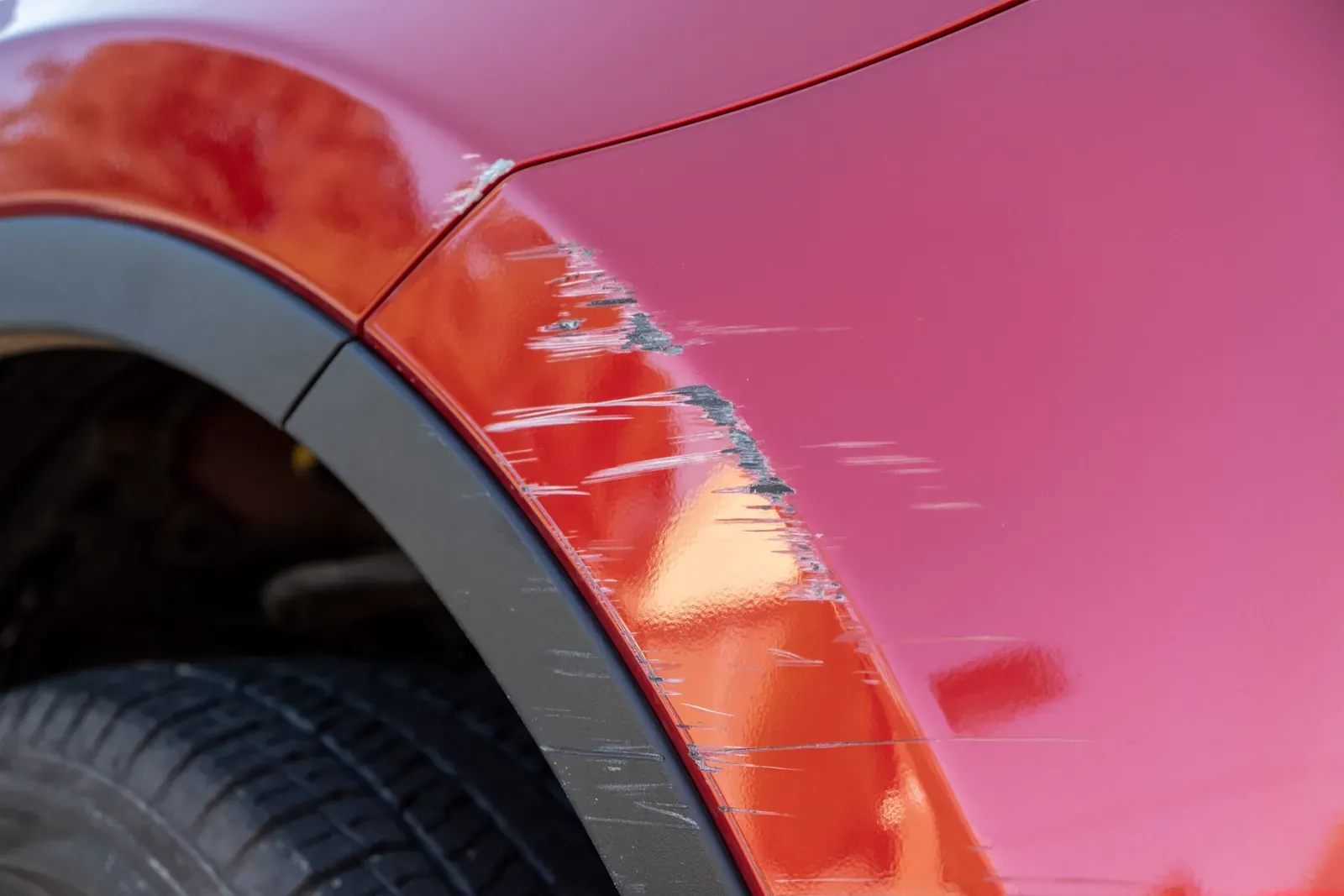
The reason we ask people not to settle a lot bump by eye is that bumper systems are designed to hide exactly this. The cover flexes, springs back and looks almost right, while the foam absorber behind it stays crushed and the two brackets holding the whole assembly stay bent.
On the estimate, what starts as a scuff often becomes: a cover with a stress split at the tab, a collapsed absorber, a bent bracket, a misaligned gap at the fender, and a parking sensor knocked off its aim. On a rear hit, add a tailgate or trunk lid that no longer closes with one hand and a lamp assembly with a hairline crack that will fill with water by January.
Panel gaps are the tell. Stand at the corner and sight down the seam between the bumper and the quarter panel, then compare it with the same seam on the undamaged side. A gap that widens at one end means something structural behind the paint moved, and no amount of polishing addresses it.
Trunk and hatch alignment deserves the same look on a rear hit. Open it, close it, and listen. If it needs a shove where it used to fall shut, the opening itself has changed shape.
What we do, and what it costs you
Start with photos. A wide shot of the damaged corner, a close shot of the contact area, and a shot of the panel gaps beside it are enough for a real estimate — not a range read off a screen, but a line-by-line document you can hand to an adjuster.
If you decide to claim, we deal with your insurance company directly. We work with every insurance company in the province, and you are entitled to choose this shop regardless of which one is on your policy. A recommendation from an adjuster is a recommendation, not an instruction.
If you decide to keep it private between the two drivers, get the other driver’s agreement in writing before any work starts, and understand the risk you are carrying: once a cover comes off and hidden damage appears, the number changes, and a handshake made in a parking lot rarely survives that conversation.
One more thing worth saying plainly. Damage from a slow collision is frequently under what people expect and occasionally far over it, and the only way to know which one you have is to open it up. We tell you which one you have before anything is ordered. Mandarin is spoken here if that makes the claim call easier.
Questions people ask
The other driver wants to keep it between us. Should I agree?
It is legal, and for a genuinely cosmetic scuff it can be reasonable. The catch is that neither of you knows the number yet. Agree only after a written estimate exists, get the agreement in writing, and be aware that if hidden damage appears mid-repair, you have no claim to fall back on unless you report it to your insurance company at that point.
There were no witnesses and no camera footage. What happens then?
Each driver gives a statement, the two insurance companies compare them against the Fault Determination Rules and the physical damage, and the contact points on the two vehicles do a lot of the talking. Where the accounts conflict and both cars were moving, a split is the usual landing spot. Your photos of the cars in their stopped positions are the strongest evidence you can supply.
Do I have to call police about a parking lot collision?
Not for a minor bump on private property with nobody hurt. An injury changes it completely: that is a 911 call from the lot, and you wait for police. With no injuries, a Collision Reporting Centre is the right stop once the combined damage looks likely to pass the provincial reporting threshold. Either way, notify your own insurance company promptly if you intend to claim — the standard policy expects notice within about a week.
My car has almost no mark on it. Is an estimate worth the trip?
Send photos instead of making the trip. If the images show clean, undisturbed gaps and nothing but a polishable transfer mark, we will tell you that and you have lost nothing. If they show a gap that has opened up, you have found the problem before it became a rattle and a leak.