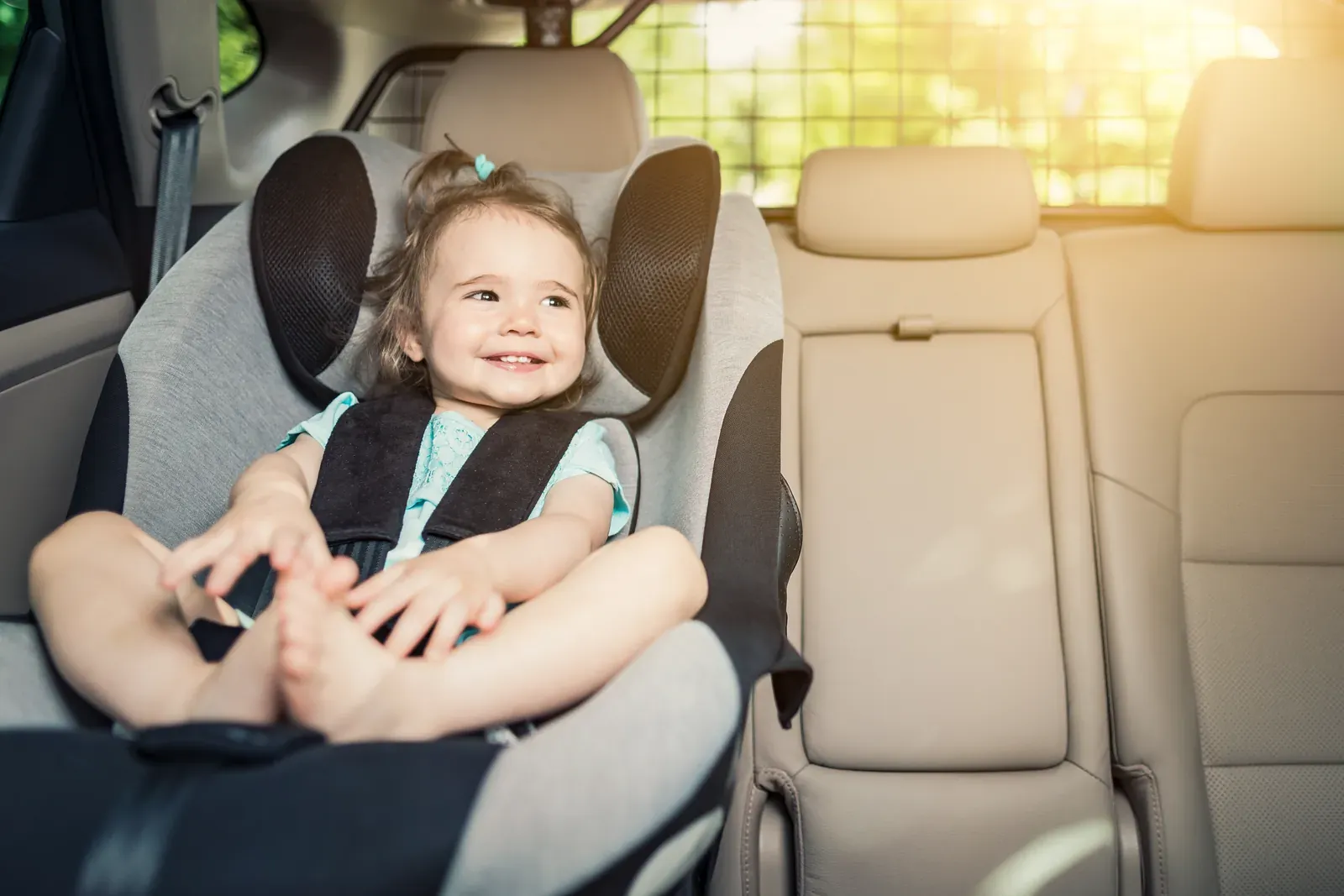
Usually yes: replace it after a moderate or severe collision
The clear part first. After a moderate or severe collision, replace the child seat, whether or not a child was sitting in it at the time. That is the general advice from Transport Canada and from the seat manufacturers, and it is what we tell every parent who comes through the door with a seat in the back. The forces that bent your bumper and set off your airbags went through the seat and its belt path too, and a seat is engineered to manage one crash, not two.
A seat that has been through a serious hit may look untouched. Seats are built from moulded plastic over foam, and both can develop cracks and compression you cannot see from the outside. The webbing, the buckle and the latch connectors can be stretched or stressed in a way that will not show until they are asked to hold again. Nobody wants to test that.
Replacing a seat is a small cost against the rest of a claim, and in many cases it is not your cost at all, as the section on insurance below explains.
Minor collisions: the manufacturer’s rule decides
For a minor collision the picture is less absolute, and the answer is in your seat’s manual. Every manufacturer prints its own rule, and the rules differ. Some say replace after any collision at all, no matter how small. Others allow the seat to stay in service after a minor collision that meets a specific set of conditions, and describe those conditions. Follow the rule for your seat, because it is the one the maker will stand behind.
The conditions a manufacturer’s minor-collision rule tends to describe are the ones you would expect: the car could be driven away from the scene, the door nearest the seat was not damaged, nobody in the car was injured, no airbag deployed, and the seat itself shows no visible damage. If any one of those is not true, the collision is not minor by that standard and the seat is replaced. If you cannot find the manual, the manufacturer’s website has it, and the seat label has the model and the date of manufacture you need to look it up.
The situation page on a child seat that was in the car during a collision walks through the checks in order for the day it happens.
- Find the model and manufacture date on the seat label.
- Read the manufacturer’s after-collision rule for that seat.
- Check the seat, belt path and connectors for any visible damage.
- When in doubt, replace it; the manufacturer’s rule is the minimum, not the maximum.
A seat that looks fine may not be
The whole point of a child seat is to absorb energy so a small body does not, and it does that by deforming. The shell flexes, the foam compresses, the belt path stretches a little. All of that is a single-use design. After a crash the seat may have used up its margin without leaving a mark. That is why the advice is written around the severity of the collision rather than around the appearance of the seat, and why we ask parents not to judge by looking.
Seats also expire. Every seat has a date after which the maker no longer vouches for the plastic, usually printed on the label. If your seat was near that date anyway, a collision is the moment to replace it rather than argue over whether the hit was minor.
Asking the insurance company to cover the seat
Many insurance companies cover a replacement child seat as part of the collision claim, on the same reasoning as any other damaged contents of the car. It is not always offered, so ask. Tell the adjuster there was a child seat in the car, give the make and model, and say you are replacing it on the manufacturer’s advice. Keep the old seat until the claim is settled in case the adjuster wants to see it, then cut the straps so it cannot be reused by someone who finds it, and dispose of it. Keep the receipt for the new one.
If you were not at fault, the seat is part of what your own insurance company pays under DCPD. If you were at fault, it comes under your collision coverage alongside the car, and the deductible you already owe covers both. The page on what to do right after a car accident in Toronto has the first-hour list, and the seat belongs on it.
What we do with the seat while the car is here
When a car arrives with a seat still fitted, we leave it in place until you have decided what to do with it, and we take photos for the claim if you ask. If you want the seat out to take home or to hand in, we remove it and hand it to you. We do not reinstall a seat that has been through a collision; the new one is yours to fit the way the manual says, and if you want a second pair of eyes on the installation, many public health units and some police and fire services in the GTA run car seat clinics that will check it.
Questions people ask
The seat was empty during the crash. Do I still replace it?
Yes, by the same rule. The seat was still belted or latched into the car and took the same forces. The advice from Transport Canada and the manufacturers does not depend on whether a child was in it.
What if I cannot find my seat’s manual?
Look on the manufacturer’s website using the model number and manufacture date from the label on the seat. If you still cannot find the after-collision rule, treat the seat as needing replacement.
Will the insurance company pay for a better seat than the one I had?
It normally pays for a comparable replacement. If you choose a more expensive seat, expect to pay the difference. Ask the adjuster before buying so there is no dispute about the amount.
Can I donate or sell the old seat?
No. A seat that has been through a collision should not be used again by anyone. Cut the straps, mark it clearly, and dispose of it so it cannot be picked up and reused.