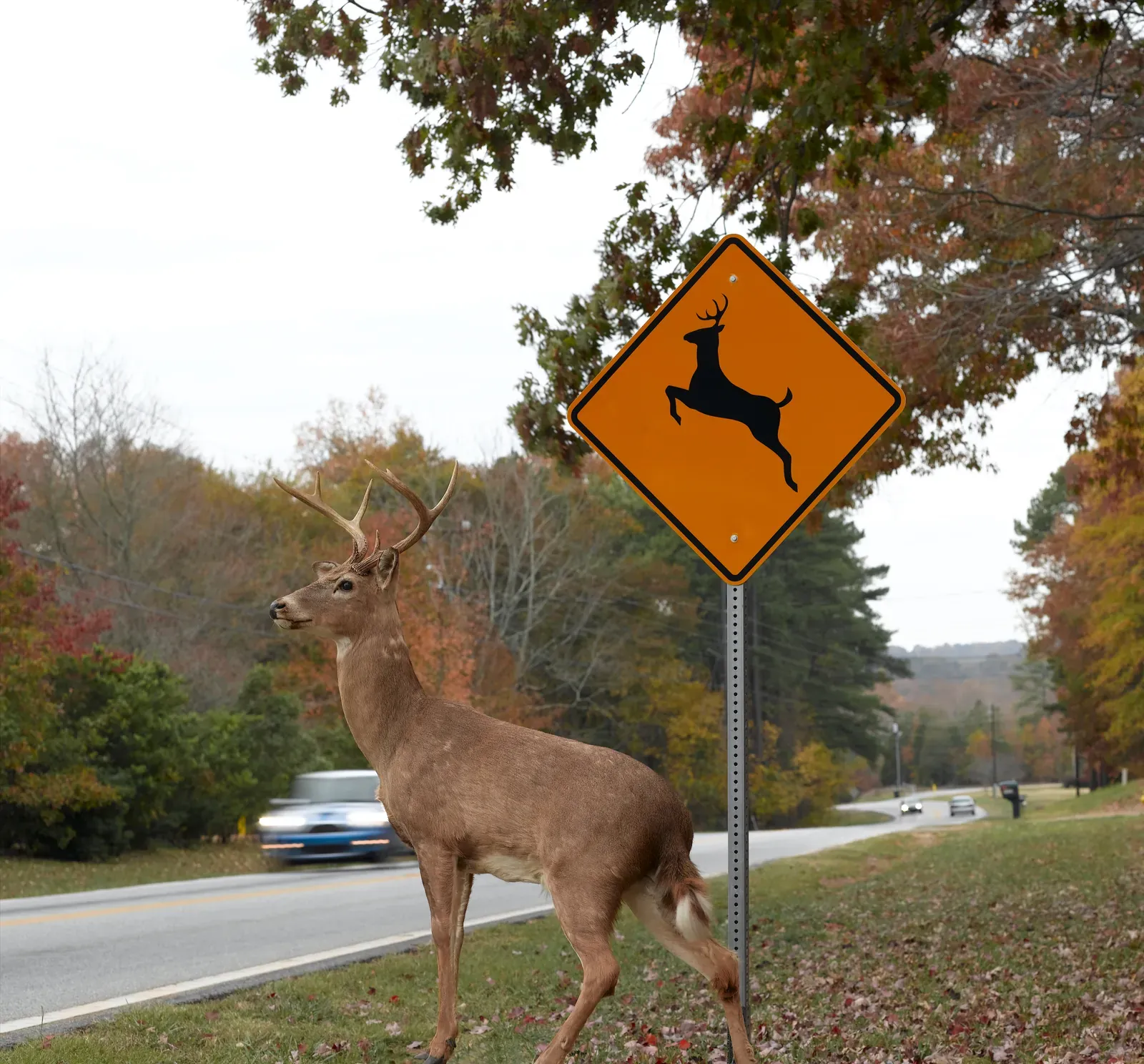
First, get the car off the road and leave the deer alone
Steer onto the shoulder, stop, hazards on. If it is dark, which it usually is, stay in the car with the seatbelt on while you gather yourself, because the next car around the bend on a road north of Aurora or out toward Uxbridge has not seen you yet. Check on everyone in the car. If anyone is hurt at all, call 911.
Do not go near the deer. An injured deer kicks, and a frightened one can hurt you badly. Do not try to drag it off the road yourself. If the animal is blocking a lane, or is alive and suffering, call the police non-emergency line and tell them where you are; they will send someone with the authority and the equipment to deal with it. If it is dead on the shoulder, the municipality removes it, and a call to the police or the region gets it logged.
If you can, take a few photos of the car and the scene from the shoulder, without stepping into the road. They help the claim later, and they record where the strike happened if you need it.
Report it when the damage looks like it passes the provincial threshold
Two different duties sit behind that word "report". If anyone in the car is hurt, you call 911 from where you are and wait for police — that is not a paperwork step. If nobody is hurt, the question is only whether the total damage looks like it passes the provincial reporting threshold, and a deer strike at highway speed often clears it: a hood, a bumper cover, a headlamp, a fender and the radiator support add up quickly on any modern car. If you are unsure, report anyway. Reporting is never held against you, and not reporting when you should have can be.
On a rural road outside Toronto, the police may attend or tell you to come to the nearest Collision Reporting Centre within the next day. In Toronto and York Region, the centre is where you go when nobody is hurt and the car can be driven. The page on Collision Reporting Centres explains what to bring and what happens there. Get the report number, because the insurance company will ask for it, and it settles the question of what hit what.
Photograph the damage in daylight as well, once you are home. A strike that looked like a broken grille at midnight often turns out to have pushed the bumper beam or the radiator support back, and the daytime photos are what the estimate is written from.
The answer on whether you have to report an accident to police in Ontario covers the threshold rule for every kind of collision, deer included.
Check the car before you drive it anywhere
A deer strike does damage where you cannot see it from the driver’s seat. Before you pull back onto the road, walk around the front with your phone light on. Look for coolant on the ground or a sweet smell, which means the radiator or a hose is holed; a car with no coolant will not get you far before the engine overheats. Check that both headlights work and neither is pointing at the sky. Look at the wheels and tires for anything rubbing. Open the hood if it will open, and look for the fan or a belt fouled by broken plastic.
If anything is leaking, a light is out, the hood will not latch, or the steering feels off, do not drive. Call for a tow and tell them where you want the car to go. You choose the destination for the tow in Ontario, and a car that lands at the right shop that night starts its claim in the morning. If the car checks out, drive gently to somewhere with light and look again.
- Coolant on the ground or a temperature warning: do not drive.
- A headlight out or a hood that will not latch: get it towed.
- Steering that pulls or a wheel that rubs: tow, do not risk the 404.
- Bodywork only, everything else working: drive home slowly and call in the morning.
The claim is comprehensive, and it usually leaves your rating alone
An animal strike is covered under comprehensive, not collision. That distinction matters, because comprehensive claims are generally not counted as at-fault accidents in Ontario, so the rating consequences that follow a collision claim mostly stay out of it. You pay your comprehensive deductible, and the insurance company pays the rest. If you carry collision only, and no comprehensive, the deer becomes a collision claim, which is a different conversation with your broker.
Tell the insurance company promptly, name your shop, and send us the photos. A deer strike on a modern front end usually involves radar or camera sensors in the bumper or grille, and after replacing those parts a recalibration may be required before the driver aids can be trusted; we build that into the repair. The full night-by-night version, including the drive home down the 404, is on the situation page about hitting a deer north of Newmarket.
One last thing, for next time. Deer travel in groups, and the one you see is rarely the only one. Slow down when you see the first, and if a deer is in the lane, brake hard and straight rather than swerving; a swerve into the ditch or the oncoming lane is the version of this story that ends badly.
Questions people ask
Is hitting a deer an at-fault accident in Ontario?
No. It is a comprehensive claim, and comprehensive claims are generally not rated as at-fault. If you swerved to miss the deer and hit something else, the claim becomes a collision, and the fault rules apply to that.
Can I keep the deer?
Only with paperwork. Ontario allows a driver to keep a road-killed deer if it is registered with the province promptly, but the practical answer for most people is to leave it and let the authorities remove it.
Will I need a rental after a deer strike?
Usually, because front-end repairs take longer than a bumper scuff: parts, radiator work and a possible sensor recalibration. Rental coverage under comprehensive depends on your policy; check for loss-of-use coverage, and we time the drop-off to the parts arriving.
Should I go to a Collision Reporting Centre if nobody was hurt?
If the damage looks like it passes the provincial threshold, yes, within the next day. Outside Toronto and York Region, the local police service may take the report directly instead. Bring your licence, ownership and insurance slip.