On a skateboard-style EV the battery sits lowest, so it meets the road first
Yes, the battery is reachable, and it is reachable because of where it lives. On a typical skateboard-style EV the pack runs the full length of the cabin between the front and rear wheels, bolted up under the floor and sealed inside a metal case. Below it there is usually a shield or a set of plastic aero panels, and below that there is only the road. Ground clearance under the pack on many sedans and crossovers is modest, which means the case is often the first hard thing a raised object meets.
That layout is good for handling and crash safety, and the case is built to take abuse. It is not built to take unlimited abuse. A sharp edge pressing upward with the full weight of the car behind it can push a dent into the case, tear the shield, crack a mounting point, or crush a coolant line running along the edge of the pack. Hybrids are a different picture: their smaller packs usually sit under the rear seat or in the cargo floor, well up out of harm’s way, so a pothole is far less likely to touch one.
Which pothole and curb strikes can reach the battery case
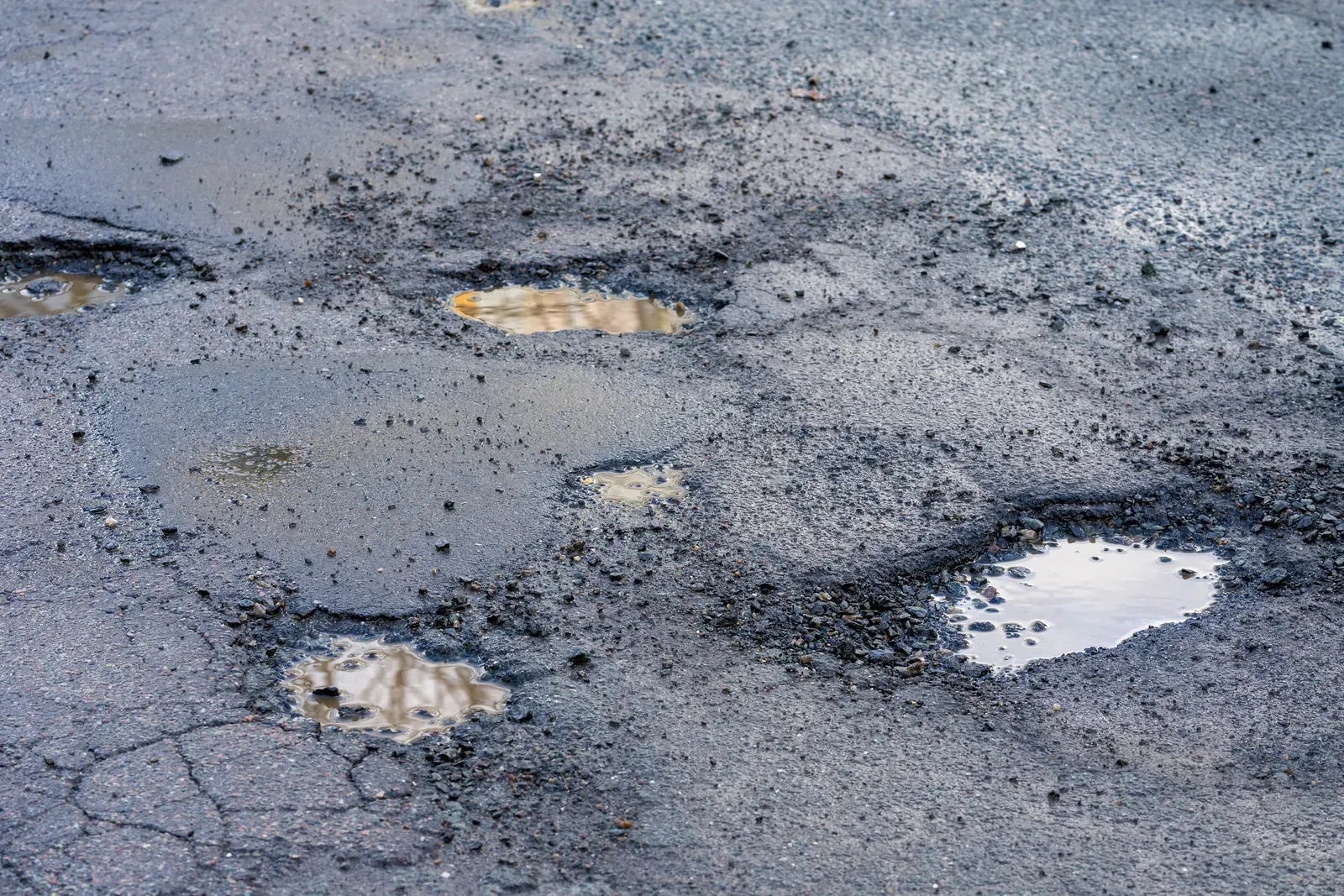
Most potholes damage what touches them first, and that is the tire and the wheel. The pack becomes a concern when the car drops into a hole and the body comes down on the far lip, when the suspension compresses all the way and the floor scrapes, or when something solid is waiting in the hole. On Toronto roads the deep, square-edged holes that do this tend to open between February and April, as repeated freezing and thawing breaks up the asphalt, and the 401 collector lanes and the older arterials such as Finch and Sheppard see their share.
Curbs work differently. Rolling over a curb at an angle, or sliding sideways into one on black ice, puts the load on the sill and the edge of the pack where the case is bolted to the body. Concrete wheel stops at the front of mall parking spaces are another quiet offender: pull too far forward and a low EV can drag its underbody across the top of one. Steep condo garage ramps and the hard ridge a snowplow leaves at the mouth of a driveway can catch the floor the same way.
- A loud bang or crunch from directly under the seats, rather than from a corner of the car.
- Hitting a hole hard enough that the car visibly bottomed out.
- Mounting a curb, a median or a parking wheel stop with the body, not just the tire.
- Running over a chunk of debris, a frozen slab of slush or a lost exhaust part on the highway.
Warning signs after the hit, and the ones that mean stop now
Some damage announces itself; much of it does not. A warning on the dashboard that mentions the high-voltage system, an isolation fault, reduced power or a request to service the vehicle is the car telling you its own monitoring has found something. So is a car that refuses to charge, or charges far more slowly than it did last week. Look under the car in daylight once it is parked safely: a fresh gouge in the shield, a hanging aero panel, or a drip of coolant beneath the middle of the car all point at the pack area.
A few signs call for leaving the car alone entirely. Smoke, a hissing or popping sound, a sharp chemical smell or heat coming up through the floor mean the car is no longer something to stand beside: get every passenger clear, keep a good distance, and phone 911 from there. Lithium-ion damage does not always show itself right away, and trouble can begin hours or days after the strike. That is the reason we suggest that an EV with a known underbody hit not be parked overnight in an underground condo garage or an attached home garage until it has been looked at.
If nothing shows at all, that is good news, though not a clean bill of health. A dented case with no warning light is still a dented case, and its seal or its internal structure may be compromised in ways the car’s software cannot see yet.
What an underbody inspection involves, and why it beats waiting
An inspection starts with the car on a hoist and the underbody panels off. The technician looks at the full length of the case for dents, creases, cracks and scraped-through coating, checks the mounting bolts and brackets along the sills, and follows the coolant lines and high-voltage cables where they leave the pack. A diagnostic scan reads stored fault codes and, where the model’s repair information requires it, the isolation readings that confirm the high-voltage circuit has not developed a leak path to the metal body.
Manufacturers publish their own limits for what kind of case damage is acceptable and what is not, and the inspection is measured against those, not against anyone’s eye. Where the result points to internal damage, the pack itself is often a dealer or manufacturer-network job, and we say so plainly and coordinate it rather than guess. The body around it, the shields, the sill and any suspension damage we repair here.
Waiting costs more than it saves. A small breach in the case lets in water and road salt, and a GTA winter supplies plenty of both, so a dent that would have been a shield replacement in March can become a moisture fault by the following winter. Finding damage early also keeps the insurance file clean, because the inspection report ties the damage to a dated event instead of leaving an adjuster to wonder when it happened.
Claim decisions come after the inspection, not before it
Inspect first, then decide whether to claim. Hitting a pothole or curb is treated as a single-vehicle collision; the claim belongs on the collision section of your own policy with its usual deductible and rating questions, and an EV battery does not change that. The page on claiming pothole damage in Ontario covers the insurance side and the municipal claim. What matters here is getting the inspection done first, so whatever decision you make about a claim is made with the real extent of the damage in front of you. Bring the car to us at Sheppard and Don Mills and you get the inspection findings explained in plain language.
Questions people ask
My EV has a skid plate under the battery. Does that mean the pack is safe?
It means the pack is better protected, not untouchable. A shield spreads and absorbs a strike, and a dented or torn shield is often the whole of the damage. It still has to come off for the case behind it to be seen, because a hard enough hit passes through.
Can I keep driving to work while I wait for an inspection?
If there are no warnings, no smells, no drips and the car drives normally, a short careful drive to the shop is generally reasonable. Daily highway commuting on a car you know scraped hard underneath is not, and any high-voltage warning means it should be towed on a flatbed instead.
Should I lower the charge or stop charging after an underbody hit?
Hold off on charging until the car has been checked if the hit was hard or any warning appeared, and charge outdoors rather than in a garage if you must. Follow anything your owner’s manual or the manufacturer’s roadside service tells you for your specific model.
Does ride height matter, or is every EV equally exposed?
It matters. A low sedan with performance tires scrapes far more easily than a taller crossover, and aftermarket lowering makes it worse. Even so, a deep enough hole or a high enough curb reaches any of them.